Block and Foundation Stucco in Port St. Lucie, FL
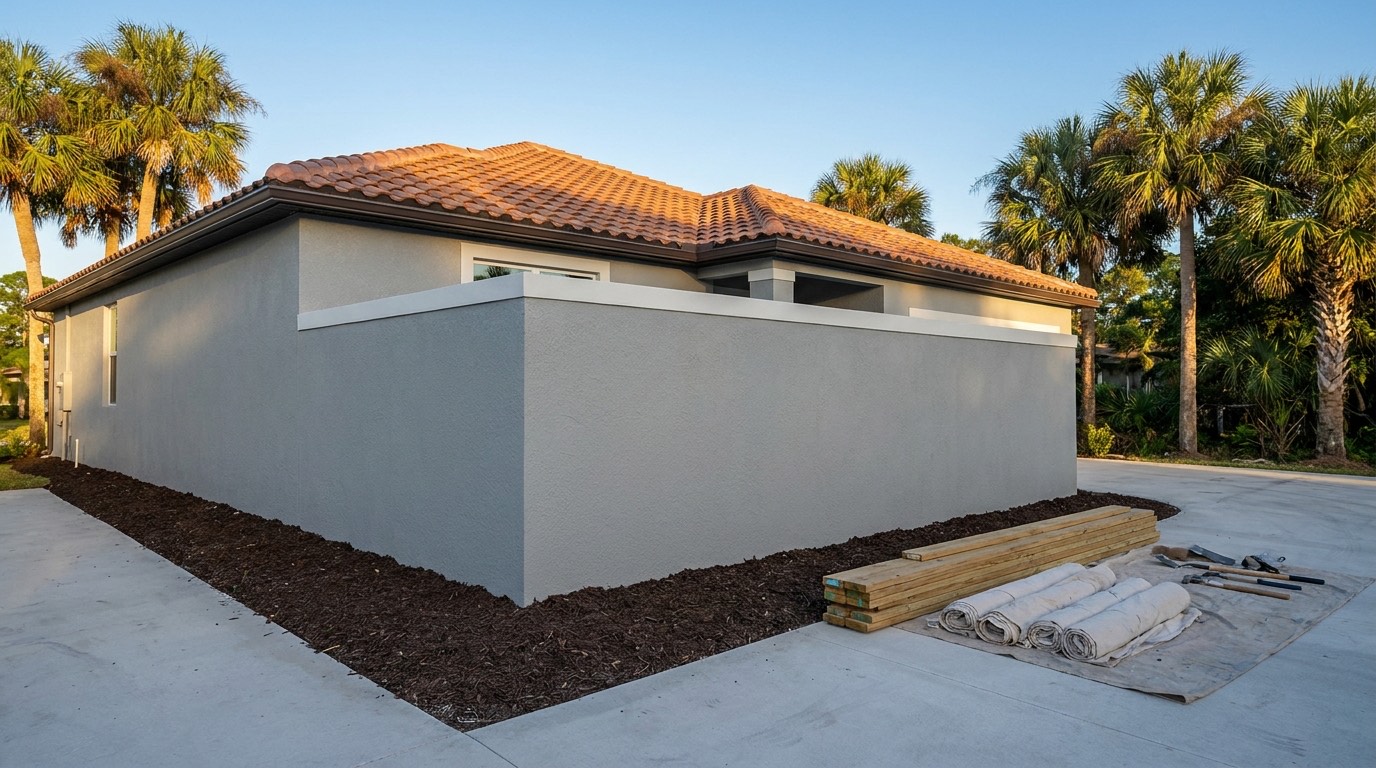
Nearly every house in Port St. Lucie is concrete block. Block takes stucco directly, which makes the work simpler than framed walls and puts all the difficulty into the substrate and the line at grade.
Request a quote
Four questions, about a minute. We'll call you back.
Block Takes Plaster Directly
Concrete masonry units are absorbent and rough. Cement plaster bonds to them chemically and mechanically without any wire in between, as long as the block face is clean, sound and unsealed. That is why a standard Florida block house gets a two coat application rather than the three coat build a framed wall needs.
It also changes what can go wrong. On a framed wall the failure is usually behind the wire. On block, the failures are bond failures at the block face and moisture problems coming up from the bottom of the wall. Those are the two things we look at first on any block job.
Parge Coat, Skim Coat and Two Coat Work
The words get used loosely, so here is how we use them. A parge coat is a thin cement coat troweled directly onto masonry to close the surface, even out the block joints and give a uniform face. It is what goes on stem walls, retaining walls, block fences and the exposed foundation below a finished wall.
A skim coat is thinner still, used to smooth an existing surface that is already sound rather than to build any real thickness.
Two coat stucco on block is the residential standard. A base coat brings the wall to plane and covers the mortar joints, then a finish coat carries the texture and the color. Nominal thickness on block is thinner than on lath, typically around half an inch total, because the block itself is doing the structural work.
Getting Bond on CMU
Bond is the whole job on block. Plaster will not stick to dust, to form release oil on precast or poured elements, to old paint, to a sealer, or to a glazed slick face.
Dry block also steals water from the mix. A hot block wall in the Port St. Lucie sun pulls water out of fresh plaster so fast that the cement never hydrates at the interface, and the coat lets go months later in sheets. Pre dampening the wall to a saturated surface dry condition, damp but with no standing water, solves it.
Where bond cannot be trusted, we do not gamble. Painted or sealed block gets either mechanical removal, a bonding agent, or lath fastened over it depending on the condition.
- Remove dirt, dust, laitance and efflorescence from the block face
- Strip or lath over paint, sealers and any coating that blocks suction
- Cut back form oil residue on poured or precast elements
- Dampen the wall ahead of the base coat, especially on hot afternoons
- Run lath across any block to frame transition rather than stopping at it
- Check that mortar joints are full and repoint any that are not
Stem Walls and the Line at Grade
The stem wall is the exposed block between the finished wall and the ground. It takes splash back from every rain, irrigation spray, string trimmer damage, and any moisture wicking up from the footing. It is the hardest working few feet of stucco on the house.
How the finish terminates at the bottom matters. On block construction the plaster is often carried down onto the stem wall and stopped a set distance above grade, sometimes with a change of texture or a foundation band. Running the finish all the way into the soil is asking for the bottom of the wall to stay permanently wet.
Where a framed wall sits above, the weep screed sets that termination and it needs its clearance, roughly four inches above earth and two inches above a driveway or patio. Adding a raised planting bed or pouring a new patio tight to the wall undoes it, and that is one of the most common things we are called to correct.
Below Grade Is a Different Detail
Standard stucco is not a below grade waterproofing product. Buried against soil it stays saturated, and constant saturation drives salts out of the masonry and pushes coatings off the surface.
Below the grade line the correct approach is a dampproofing or waterproofing membrane applied to the masonry, with any parge coat serving as the smooth carrier for that membrane rather than as the barrier itself. Above the grade line the stucco does its normal job.
The transition between the two is where the detailing counts. A clean termination, a slight kick or drip so water leaves the face instead of running down into the soil contact zone, and grade sloped away from the house. Most stem wall failures we see are drainage problems, not material problems.
Efflorescence, Rising Damp and Breathability
The white crusty deposits on a stem wall are efflorescence. Water moves through the masonry, dissolves salts on the way, reaches the surface and evaporates, and the salt stays behind. It is a symptom. Scrubbing it off without dealing with the water means it comes back.
When those salts crystallize just under a coating instead of on top of it, the pressure lifts the coating off. That is the mechanism behind most peeling paint at the base of a block wall in this area, and it is why the fix is almost never a better paint.
The rule on block is to let the wall dry outward. Cement based parge coats, mineral and silicate coatings, and breathable acrylics all allow that. Sealing a damp stem wall with a low permeability elastomeric traps the moisture and moves the damage inward. Find the water source, cut it off, and keep the wall open enough to dry.
Repairing Hollow, Cracked and Spalled Block Stucco
Tap along an older wall and the sound tells you a lot. A solid ring means the plaster is bonded. A drummy hollow sound means it has released from the block, and no coating or patch on the surface changes that.
Repair means cutting back the loose material to sound plaster, squaring the edges rather than feathering them out to nothing, dampening the exposed block, and rebuilding the coat to the original thickness. Feathered patch edges are thin, they crack first, and the repair peels back from the perimeter within a season or two.
Texture matching on block repairs is generally easier than on a smooth wall, because most Port St. Lucie homes carry sand, lace or knockdown texture that patches in well. We match on sample boards before touching the wall. On a stem wall or foundation band, the practical move is often to run the repair the full length of the band so the change stops at a natural edge.
What block and foundation stucco costs in Port St. Lucie
Work on a full wall is priced per square foot of wall, and patches are priced per square foot of the patched area, because cutting out one bad spot and rebuilding it costs more per foot than coating a whole wall does. A parge or skim coat over sound masonry prices like a resurface, and below grade membrane or drainage correction are separate line items rather than part of the stucco rate.
| Parge or skim coat over sound block, stem wall or fence | $3 to $6 per square foot of wall |
|---|---|
| Two coat stucco on bare or stripped block | $6 to $11 per square foot of wall |
| Stripping failed stucco off block and replacing it | $7 to $12 per square foot of wall |
| Small isolated spall or hollow area | $10 to $25 per square foot of patch |
| Larger continuous damaged band | $8 to $15 per square foot of patch |
What moves the number
- Whether the block face is clean and unsealed, or painted, sealed or slick, which adds stripping, a bonding treatment or lath over the face
- How much of the existing plaster sounds drummy and has to come off, which is only known once somebody taps the wall
- Access at the base of the wall, and whether planting beds, a pool deck, a screen enclosure or a tight side yard have to be worked around
- Drainage work at grade, since regrading soil off the wall or moving a sprinkler head costs less than any stucco and is sometimes the only work needed
- Whether the repair stops mid wall or runs out to a corner or the end of a foundation band, which uses more material but hides the transition
- Small jobs price against a visit minimum, $350 to $750 for a short repair call, so grouping several small areas into one trip costs less per area
These are budget ranges and not a quote, because the number comes from sounding the wall and looking at the line at grade. Call (772) 251-6654 or send the form and we will put it in writing.
Block and Foundation Stucco across our area
All areas →Questions about block and foundation stucco in Port St. Lucie
What exactly is a parge coat?
It is a thin coat of cement plaster troweled straight onto masonry to close the surface and hide block and mortar joints. It is what gives a stem wall, block fence or exposed foundation a finished face instead of raw block. It adds some weather resistance and a lot of appearance, but on its own it is not a below grade waterproofing layer.
Can stucco go below grade on a foundation?
Not as your waterproofing. Buried stucco stays saturated, and that leads to salt damage, spalling and coating failure. Below grade masonry should get a dampproofing or waterproofing membrane, with a parge coat used to smooth the surface for it if needed. The stucco finish belongs above the grade line, with a clean termination and soil sloped away from the wall.
Why is the stucco flaking off the bottom of my wall?
The most common causes here are moisture and burial. If soil, mulch or a new patio has come up against the wall, or irrigation is spraying it daily, the base stays wet, salts crystallize under the surface and push the finish off. Confirm the water source first. A repair that does not fix drainage and sprinkler spray will fail again in the same place.
How thick should stucco be on a block wall?
Two coat work over block is thinner than three coat over lath. The typical residential build is around half an inch total, with the base coat bringing the wall to plane and the finish coat carrying the texture. Bond and even thickness matter more than extra material. Piling on thickness to fix a wavy wall causes shrinkage cracking rather than curing it.
Can you match the stem wall finish to the rest of my house?
Usually, and it is a common request when a foundation band gets repaired or a new addition changes the line. We mock up the texture on site first and get your eyes on it next to the original before we commit. Where an exact match is not realistic, the cleaner result is often to carry the repair to a corner or the end of the band so the transition lands on an edge instead of the middle of a wall.
Other services
All services →
Stucco Installation
New three-coat stucco over frame or block
Learn more
Stucco Repair
Cracks, spalling, bulges, and failed patches
Learn moreRestucco
Whole-house re-stucco, remove and replace
Learn more
Stucco Remediation
Moisture intrusion and rotted substrate
Learn more
EIFS / Synthetic Stucco
Installation, inspection, and repair
Learn more
Stucco Resurfacing
Refinishing tired or mismatched walls
Learn more
Decorative Stucco Finishes
Sand, lace, knockdown, smooth, and Santa Barbara
Learn more
Lath and Plaster
Wire lath, scratch and brown coat
Learn more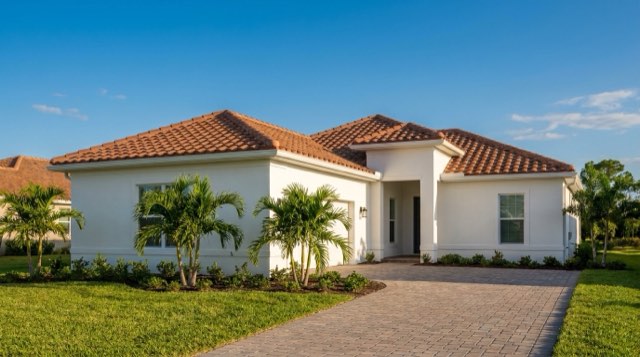
Stucco Painting and Coatings
Elastomeric and breathable coatings
Learn more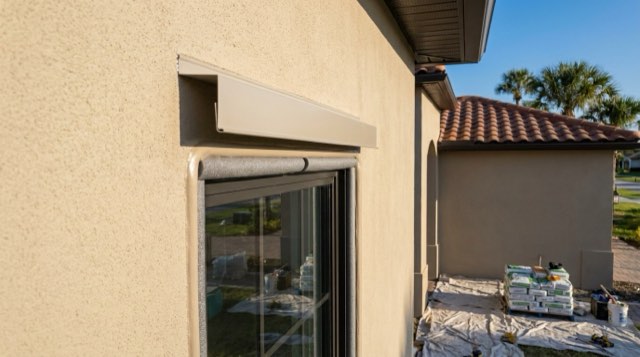
Stucco Waterproofing and Sealing
Sealants, flashing details, and weather barriers
Learn more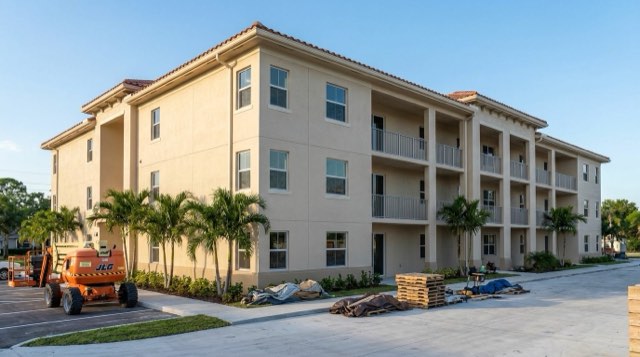
Commercial Stucco
Multi-family, retail, and light commercial
Learn more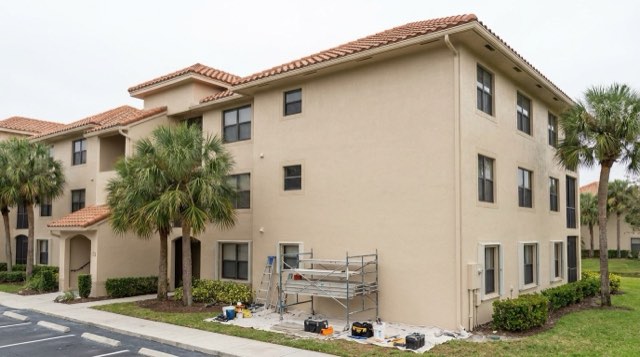
Commercial Stucco Repair
Scheduled maintenance and facade repair
Learn moreStraight answer on your wall.
Call, or send the form and we will get you a written price.