Stucco Installation in Port St. Lucie, FL
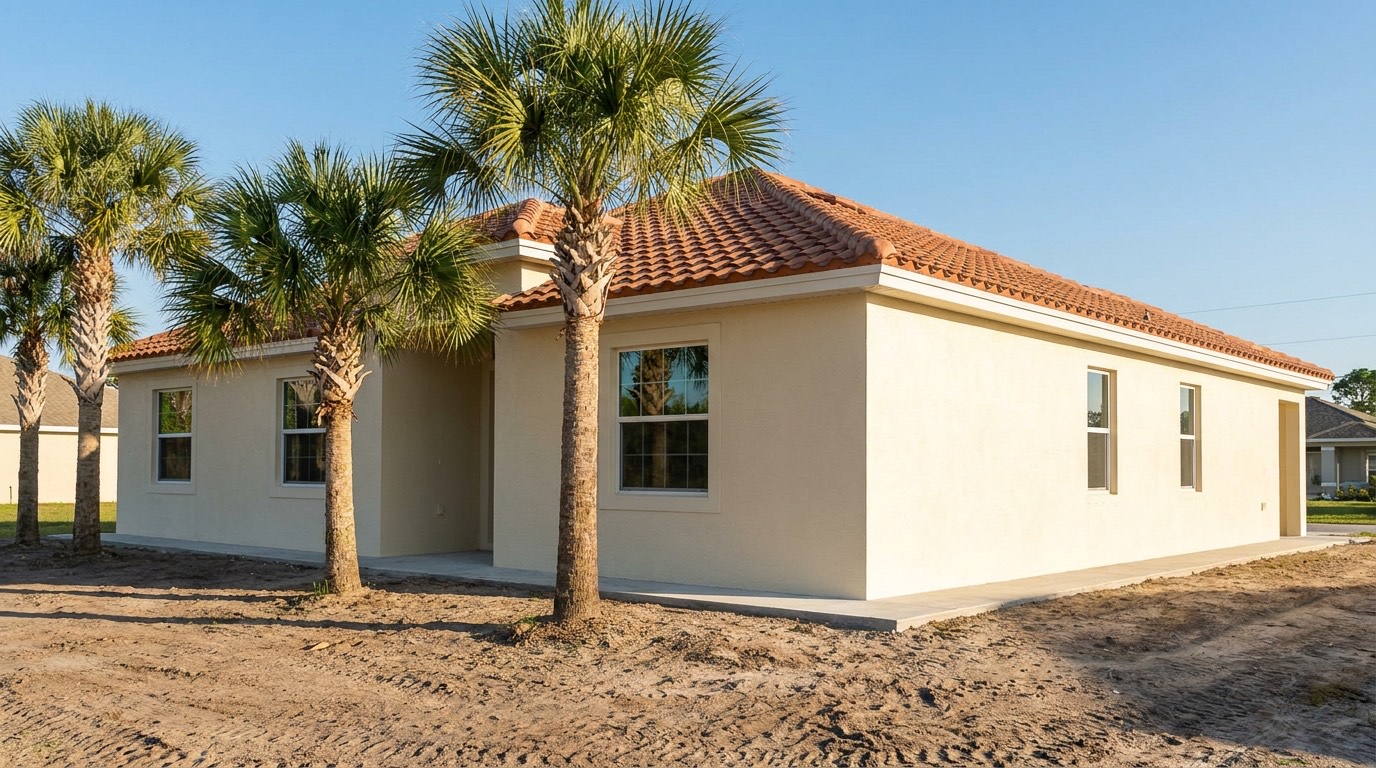
New stucco is a layered wall system, not a coating you roll on. We install three-coat cement stucco on new builds, additions, and re-clad projects in Port St. Lucie and across St. Lucie County.
Request a quote
Four questions, about a minute. We'll call you back.
What actually goes into a new stucco wall
Three coats, three jobs. The scratch coat is the bond coat. It grips the lath or the masonry and gets scored horizontally so the next layer has something to key into. The brown coat is where the thickness lives. It gets rodded and floated until the wall is flat and true, and that plane is what you will be looking at for the life of the house. The finish coat is thin. It carries color and texture and almost nothing else.
Behind the plaster, the assembly changes depending on what you are building on. Over wood or metal framing, a weather-resistant barrier goes on first and creates the drainage plane, then self-furring galvanized lath gets fastened back into structure. Over concrete block, we can usually apply directly to the masonry once the face is clean, sound, and dampened. Block pulls water out of a fresh mix fast, so wetting the wall down is not optional here.
- Weather-resistant barrier and drainage plane on framed walls
- Self-furring galvanized lath, fastened into framing rather than sheathing alone
- Weep screed at the base so anything that gets in has a way back out
- Casing bead at terminations and corner aid at outside corners
- Control joints laid out on paper before the first shovel of mud goes up
Our installation sequence
We walk the wall before we quote it. We are looking for bows in the framing, block left dirty or sealed, openings that are out of plane, and grade that sits too high for a weep screed. None of those problems get better once they are buried under plaster.
From there the coats go on in order, with cure time between them. Putting a brown coat over a green scratch coat is the shortest path to a wall that maps out with cracks inside the first year. In heat and wind we keep the work damp so the mix cures rather than just dries.
- Protect the site. Windows, doors, roofing, driveways, and plantings get covered.
- Set accessories. Weep screed, casing bead, corner bead, and control joints go on first.
- Lath, on framed walls. Lapped correctly over an intact barrier and fastened on a set spacing.
- Scratch coat. Applied and scored to key the layer above it.
- Brown coat. Rodded straight and floated to a flat plane.
- Cure. Kept moist and given time before anything else touches the wall.
- Finish coat. Run wall to wall in a single pass so there are no cold joints in the field.
Finish textures and mix choices
Most homes on this coast run a knockdown, a sand or float finish, a dash, or a smooth trowel look. Knockdown is forgiving over long elevations and hides small imperfections. Smooth trowel looks sharp and hides nothing, including any waviness left in the brown coat. Pick the texture first, then hold the crew to the flatness that texture demands.
Color can be integral, mixed into the finish coat itself, or applied afterward as paint or an elastomeric coating. Integral color cannot peel because there is no film to peel. Paint opens up the color range and lets you change the look later without touching the plaster.
- Knockdown, the most common look on Florida block homes
- Sand or float finish, uniform and straightforward to patch years later
- Dash and lace, heavier texture that masks minor substrate movement
- Smooth trowel, high-end appearance that requires a very flat brown coat
- Integral color versus paint or a topcoat applied after cure
What moves the price on an installation
Square footage is the starting number and rarely the deciding one. A single-story block box with a handful of openings is quick, repetitive work. A two-story house with tall gable ends, deep returns, decorative banding, and a dozen window sills is a very different job at the same square footage.
Substrate is the other big lever. Framed walls need barrier and lath before any mud gets mixed, which adds both material and a full labor phase. Direct application to clean block skips that step entirely.
- Block versus framed wall, and whether lath is in the scope
- Wall height, roof pitch, and how much scaffold the elevation needs
- Count of openings, outside corners, and bands
- Decorative trim, quoins, keystones, and window surrounds
- Finish texture and whether color is integral or applied later
- Site access for the mixer, staging, and material drops
Building for Treasure Coast weather
Heat and wind pull water out of fresh stucco faster than the cement can use it. That is the core local problem on new work. A mix that dries before it cures ends up weaker and shrinks more, and that shrinkage shows up as fine map cracking a few months down the road. We schedule around the worst of the afternoon sun where we can and we keep new walls damp.
The other half of the job is water management. Salt air and wind-driven rain will find any unsealed gap at a window head, a hose bib, a dryer vent, or a light box. Those penetrations get detailed so water sheds outward instead of running behind the plaster and sitting there in the humidity.
- Moist curing between coats when it is hot, dry, and windy
- Flashed and sealed penetrations at windows, vents, and fixtures
- Weep screed held clear of grade and finished paving
- Control joints placed to relieve stress before the wall picks its own crack line
Is your project ready for stucco yet?
Stucco is one of the last exterior trades to run. The roof should be dried in. Windows and doors should be set and flashed. Rough plumbing and electrical should already be through the wall. If any of that is still open, the plaster just gets cut back out later, and the patch will show.
On block, check what the mason left you. Bituminous coatings, form oil, heavy efflorescence, or a slick burnished trowel finish all interfere with bond. Every one of those surfaces can be prepped, but the prep needs to be priced up front instead of discovered on the first morning.
- Roof dried in and roof-to-wall flashing complete
- Windows and doors set, flashed, and sealed
- All wall penetrations through and secured
- Block face clean, unpainted, and free of sealers or coatings
- Final grade set so the weep screed clears the ground
Questions to ask before you sign anything
A bid that says stucco and a square-foot number is not a bid. Ask how many coats, what total thickness, what mix, and where the control joints are going. Ask how long the wall sits between the brown coat and the finish.
On framed walls, get the lath and accessory spec in writing. Galvanized versus plain steel matters this close to salt air, and whether fasteners land in framing or stop in the sheathing matters more.
- Number of coats and the total thickness being installed
- Lath type, gauge, and fastening schedule
- Control joint layout, drawn or described in the scope
- Cure time allowed between coats
- Who owns the flashing at openings and roof-to-wall transitions
- Texture and color in writing, with a sample panel approved before the full application
What stucco installation costs in Port St. Lucie
New stucco is priced by the square foot of wall we cover, and the substrate decides which end of the range you land on. Block we can bond to directly is the cheaper wall, while a framed wall needs a weather barrier and lath before any mud gets mixed, and that adds a full labor phase.
| New stucco on block, applied direct to clean masonry | $6 to $11 per sq ft of wall |
|---|---|
| New stucco on a framed wall, barrier, lath, three coats | $9 to $15 per sq ft of wall |
| Re-clad on block, old stucco off first | $7 to $12 per sq ft of wall |
| Re-clad on frame with new lath and three coats | $9 to $15 per sq ft of wall |
| Wall still sound, so a resurface instead of a re-clad | $3 to $6 per sq ft of wall |
What moves the number
- Block or framed wall, and whether lath is in the scope
- Wall height, roof pitch, and how much scaffold the elevation needs
- Count of openings, outside corners, and decorative bands
- Trim work, quoins, keystones, and window surrounds
- Finish texture, and whether color is integral or painted later
- Site access for the mixer, staging, and material drops
These are ranges rather than a quote, because the real number comes from measuring your walls and seeing what the plaster has to go over. Call (772) 251-6654 or send the form and we will put it in writing.
Questions about stucco installation in Port St. Lucie
How thick should three-coat stucco be?
Over metal lath on a framed wall, the industry standard is roughly seven-eighths of an inch total across the three coats. Over concrete block, the total is normally thinner because the block itself is providing the mass and the bond. What matters more than any single number is that the brown coat carries the thickness and the finish coat stays thin. A heavy finish coat cracks.
Can stucco be applied directly to concrete block?
Usually yes, and that is how most Florida homes are built. The block face has to be clean, structurally sound, and free of paint, sealers, form release, or bituminous damp-proofing. It also has to be dampened before application so it does not suck the water out of the mix. If the block has been painted or coated, we lath over it instead of trying to bond to a film.
How long before new stucco can be painted?
Cement stucco needs a real cure before any coating goes over it, commonly cited as about 28 days, and it needs to stay damp during that window rather than baking dry. Fresh stucco is also highly alkaline, which will attack the wrong paint. If a schedule will not allow the full cure, an alkali-resistant primer is the usual path. We put the timeline for your specific job in the written scope.
Will brand new stucco still crack?
Fine hairline cracking is normal in a cement product and is not a defect on its own. What we control is how much of it you get. Correct mix proportions, proper cure, a properly placed control joint layout, and lath fastened to structure all reduce cracking substantially. Cracks that open wide, run diagonally off an opening, or step along block joints are a different issue and are not shrinkage.
Can you install new stucco on an addition and match the existing house?
We can get very close on texture, and we always build a sample panel for you to approve before the full application. Perfect invisibility is harder than most people expect, because the existing wall has years of weathering and fading on it that a new finish does not have. Running the new work to a natural break like a corner or a control joint helps a lot. Where a match will not hold up, we will tell you and price coating the full elevation instead.
Other services
All services →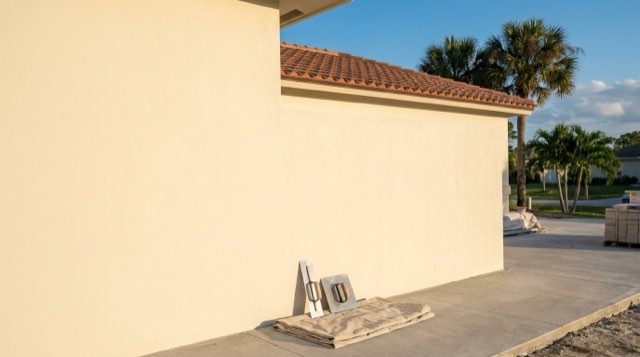
Stucco Repair
Cracks, spalling, bulges, and failed patches
Learn moreRestucco
Whole-house re-stucco, remove and replace
Learn more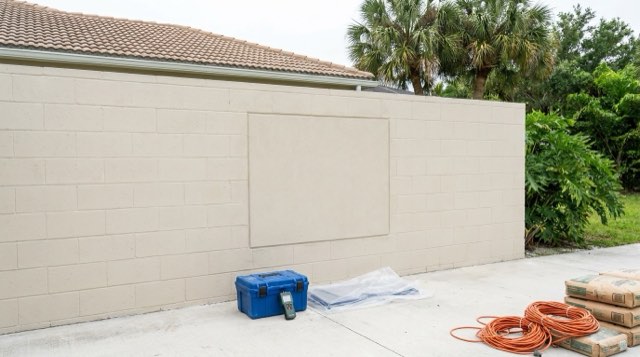
Stucco Remediation
Moisture intrusion and rotted substrate
Learn more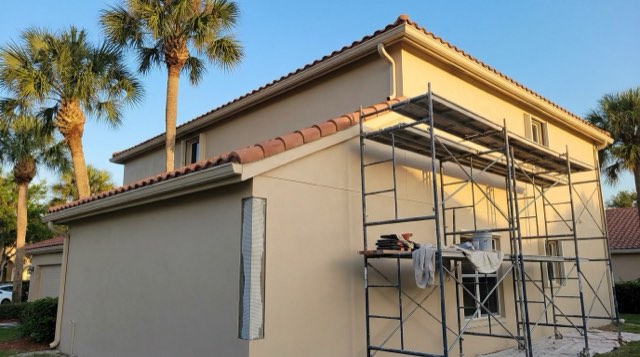
EIFS / Synthetic Stucco
Installation, inspection, and repair
Learn more
Stucco Resurfacing
Refinishing tired or mismatched walls
Learn more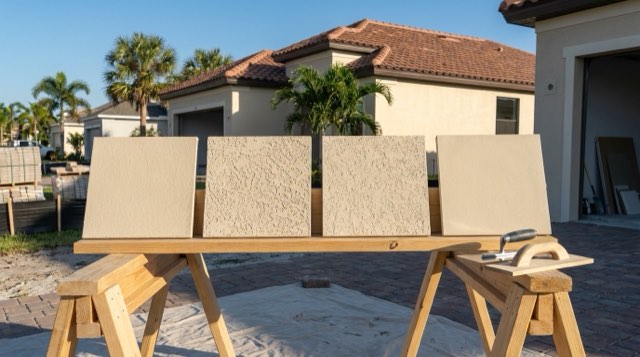
Decorative Stucco Finishes
Sand, lace, knockdown, smooth, and Santa Barbara
Learn more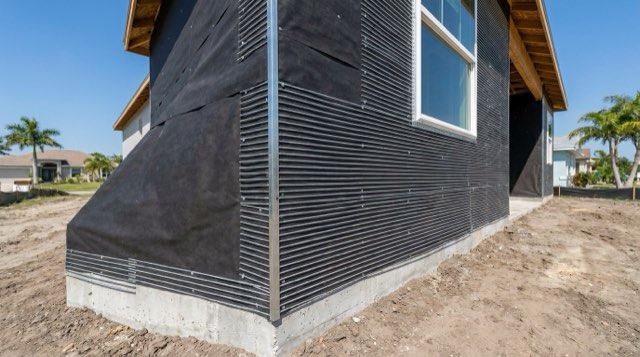
Lath and Plaster
Wire lath, scratch and brown coat
Learn more
Stucco Painting and Coatings
Elastomeric and breathable coatings
Learn more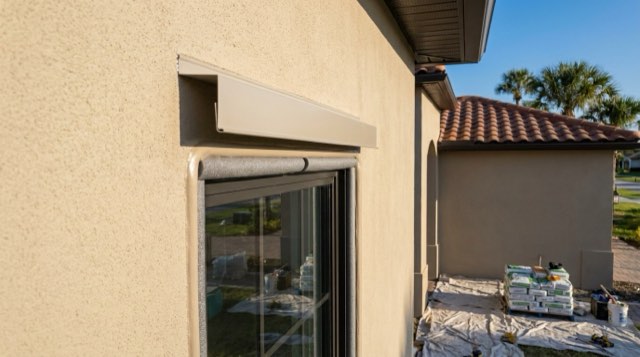
Stucco Waterproofing and Sealing
Sealants, flashing details, and weather barriers
Learn more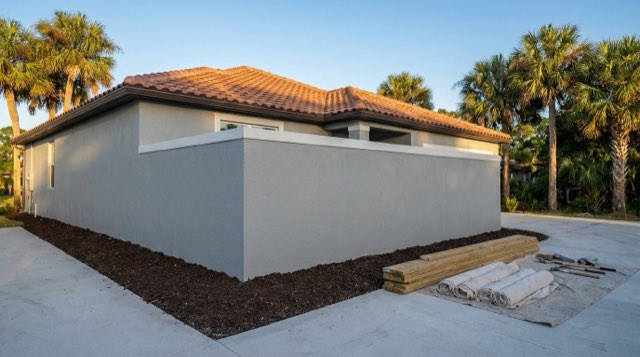
Block and Foundation Stucco
CMU parge coats and stem wall finishes
Learn more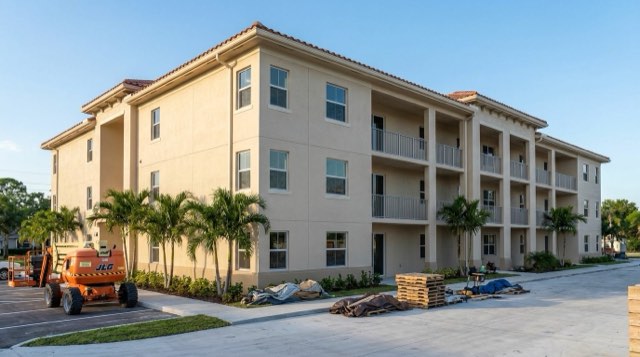
Commercial Stucco
Multi-family, retail, and light commercial
Learn more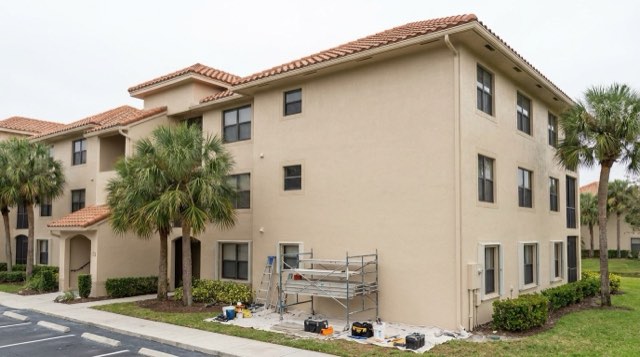
Commercial Stucco Repair
Scheduled maintenance and facade repair
Learn moreStraight answer on your wall.
Call, or send the form and we will get you a written price.