Stucco Resurfacing in Port St. Lucie, FL
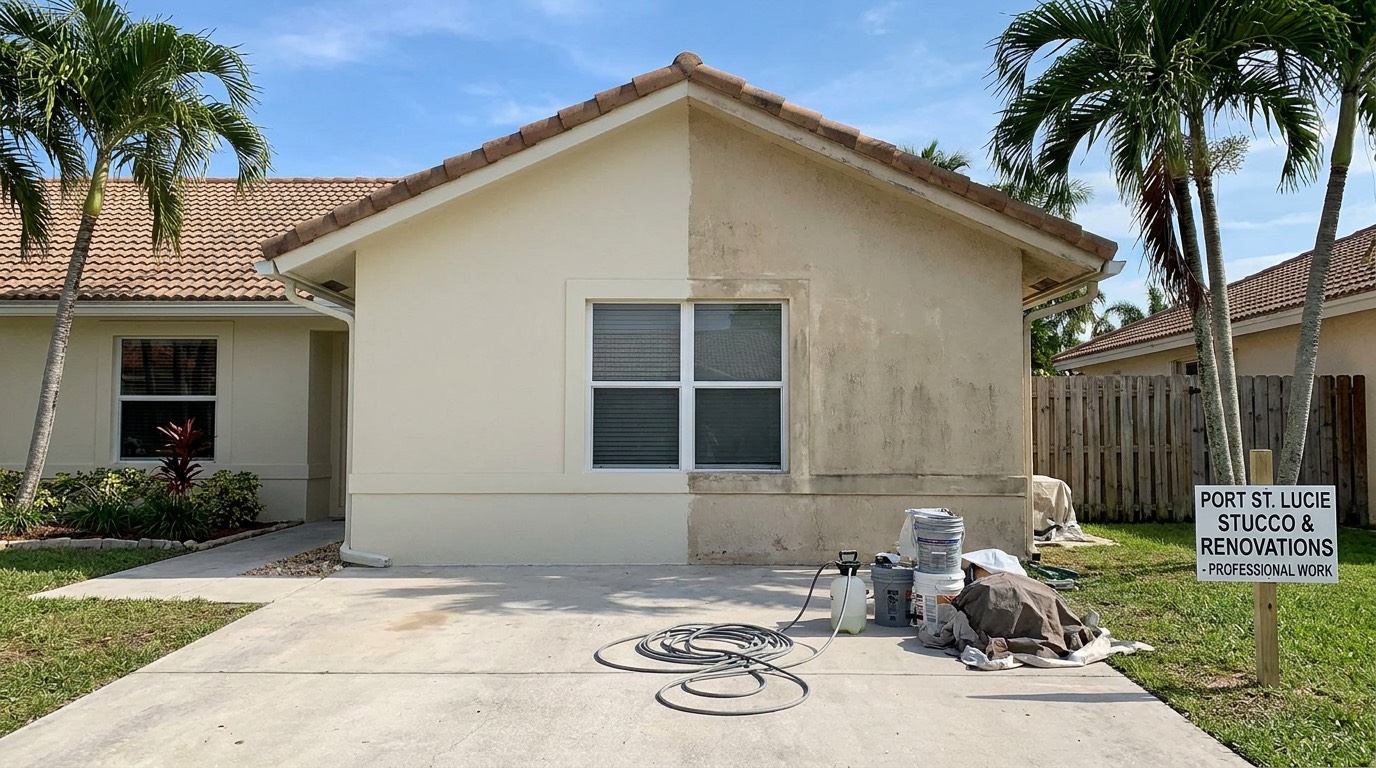
Resurfacing puts a new finish over stucco that is structurally fine but looks tired. It is the fix for patchwork you can see from the street, dated texture, and walls that have gone chalky and uneven in the sun. We resurface homes throughout Port St. Lucie and the Treasure Coast.
Request a quote
Four questions, about a minute. We'll call you back.
What resurfacing actually is
Think of it as replacing the top layer only. The scratch and brown coats stay where they are. We clean and prepare the existing surface, correct what needs correcting, and apply a new finish across the whole elevation so it reads as one continuous wall again.
It sits between painting and restuccoing. Paint is a film. It follows every ripple and every patch outline underneath it, and within a year you can see them again. A full restucco means taking the old material off and starting over, which is a much bigger and more expensive project. Resurfacing gives you an actual new plaster or acrylic finish with real body to it, without touching the structure of the wall.
- Hides mismatched patches and repair outlines
- Evens out texture that has worn unevenly across an elevation
- Changes the look of a dated finish without demolition
- Gives you a uniform color and sheen across the whole wall
- Costs less than tearing off and rebuilding the stucco
When resurfacing is the wrong call
We will tell you no on this one more often than you would expect. Resurfacing is cosmetic. It does not add strength, it does not stop water, and it does not fix anything happening behind the wall. Putting a new finish over a wall that is delaminated or wet just buries the problem under something nicer looking.
So before we quote a resurface, we sound the wall. If large areas come back hollow, that stucco has already released from the substrate and it will keep letting go underneath the new finish. If there is efflorescence blooming or stains that keep returning through paint, water is moving through the wall and needs to be dealt with first. Cracks that are actively opening need to be understood before they get covered. In those cases the honest sequence is repair first, resurface second.
- Widespread hollow or drummy areas that need to come off
- Active moisture intrusion or recurring stains
- Cracks that are opening over time rather than sitting stable
- Rust staining from corroding lath or embedded metal
- Soft, crumbling material near the base of a wall
Prep decides how it looks in five years
This is where resurfacing jobs are won or lost. A new finish bonds to whatever it lands on, so if it lands on chalk, mildew, salt residue, or loose paint, it bonds to that instead of to the wall. Washing is done at a pressure high enough to strip the surface clean and low enough not to drive water into the stucco or blast away sound material. Mildew gets treated rather than just rinsed, because it will grow back through a new finish.
Then the surface gets made ready. Cracks are opened and filled. Hollow spots are cut out and rebuilt. Old peeling paint has to come off completely, and a wall that is heavily coated in glossy paint may need a bonding primer or, in the worst cases, may not be a candidate for a cementitious finish at all. Existing paint condition is the first thing we check on a resurfacing walkthrough.
- Wash and rinse at a pressure appropriate to the surface
- Treat mildew and algae rather than rinsing them off
- Remove all loose, peeling, or poorly bonded paint
- Cut out and rebuild any drummy sections found during sounding
- Fill and mesh cracks before the new finish goes on
- Bonding agent or primer where the substrate calls for it
- Mask windows, fixtures, roofing, hardscape, and plantings
Texture and color choices
You have real latitude here, and it is the part most people enjoy. You can match what is already there, or change it entirely. Going from a smooth or sand finish to a knockdown is straightforward, because you are adding material and building texture up. Going the other direction is harder. Smoothing out a heavy dash or lace finish takes a thicker skim coat and more labor, and it is the more expensive move.
On materials, there are two broad families. Cementitious finishes are mineral-based, breathable, and they behave like the original stucco because they essentially are the original stucco. Acrylic and acrylic-modified finishes are more flexible, hold color better over time, and resist hairline cracking, but they form a film and are less permeable. On a block wall that needs to breathe, that permeability difference is worth a conversation before you choose. Always ask for a sample panel on the actual house, in daylight, before the full application.
- Knockdown, the standard look on most homes here
- Sand or float finish for a fine, even surface
- Dash, lace, or Spanish textures for a heavier hand-worked look
- Smooth or level finishes, more labor and less forgiving
- Cementitious finish, breathable and closest to the original material
- Acrylic or acrylic-modified finish, better color retention and more flexibility
- Integral color in the finish, or paint and coating applied afterward
What you are paying for
The material is the small part of the number. Labor is the job. Prep alone can take longer than the application, especially on a house with failing paint or a lot of small repairs scattered across the walls, and a texture change adds material thickness and time on top of that.
Access is the other multiplier that surprises people. Second-story elevations, tall gable ends, walls over a pool cage, and tight side yards all mean scaffold or a lift, and that time gets billed whether the wall is complicated or not. Two houses with the same wall area can be far apart in price for no reason other than how hard it is to stand in front of the wall.
- Condition of the existing surface and how much prep it needs
- Whether you are matching the existing texture or changing it
- Amount of crack repair and patching included before finishing
- Height, access, and scaffold or lift requirements
- Finish material selected, cementitious or acrylic
- Total elevations being done and how much masking the site needs
Sun, salt, and what they do to a finish
Ultraviolet exposure here is relentless, and it is the main reason walls end up needing this work. Pigments break down, paint chalks, and dark colors fade first and fade unevenly depending on which way the wall faces. A south or west elevation will look years older than a shaded north wall on the same house. That is also why patching one section rarely looks right and why we quote resurfacing corner to corner instead of by the square patch.
Salt air adds two things. It leaves deposits on the surface that interfere with bond if they are not washed off, and it keeps the wall slightly damp, which encourages mildew on shaded elevations. Neither is difficult to deal with. Both have to actually be dealt with, in prep, before a new finish goes on top of them.
- Fading and chalking, worst on south and west elevations
- Uneven color between shaded and sun-exposed walls
- Salt deposits that block adhesion if they are not washed off
- Mildew and algae growth on shaded, damp-facing walls
- Lighter colors and quality pigments holding up noticeably longer
Getting a straight answer out of a bid
The first question to ask is simple. Is this a coating or a finish coat? Some companies sell a thick elastomeric paint job under the word resurfacing. That can be a perfectly reasonable product on the right wall, but it is not the same thing as applying a new stucco finish, and it should not carry the same price. Make them tell you what material is going on, by name.
After that, ask what prep is included and what is excluded. Ask whether the wall will be sounded before work starts and what happens to the price if hollow areas turn up. Ask for a sample panel on your house. And get any performance or workmanship terms in writing rather than taking a verbal number, because a warranty you cannot read is a warranty you do not have.
- The specific product going on the wall, named in the scope
- What prep is included and what is billed separately
- Whether the wall gets sounded before the quote is finalized
- How cracks and hollow areas are handled if found
- A sample panel on the house for approval before full application
- Written workmanship terms rather than a verbal promise
What stucco resurfacing costs in Port St. Lucie
Resurfacing is priced by the square foot of wall, corner to corner, because a new finish only reads right when it runs to a real stopping point. It is the cheaper of the two ways to make old stucco look new. On the same wall it usually lands at about half the per square foot cost of tearing the old stucco off and starting over, which is why we quote it first whenever the wall is sound enough to take it.
| Sound wall, crack prep and a new finish coat | $3 to $6 per square foot of wall |
|---|---|
| Sections cut out and rebuilt first, then the wall refinished | $5 to $9 per square foot of wall |
| Full tear off and replace on block instead | $7 to $12 per square foot of wall |
| One elevation of routine crack work on its own | $400 to $1,500 |
What moves the number
- Condition of the existing paint and how much of it has to come off
- Matching the existing texture or changing it, since taking texture out costs more than adding it
- How much crack filling and hollow area rebuild happens before the finish
- Height and access, including scaffold or a lift on second story walls and over pool cages
- Finish material chosen, cementitious or acrylic
- How many elevations are in the job and how much masking the site needs
These are ranges and not a quote, because the wall has to be sounded and the existing paint checked before anyone can put a real number on it. Call (772) 251-6654 or send the form and we will put it in writing.
Questions about stucco resurfacing in Port St. Lucie
Is resurfacing just an expensive paint job?
No. Paint is a thin film that follows every flaw underneath it, so old patches and texture differences show right back through. Resurfacing applies an actual finish material with body to it, which fills, evens, and re-textures the surface. That is why it hides patchwork and paint does not.
Can you change my texture completely?
Yes, though the direction matters for cost. Adding texture is easy, so going from a flat or sand finish to a knockdown or a heavier hand texture is a straightforward job. Removing texture is harder, because smoothing out a dash or lace finish means building a thicker skim coat to bury it and then working that coat flat. Ask for the price both ways before you decide.
Will resurfacing get rid of my cracks?
It will hide the ones that are stable and it will not stop the ones that are moving. Fine hairline cracking gets filled and covered as part of the process and generally stays gone. A crack caused by ongoing movement, settlement, or water in the wall will telegraph back through the new finish, usually within a season or two. Those need to be diagnosed and repaired before the resurface, not covered by it.
How long does a resurfaced wall last?
The finish itself is a cement or acrylic material and it is durable, so the practical lifespan comes down to prep quality, the product used, exposure, and color choice. A wall that was properly cleaned and bonded holds up for many years. A wall that was finished over chalk, mildew, or peeling paint can start letting go in the first year. Prep is the variable, which is why we spend so much of the quote on it.
Can I resurface one elevation instead of the whole house?
You can, and sometimes it is the sensible move when one wall has taken far more sun or damage than the others. Be realistic about the result, though, because a freshly finished elevation next to three weathered ones will not match even in the same color. Stopping at an outside corner or a control joint gives you a clean break. If the difference will bother you, doing all four is the better spend.
Other services
All services →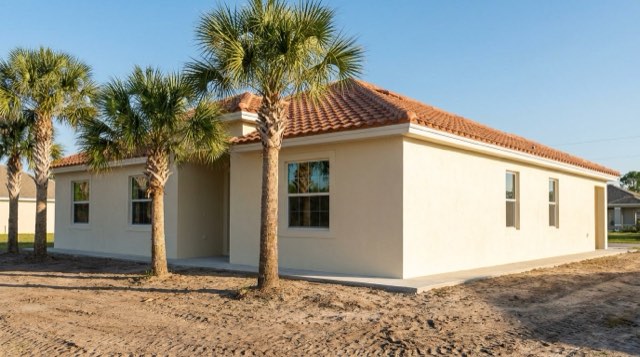
Stucco Installation
New three-coat stucco over frame or block
Learn more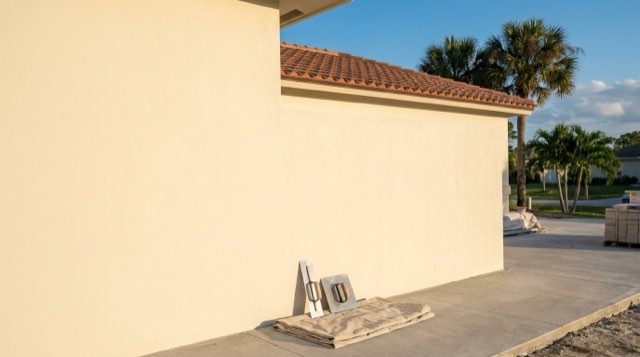
Stucco Repair
Cracks, spalling, bulges, and failed patches
Learn moreRestucco
Whole-house re-stucco, remove and replace
Learn more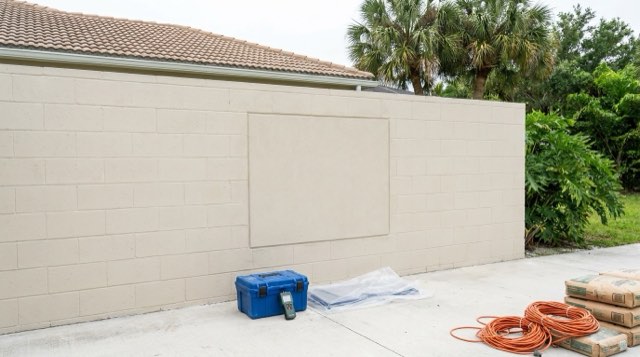
Stucco Remediation
Moisture intrusion and rotted substrate
Learn more
EIFS / Synthetic Stucco
Installation, inspection, and repair
Learn more
Decorative Stucco Finishes
Sand, lace, knockdown, smooth, and Santa Barbara
Learn more
Lath and Plaster
Wire lath, scratch and brown coat
Learn more
Stucco Painting and Coatings
Elastomeric and breathable coatings
Learn more
Stucco Waterproofing and Sealing
Sealants, flashing details, and weather barriers
Learn more
Block and Foundation Stucco
CMU parge coats and stem wall finishes
Learn more
Commercial Stucco
Multi-family, retail, and light commercial
Learn more
Commercial Stucco Repair
Scheduled maintenance and facade repair
Learn moreStraight answer on your wall.
Call, or send the form and we will get you a written price.