Stucco Waterproofing and Sealing in Port St. Lucie, FL
Water does not come through the middle of a stucco wall. It comes in at the edges, the openings and the terminations. That is where waterproofing work belongs.
Request a quote
Four questions, about a minute. We'll call you back.
Stucco Is a Reservoir Wall
Cement stucco absorbs water. That is normal and it always has been. During a Treasure Coast squall a wall takes on moisture, and over the days after it gives that moisture back to the air. The system is designed around wetting and drying, not around staying dry.
What has to be controlled is bulk water reaching the things behind the stucco. Sheathing, framing, window frames, the base of a block wall. Waterproofing a stucco house means managing the joints and transitions where bulk water can get past the face, and making sure anything that does get past has a way out.
Where Water Actually Gets In
After enough leak calls the list stops surprising anyone. It is almost never the field of the wall.
Wind driven rain is the local variable that makes all of these worse. Rain arriving horizontally at pressure will drive uphill into a lap and sideways into a joint that would never leak in a calm shower. That is why a house can be fine for years and then leak in one storm.
- Window and door perimeters where the sealant has failed or was never installed correctly
- The roof to wall junction where a roof edge dies into a wall with no kick-out flashing
- Window head flashing that was omitted or not lapped into the weather barrier
- Penetrations: hose bibs, dryer vents, electrical, AC line sets, light boxes, satellite anchors
- Bottom of wall where grade, mulch or a slab pour has buried the weep screed
- Deck and railing attachments bolted through the stucco face
- Control joints and cold joints that were caulked over instead of detailed
- Parapet and band tops with no slope, holding water on a flat surface
Sealant Joints Done Right
A caulk joint is a piece of engineering, not a bead of goo. It has to stretch and compress as the opening moves, and to do that it needs the right shape. Backer rod goes in first to set the depth and keep the sealant from bonding to the back of the joint. The sealant should be roughly twice as wide as it is deep, tooled into an hourglass profile, bonded to two faces only.
Three sided adhesion is the classic failure. Sealant stuck to the back of the joint cannot stretch, so the first real thermal cycle tears it, usually right along one edge where you will not notice for a year.
Product class matters too. Cheap acrylic latex caulk has limited movement capability and hardens in Florida sun. Polyurethane and high performance silicone sealants carry much higher movement ratings and hold up to UV and salt air. The extra cost per tube is trivial against opening a wall to chase a leak.
Kick-Out and Head Flashing
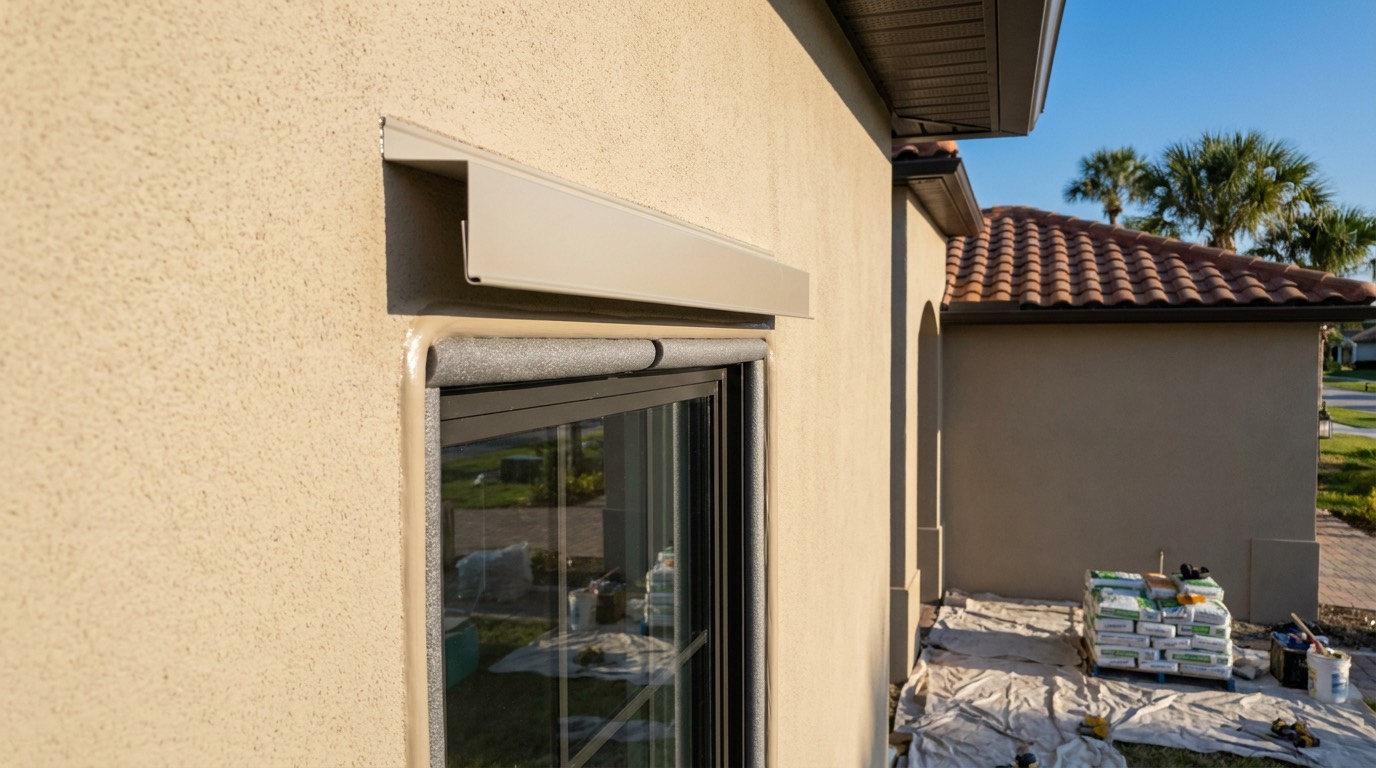
Kick-out flashing is the single most valuable piece of metal on a stucco house, and it is missing constantly. Where a sloped roof runs into a vertical wall and ends at the gutter line, all the water running down that roof to wall intersection arrives at one point. Without a kick-out diverting it out into the gutter, it runs straight down behind the stucco.
The damage is hidden and it is slow. Rotted sheathing, rusted lath, and a wall that looks fine from the street until someone pushes on it. Adding a kick-out later means opening the stucco at that corner, installing the flashing properly lapped into the barrier, and re-plastering. It is not a caulk job.
Head flashing over windows and doors follows the same logic. Metal above the opening, turned up behind the weather barrier, with end dams so water cannot run off the ends and back into the wall. Flashing has to shed onto the layer below it. Anywhere that shingle logic is broken, water goes inward instead of out.
Weep Screed and Ground Clearance
The weep screed at the base of a framed stucco wall is the drain. Water that gets behind the stucco runs down the barrier and exits at the screed. Block the exit and the water backs up into the bottom of the wall.
The clearance rule is straightforward: the screed needs to sit a minimum of about four inches above earth, and about two inches above paved surfaces like driveways, patios and walkways. We check that on every waterproofing inspection and we find it violated all the time on Port St. Lucie homes.
The usual culprits are landscaping and hardscape added after the house was built. Mulch piled to the wall. A flowerbed raised eight inches. A new paver patio poured tight to the stucco. Each of those buries the drain. Fixing it can mean regrading, cutting the stucco back, or installing a trench detail to restore clearance.
Coatings Are a Second Line, Not a Cure
Homeowners often call asking to have the house sealed. It is worth being clear about what that does and does not do. A quality water repellent or high build coating reduces how much water the wall face absorbs, and that is genuinely useful. It does nothing about a missing kick-out or a torn barrier.
There is also a real risk in over sealing. On a concrete block house, the outside face of the wall is often the main drying path. A low permeability coating applied over a wall that is already taking on water traps that moisture, and it comes back as blistering, efflorescence and interior damage.
Our order of operations is fixed. Correct the flashing and terminations. Rebuild the sealant joints. Repair cracks and hollow stucco. Then, if it makes sense, apply a breathable water repellent or coating as a secondary defense.
Checking a Wall Before Storm Season
The right time to find a bad joint is not during a named storm. A walk around before the season catches most of what matters, and a lot of it is visible from the ground.
Look for cracked or pulled sealant at windows, dark staining below a roof to wall corner, soil or mulch touching the stucco, rust bleed, hollow sounding spots when you tap the wall, and any interior staining at a window head or a corner after a hard rain. Interior stains that only appear when the rain arrives from one direction are a strong sign the entry point is on that elevation.
When the source is not obvious, testing works better than guessing. Spray testing an elevation from the bottom up, one detail at a time, isolates the entry point without opening a wall on a hunch.
Stucco Waterproofing and Sealing across our area
All areas →Questions about stucco waterproofing and sealing in Port St. Lucie
My window only leaks in wind driven rain, not in normal rain. Why?
That pattern points to a gap that needs pressure to matter. Vertical rain runs down the face and past the joint. Rain driven horizontally is pushed into openings and up under laps. Failed perimeter sealant, a missing head flashing, or an unsealed corner joint in the window frame itself will all behave this way. The good news is that the direction of the storm usually tells us which elevation to test.
How often should the caulking on my stucco be redone?
It depends on the product that was used. Basic acrylic caulk in Florida sun and salt air can start failing in a few years. A properly installed polyurethane or high performance silicone joint with backer rod should last significantly longer. Rather than working to a calendar, inspect the joints yearly for cracking, shrinkage or separation at one edge, and replace them before storm season when they show it.
Can you just caulk a crack in my stucco wall?
Only for certain cracks. A moving joint, such as a control joint or the perimeter of an opening, is meant to be sealed with a flexible sealant. A shrinkage or structural crack in the field of the wall is a repair, not a caulking job, and caulk smeared across it stays visible and traps water at the edges. We open field cracks, fill them with a compatible patching material, and re-texture.
Should I seal the whole wall to waterproof my house?
Be careful with that. Blanket sealing a block house with a low permeability product can trap moisture that is entering from below or through failed details, and trapped moisture causes blistering and interior damage. Breathable water repellents are a reasonable secondary layer once the flashing, joints and drainage are correct. They are not a substitute for those things.
Do you have to remove stucco to fix flashing?
For real flashing work, usually yes, at least locally. Flashing has to be tucked behind the weather barrier so water sheds over it, and that means cutting the stucco back at that detail. Anything applied on top of the finished surface is a surface patch that will fail. We keep the cut as tight as the detail allows and re-plaster and texture to match.
Other services
All services →
Stucco Installation
New three-coat stucco over frame or block
Learn more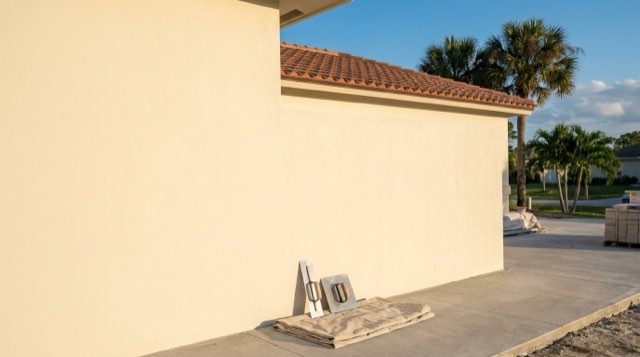
Stucco Repair
Cracks, spalling, bulges, and failed patches
Learn moreRestucco
Whole-house re-stucco, remove and replace
Learn more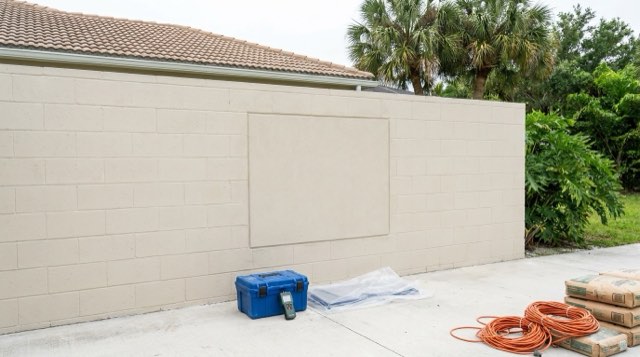
Stucco Remediation
Moisture intrusion and rotted substrate
Learn more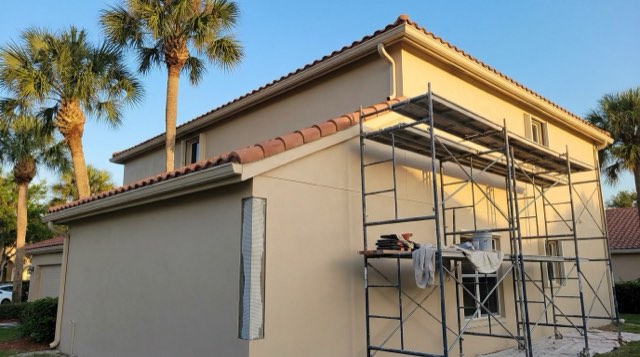
EIFS / Synthetic Stucco
Installation, inspection, and repair
Learn more
Stucco Resurfacing
Refinishing tired or mismatched walls
Learn more
Decorative Stucco Finishes
Sand, lace, knockdown, smooth, and Santa Barbara
Learn more
Lath and Plaster
Wire lath, scratch and brown coat
Learn more
Stucco Painting and Coatings
Elastomeric and breathable coatings
Learn more
Block and Foundation Stucco
CMU parge coats and stem wall finishes
Learn more
Commercial Stucco
Multi-family, retail, and light commercial
Learn more
Commercial Stucco Repair
Scheduled maintenance and facade repair
Learn moreStraight answer on your wall.
Call, or send the form and we will get you a written price.