Lath and Plaster in Port St. Lucie, FL
Frame walls need lath before they can hold stucco. We install the weather barrier, the wire, the accessories and the scratch and brown coats that everything else on the wall depends on.
Request a quote
Four questions, about a minute. We'll call you back.
Where Lath Work Comes Up Here
Most of Port St. Lucie is concrete block, and block takes stucco directly. Lath work shows up wherever the wall is not block. Second story wood framing, room additions, garage bump outs, gable ends, soffits and eave returns, chimney chases, and any framed wall on an older Treasure Coast house.
It also comes up on repair jobs. When we open a wall and find the wire rusted through or the paper missing behind it, the stucco above it is finished regardless of how it looks from the street. That section gets stripped back to framing and rebuilt.
What Goes on Before the Wire
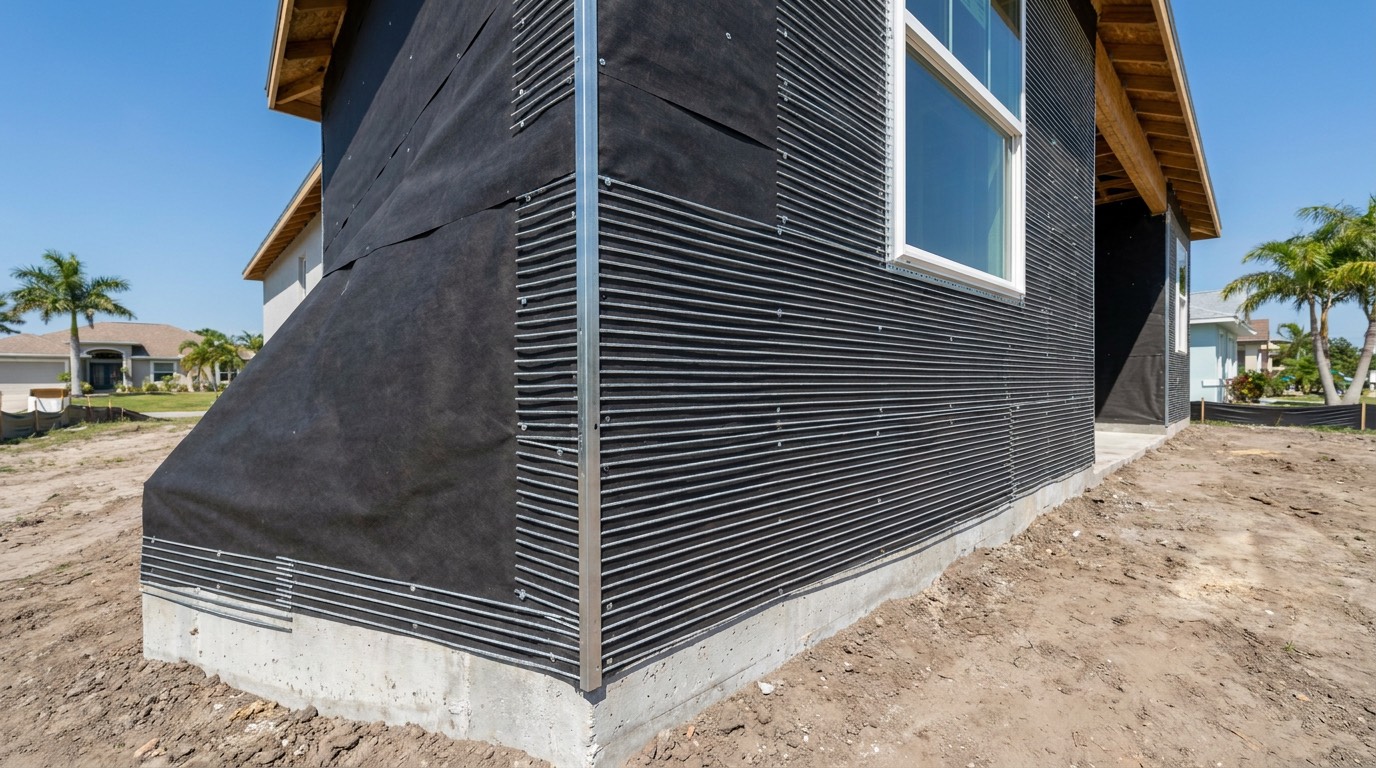
Three coat stucco over framing is a drainage assembly. It is not meant to be watertight on its face. Water that gets past the stucco is supposed to hit a barrier, run down it, and leave the wall. That barrier has to be continuous and it has to be lapped correctly, shingle style, so every upper layer sheds onto the one below.
Two layers of building paper is the traditional build over sheathing, and there is a reason for it. Fresh plaster sticks to the first layer and pulls it tight against the wall. The second layer stays free to drain. Skip it and you can lose the drainage plane that the whole system rests on.
- Continuous water resistive barrier over sheathing, lapped from the bottom up
- Second separation layer so the plaster does not bond to the drainage plane
- Flashing tied into the barrier at every window head, sill and penetration
- Weep screed at the base of the wall, set at the correct height above grade
- Casing bead where stucco stops at a different material
- Control joints laid out before any wire goes up
Hanging the Lath
Wire lath has to be furred off the wall so plaster pushes through and wraps the wire from behind. Wire pinned flat against the paper is the single most common lathing mistake we find. The plaster sits on top of it instead of encasing it, and the panel has no real reinforcement.
Fasteners go into framing members on a set spacing, not into sheathing alone. Sheets lap along the sides and ends and the laps get tied. At inside and outside corners, we run the wire continuous around the corner rather than butting two sheets at the exact point where the wall wants to crack.
Every fastener and every accessory in coastal air needs to be corrosion resistant. Salt air on the Treasure Coast will find an unprotected staple, and rust stains bleeding through a finished wall means the wire behind it is going the same way.
Scratch Coat
The scratch coat is the first plaster application. It is pressed hard into the lath so the material squeezes through the mesh and locks behind it. That mechanical key is the entire reason the stucco stays on a framed wall.
Once it firms up, the surface gets raked horizontally with a scarifier. Those grooves give the brown coat something to grab. A scratch coat that was troweled smooth instead of scratched is a delamination waiting to happen, and it usually shows up years later as a hollow section that sounds like a drum when you tap it.
Brown Coat and Float
The brown coat brings the wall to thickness and to plane. This is the layer that makes a wall look straight, and it is where a good plasterer earns the money. We rod it off the accessories, fill the hollows, cut the high spots, and float it to an even, open surface.
Float finish matters for what comes next. The brown coat should be uniform in suction and slightly open, not burnished tight. A hard, closed surface will not pull the finish coat in evenly, and the finish will dry blotchy or fail to bond.
Total thickness over metal lath is nominally three quarters of an inch on vertical walls, built up across scratch and brown. Thin spots crack. Thick spots sag and shrink more than their neighbors.
Curing in Florida Heat
Portland cement plaster does not dry, it hydrates. It needs water in the mix long enough to gain strength. In Port St. Lucie in July, a south facing wall with sun and wind on it can pull the water out of a fresh coat in an afternoon. What you get is a coat that looks set but never developed strength, and it crazes and dusts.
We moist cure. That means fogging the wall on a schedule, working the shaded elevations during the hottest part of the day, and giving each coat time before the next one goes on. Rushing the interval between scratch and brown is how you get shrinkage cracking that telegraphs all the way through the finish.
Humidity here helps and hurts. High humidity slows drying, which is good for cure, but it also stretches the schedule and makes afternoon storms a real scheduling factor from June through October.
Where Lath Jobs Go Wrong
Almost every lath failure we get called to inspect traces back to one of a short list of shortcuts. None of them are visible once the finish coat is on, which is exactly why they happen.
If you are getting bids, ask what goes behind the wire, what the fasteners are, and where the control joints are going. A contractor who has a straight answer for all three is building the wall correctly.
- Wire nailed flat to the wall with no furring, so plaster never keys behind it
- Single layer barrier, or laps run the wrong direction
- No kick-out flashing where a roof edge meets a wall
- Weep screed buried in soil, mulch or a new driveway pour
- Scratch coat troweled smooth instead of scratched
- Control joints left out on long runs and at floor lines
- Fasteners and accessories that are not rated for coastal exposure
What lath and plaster work costs in Port St. Lucie
Lath and three coat plaster is priced by the square foot of wall. Stripping a failed framed wall and rebuilding it lands in the same band as new work, because the wall gets built the same way either time. Small repairs are priced by the area that has to be opened up, with a minimum for the visit.
| New three coat stucco over framing, lath through finish | $9 to $15 per square foot of wall |
|---|---|
| Failed framed wall stripped to sheathing and rebuilt | $9 to $15 per square foot of wall |
| Small section of rusted lath cut out and rebuilt | $10 to $25 per square foot of patched area |
| A larger continuous area of failed lath and plaster | $8 to $15 per square foot of patched area |
| Minimum for a small lath and patch visit | $350 to $750 |
What moves the number
- Wall area and how many framed elevations are in the job
- Height and access, since gable ends, soffits and second story walls need staging
- Whether old material has to come off and what the sheathing looks like underneath
- Flashing and accessory scope, from kick-outs and head flashing to weep screed and control joints
- Detail work, meaning soffits, eave returns, arches, bands and transitions onto block
- Finish texture chosen once the brown coat is up
These are ranges rather than a quote, because what a framed wall costs depends on what is behind the old material when it comes off. Call (772) 251-6654 or send the form and we will put it in writing.
Questions about lath and plaster in Port St. Lucie
How long does a three coat stucco job take?
Lathing a typical addition or elevation runs a day or two. After that the schedule is driven by cure, not by labor. Scratch coat needs time before brown coat, and brown coat needs time before the finish. Plan on a couple of weeks from start to finish for a normal residential wall, longer if weather interrupts and longer still on a full house.
Can lath and stucco go over existing siding?
We do not recommend it. Furring lath over old siding leaves you guessing about the condition of the sheathing and the barrier behind it, and the added thickness throws off window and door trim depths. Stripping to sheathing lets us verify the framing, install a proper barrier and flashing, and set the accessories at the right depth.
Do block walls need wire lath too?
A sound block wall does not, because plaster bonds directly to the masonry. Lath is added on block only where bond is unreliable, such as over painted or sealed block, over patched areas of mixed material, or where stucco has to cross from block onto a framed section. That transition line is a common crack point, so the lath is run across the joint rather than stopped at it.
Why does new stucco crack?
Some fine crazing is normal shrinkage as cement plaster cures. Structural cracking is different. Straight cracks running from window corners, long horizontal cracks at floor lines, and diagonal cracks over a header point to movement, missing control joints, or a base coat that dried too fast. The pattern usually tells us which one it is before we open anything up.
Does the lath assembly matter for wind and storm exposure?
Yes. Fastener type and spacing, lath weight, and how the assembly is tied into the framing all matter for wind resistance, and inspections here look at them. Just as important on the Treasure Coast is what happens after wind driven rain gets behind the finish. A properly lapped barrier and correct flashing let that water drain out instead of sitting against sheathing.
Other services
All services →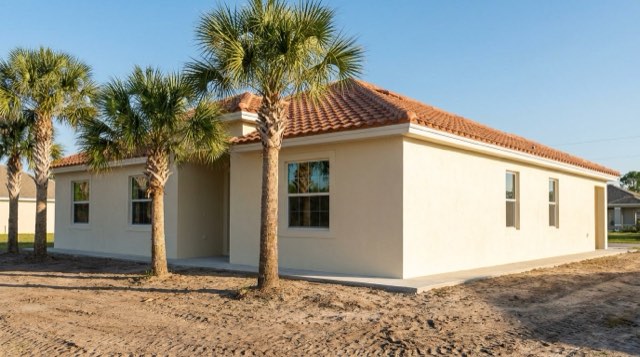
Stucco Installation
New three-coat stucco over frame or block
Learn more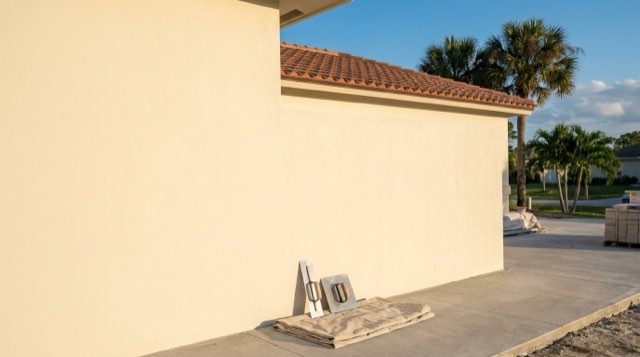
Stucco Repair
Cracks, spalling, bulges, and failed patches
Learn moreRestucco
Whole-house re-stucco, remove and replace
Learn more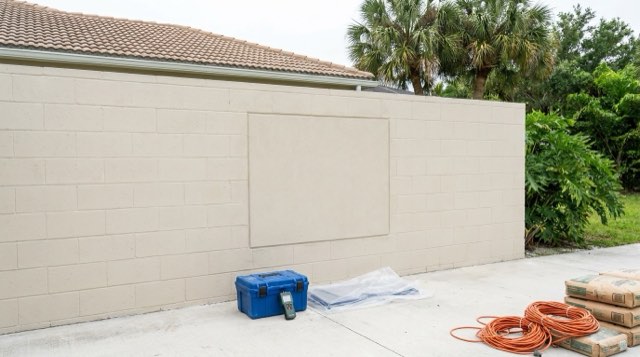
Stucco Remediation
Moisture intrusion and rotted substrate
Learn more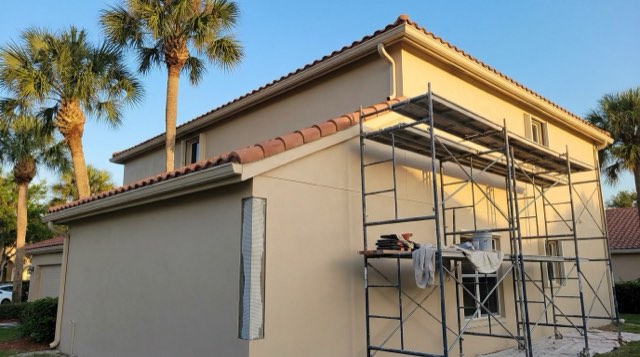
EIFS / Synthetic Stucco
Installation, inspection, and repair
Learn more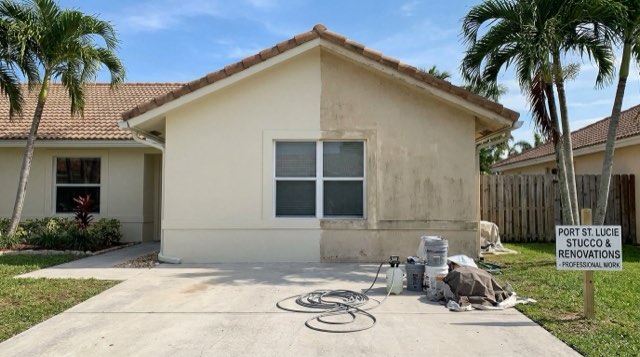
Stucco Resurfacing
Refinishing tired or mismatched walls
Learn more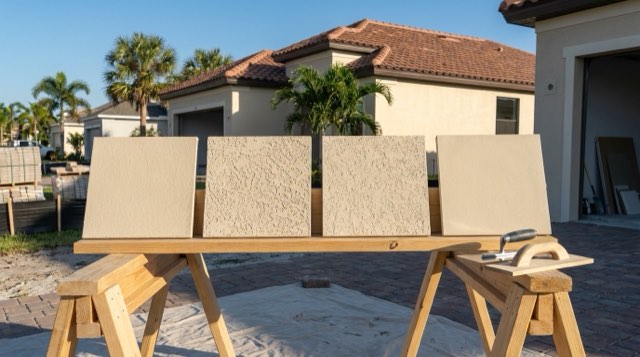
Decorative Stucco Finishes
Sand, lace, knockdown, smooth, and Santa Barbara
Learn more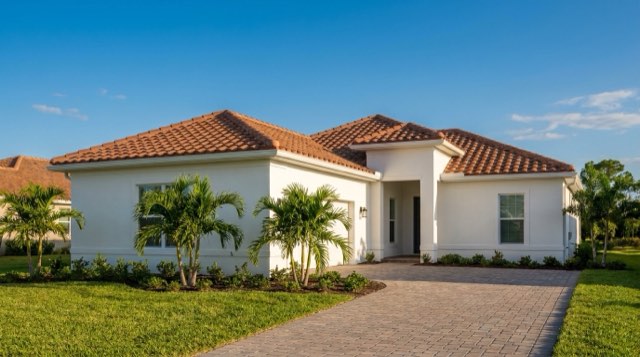
Stucco Painting and Coatings
Elastomeric and breathable coatings
Learn more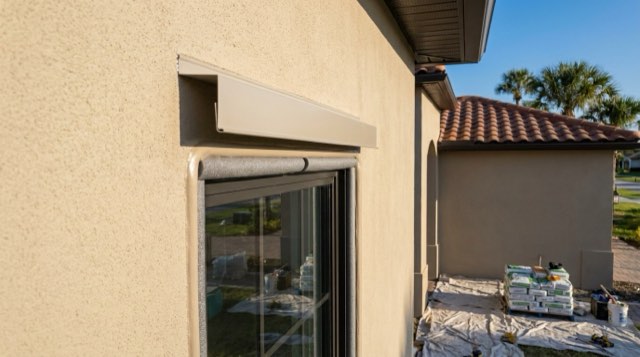
Stucco Waterproofing and Sealing
Sealants, flashing details, and weather barriers
Learn more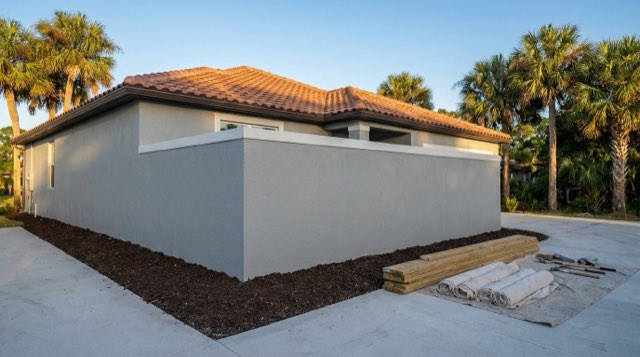
Block and Foundation Stucco
CMU parge coats and stem wall finishes
Learn more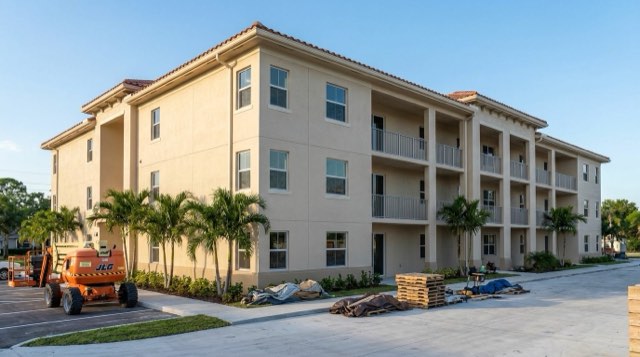
Commercial Stucco
Multi-family, retail, and light commercial
Learn more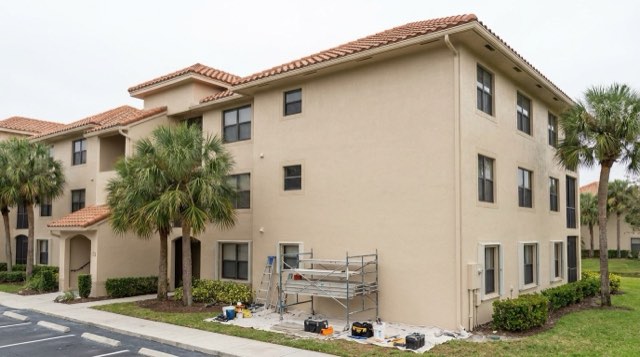
Commercial Stucco Repair
Scheduled maintenance and facade repair
Learn moreStraight answer on your wall.
Call, or send the form and we will get you a written price.