Stucco Contractors in Port St. Lucie, FL
We repair, patch, re-coat, and install stucco on block and frame homes in Port St. Lucie and across the Treasure Coast. Free written quotes, licensed and insured.
Request a quote
Four questions, about a minute. We'll call you back.
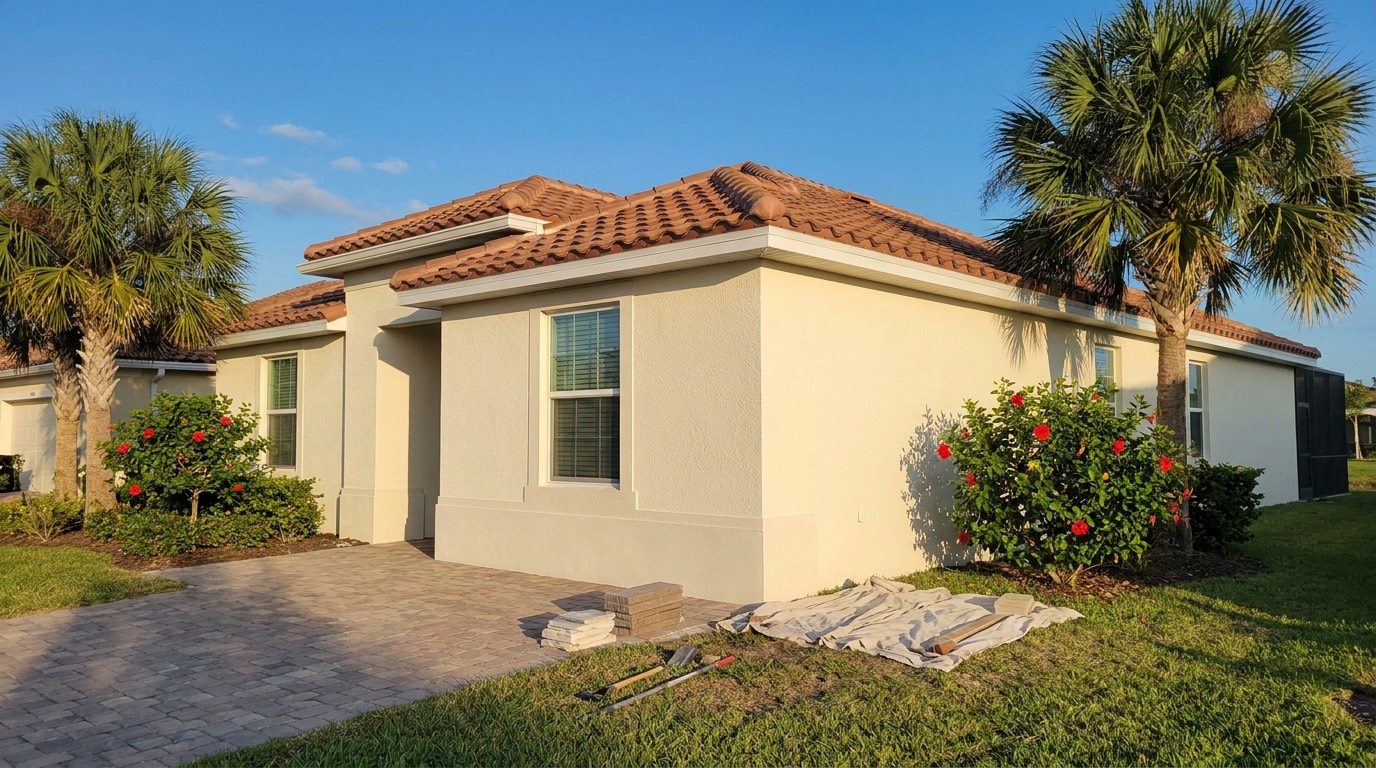
What we do
All services →Repair work, full restucco, and new stucco on homes and small commercial buildings across St. Lucie and Martin counties.
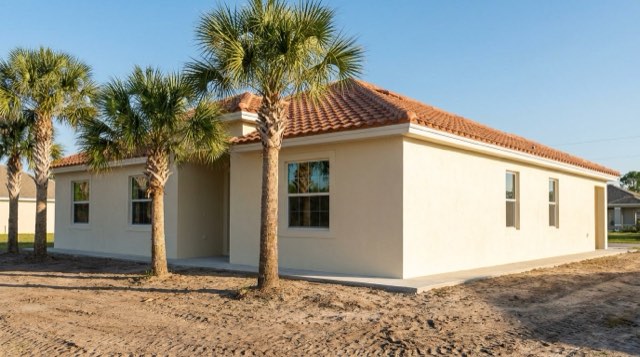
Stucco Installation
New three-coat stucco over frame or block
Learn more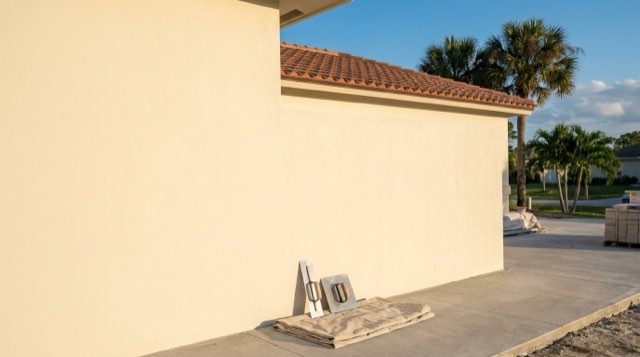
Stucco Repair
Cracks, spalling, bulges, and failed patches
Learn more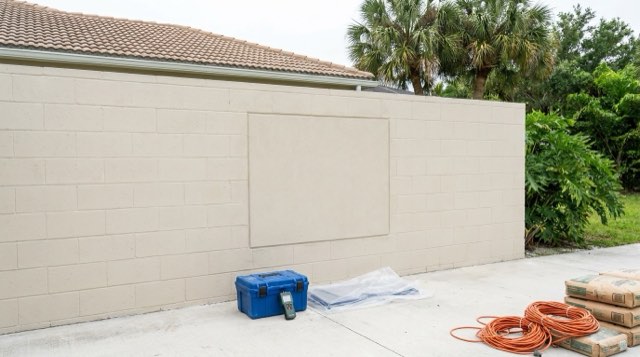
Stucco Remediation
Moisture intrusion and rotted substrate
Learn more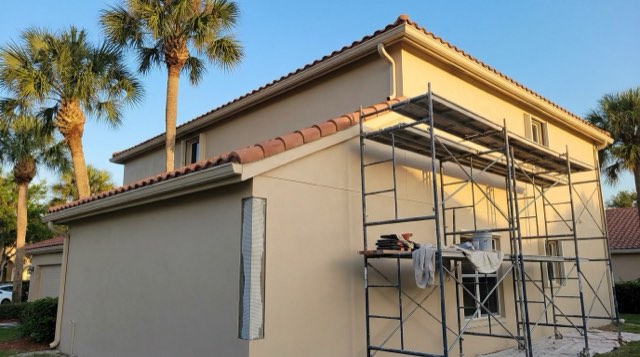
EIFS / Synthetic Stucco
Installation, inspection, and repair
Learn more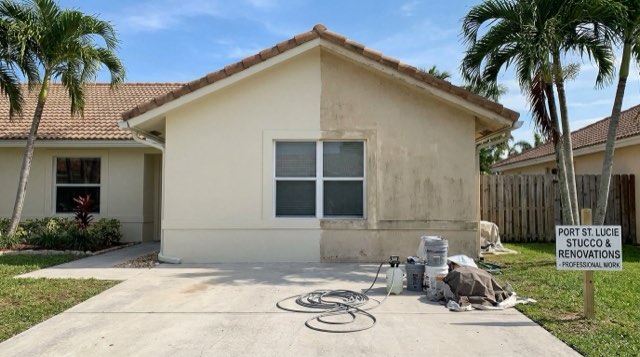
Stucco Resurfacing
Refinishing tired or mismatched walls
Learn more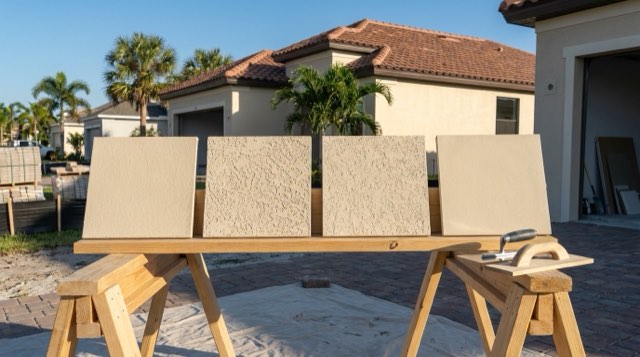
Decorative Stucco Finishes
Sand, lace, knockdown, smooth, and Santa Barbara
Learn more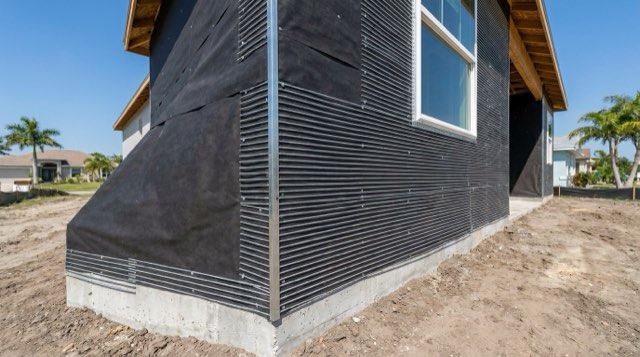
Lath and Plaster
Wire lath, scratch and brown coat
Learn more
Stucco Painting and Coatings
Elastomeric and breathable coatings
Learn more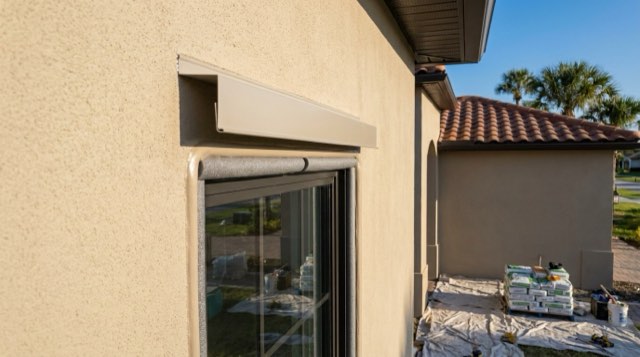
Stucco Waterproofing and Sealing
Sealants, flashing details, and weather barriers
Learn more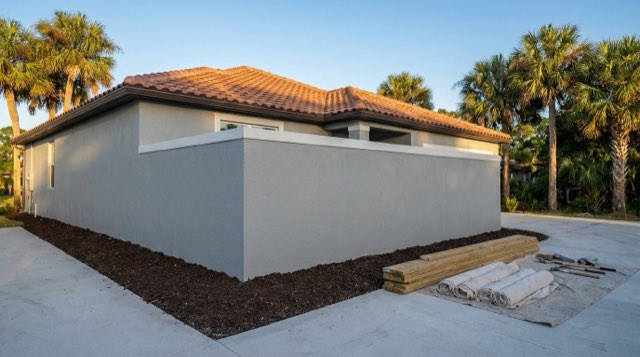
Block and Foundation Stucco
CMU parge coats and stem wall finishes
Learn more
Commercial Stucco
Multi-family, retail, and light commercial
Learn more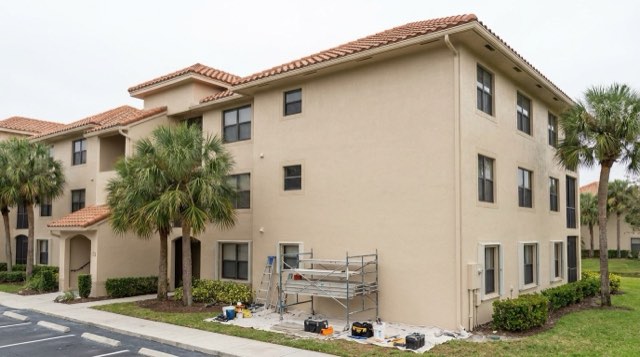
Commercial Stucco Repair
Scheduled maintenance and facade repair
Learn moreHow it works
- Call or send the formTell us what you are seeing on the wall and where the house is.
- We look at the wallWe check the substrate, sound the surface for hollow spots, and read the crack pattern.
- Written quoteScope, materials, and price in writing before anyone starts.
- We do the workWe protect the landscaping, keep the site clean, and haul off the debris.
What the Treasure Coast climate does to stucco
Most houses in this part of Florida are concrete block with a cement stucco skin over the block. That stucco is not decoration. It is the weather layer of the wall, and here it works hard. Salt air, heat, constant humidity, and wind-driven rain during storm season all land on the same surface.
Block and stucco move slightly as they heat, cool, and take on moisture. That movement shows up as fine hairline cracking, and by itself it is normal. What is not normal is a crack that keeps opening, a hollow sound when you tap the wall, or staining that bleeds back through fresh paint. Those signs point to water getting behind the stucco. Once water is back there, it does not dry out on its own in a humid climate.
- Fine map cracking across a large wall field
- Cracks running diagonally out of window and door corners
- Hollow or drummy spots when you tap the surface
- Paint blistering, bubbling, or peeling in patches
- White chalky residue bleeding through the finish
- Rust staining at lintels, corner bead, or fasteners
- Soft or crumbling stucco near the bottom of the wall
Stucco repair: hairline cracks and structural cracks are not the same problem
Hairline cracks are cosmetic. They usually come from shrinkage during the original cure or from normal thermal movement. They get cut out, filled, blended into the surrounding texture, and coated. That is a straightforward repair.
Structural cracks are wider, they follow a line, and they often step down along the block joints or run at an angle from an opening. Those are telling you something is moving or something is wet. Filling one without dealing with the cause buys a season and then reopens in the same place. We read the crack pattern first and tell you which one you have.
Where the substrate is sound, we cut back to solid material, patch in coats, and match the existing texture. Where a wall has failed over a large area, we will say so and price a re-coat instead of selling a patch we already know will come back.
Restucco, re-coat, and elastomeric coatings
When a wall has cracking everywhere instead of in one spot, patching stops making sense. A restucco or re-coat puts a new finish over the whole elevation so the texture and color are uniform and there is no patchwork showing through the paint.
Elastomeric coatings get talked about a lot in Florida, and they do have a place. They build a much thicker film than standard house paint and they can bridge fine hairline cracking, which is why they hold up on block walls. They are not a cure-all. Applied over a wall that is delaminated or actively taking on water, elastomeric traps the moisture instead of solving it.
- Good for hairline cracking on a sound, well-bonded wall
- Builds a thicker, more flexible film than standard exterior paint
- Not a fix for structural cracks or hollow, delaminated stucco
- Needs a clean, dry, properly prepped surface to bond
- New stucco has to cure before any coating goes on
New stucco and the three-coat process
Traditional stucco goes on in three coats, and each one has a job. Rushing the sequence or skipping the cure is where most premature cracking comes from.
On block, the first coat bonds directly to the masonry. On frame walls, lath goes over the sheathing and weather barrier first, and the first coat keys into that lath. Either way, the wall needs time between coats and needs to be kept damp while it cures. In this heat, a wall that dries too fast cracks.
- Scratch coat. The bond coat. It is scored so the next coat grips it.
- Brown coat. The thickness and the flat plane. This is the coat that makes the wall straight.
- Finish coat. The texture and the look, matched to the rest of the house.
- Cure time. Kept damp and given time before paint or coating goes on.
Stucco over block, stucco over frame, and EIFS
Most of what we touch here is cement stucco over concrete block. Block is the standard wall assembly for Florida homes, and stucco over block is the most durable version of this work when it is done right.
Frame walls are a different detail. Stucco over wood or metal framing needs a weather-resistive barrier and lath behind it, and the flashing at windows, doors, and roof-to-wall transitions matters more than the stucco itself. Most water problems on frame walls start at a detail, not in the field of the wall.
EIFS, sometimes called synthetic stucco, is a different system entirely. It is foam board with a thin acrylic finish over a mesh, not cement over masonry. It looks similar from the street but repairs, drainage, and impact resistance all behave differently. If you are not sure which one you have, tapping the wall usually tells the story. EIFS sounds hollow and soft. Cement stucco over block sounds solid.
Where we work
All areas →We work throughout the Treasure Coast.
Common questions about stucco in Port St. Lucie
How do I know if a stucco crack is serious?
Width, pattern, and location. Fine cracks scattered across a wall are usually shrinkage or thermal movement and are cosmetic. A crack you can catch a fingernail in, one that runs diagonally from a window or door corner, or one that steps down along the block joints is worth looking at properly. Cracks paired with hollow-sounding stucco or stains bleeding through paint mean water is involved.
Can you match my existing stucco texture?
In most cases, yes. Knockdown, sand, dash, and smooth finishes can all be matched by hand, and we work a patch out past the repair so the transition is not a visible rectangle. Older or heavily weathered finishes are harder to blend invisibly. If we think a patch will always read as a patch on that wall, we will tell you up front and price coating the full elevation instead.
What is the white chalky residue on my stucco?
That is efflorescence. Water moves through the block and stucco, dissolves salts in the masonry, and leaves them on the surface as it evaporates. The powder itself is harmless, but it is evidence that moisture is moving through the wall. Cleaning it off without finding the water source just means it comes back.
Do I have to repaint the whole wall after a repair?
Usually the full elevation, yes. Fresh stucco and cured paint almost never match in color or sheen, so touching up just the patch tends to leave a visible spot. Painting corner to corner on that wall gives you a uniform finish. We will lay out both options in the quote so you can decide.
How long does new stucco need to cure before it is painted?
Cement stucco needs real cure time before any coating goes over it, and it needs to be kept damp while it cures rather than allowed to dry out fast in the sun. Paint applied too early can trap moisture and lead to peeling or efflorescence later. The exact window depends on the coats, the weather, and the coating manufacturer's requirements. We will give you the timeline for your job in writing.
Can stucco work be done during the summer rainy season?
Yes. Stucco work runs year-round in this climate. Rain is a scheduling issue, not a stopper. We plan around the afternoon storms, cover fresh work, and avoid applying finish or coatings when rain is coming before the surface can set.
What areas do you cover?
Port St. Lucie including St. Lucie West and Tradition, plus Fort Pierce, Stuart, Jensen Beach, Palm City, Port Salerno, Hobe Sound, Vero Beach, and Sebastian. If you are near the edge of that range, call and ask. We will tell you straight whether we cover your address.
Straight answer on your wall.
Call, or send the form and we will get you a written price.