How Long Stucco Takes to Cure in Florida Humidity
Cement stucco does not dry, it cures. Here is what happens coat by coat, why Florida humidity helps the chemistry and hurts the schedule, and why coating a wall early is the most expensive week you can save.
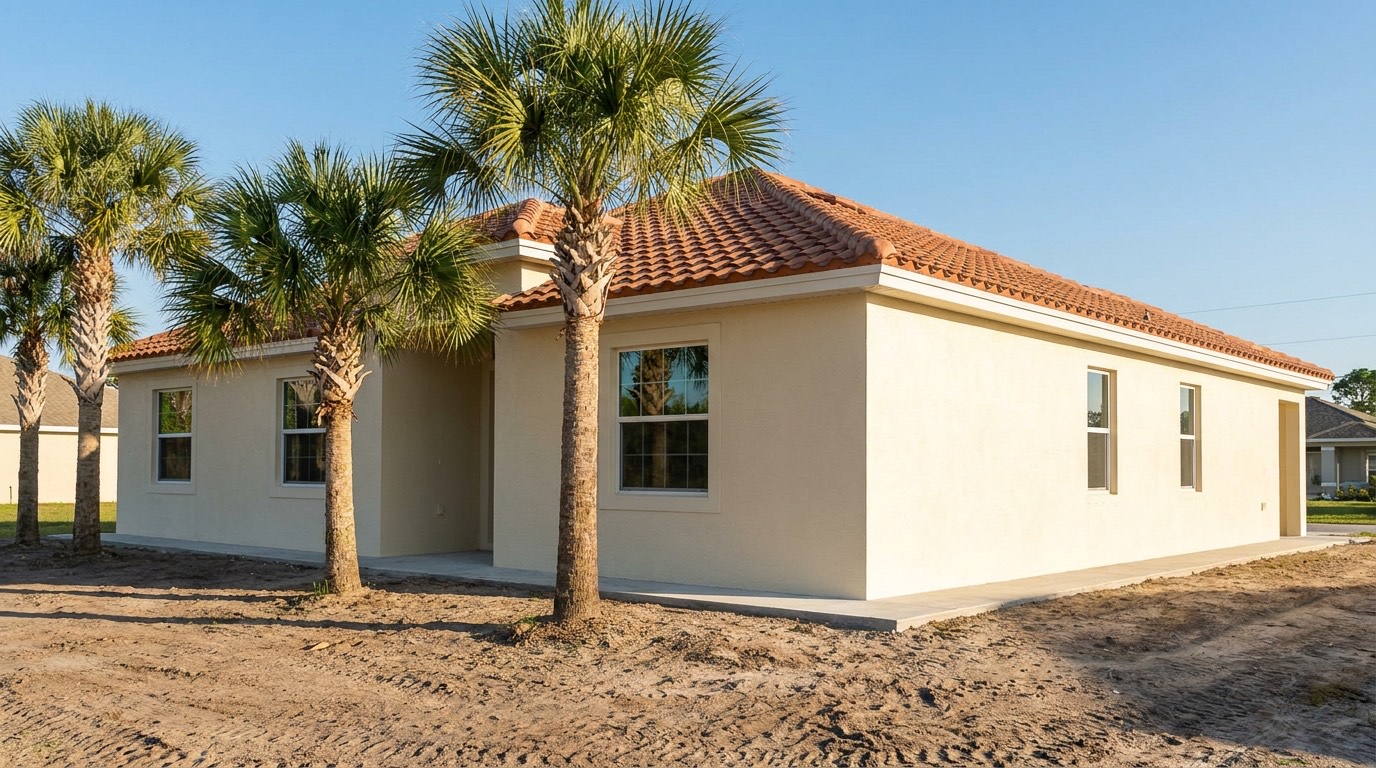
Curing and drying are two different things
This is the part that trips people up. Cement stucco does not harden by drying out. It hardens through hydration, a chemical reaction between the cement and the water in the mix. The water is not something to get rid of. It is an ingredient, and the reaction needs it to keep going.
Drying is what happens afterward, when the leftover moisture works its way out of the wall. A wall can feel dry on day two and be nowhere near done curing. It can also be fully cured and still hold enough moisture to wreck a paint job.
Separate those two ideas and most of the Florida timeline questions answer themselves. Humidity slows drying and helps the cure. Sun and wind speed drying and hurt the cure. The whole job is managing that tension.
Coat by coat, what the timeline looks like
On a traditional three coat system the sequence is scratch, brown, then finish, and each one has its own window. The scratch coat goes on, gets raked horizontally so the next coat has something to key into, and is generally given somewhere around 24 to 48 hours before the brown coat follows. In this climate it is usually closer to the short end because the wall stays damp on its own.
The brown coat is the one people rush. Traditional guidance calls for something in the range of seven days of moist cure before the finish coat goes on, because that is when most of the shrinkage happens. If the finish goes on over a brown coat that is still moving, the finish cracks along with it. That is the single most common cause of fine map cracking on new work.
The finish coat sets fast at the surface and keeps gaining strength for weeks. It is hard to the touch in a day and it will handle rain the next day. It is not done. Cement keeps hydrating for a long time after it stops feeling wet.
- Scratch coat: commonly 24 to 48 hours before the brown coat
- Brown coat: traditionally around seven days of moist cure before the finish coat
- Finish coat: surface hard in about a day, still curing for weeks
- Full cure: cement reaches most of its design strength around the 28 day mark
- One coat and two coat systems over block run shorter, but the finish still needs its cure before coating
Want a price for your own wall?
Four quick questions and we come back with a written quote. Or call (772) 251-6654 if that is faster.
Request a quote
Four questions, about a minute. We'll call you back.
Why humidity slows drying and helps the cure
Along the Treasure Coast the air holds a lot of moisture for most of the year, and in the wet season it holds a lot of moisture around the clock. That means evaporation off a fresh wall is slow. Water stays in the material longer, hydration keeps running longer, and the stucco ends up denser and stronger than the same mix would be in a dry climate.
That is genuinely good for the wall. What it costs you is time on the back end. A wall in Port St. Lucie in August holds surface moisture well past the point where the same wall in a dry climate would be ready for primer. The cure is finished. The wall is just still wet.
It matters most on shaded north elevations, walls under deep soffits, and anything behind landscaping that blocks air movement. Those are the spots that read as ready and are not.
Why heat and sun work against you
Direct Florida sun does the opposite of humidity. It drives water out of the surface of a fresh coat faster than the material can use it. The face flashes off and sets while the material behind it is still soft and still shrinking. That mismatch shows up as plastic shrinkage cracking, a chalky weak surface, and a texture that will not knock down evenly because half the wall skinned over before the trowel got there.
This is why crews here rotate elevations through the day. West and south walls in the morning, east walls in the afternoon. It is also why a hot breezy day can be harder on fresh stucco than a hot still day. Wind pulls moisture out of a wall about as effectively as sun does, and it does it without warning you. None of that is a reason to avoid summer work. It is a reason to insist on shade rotation and misting.
Moist curing, and why we wet a wall down
Moist curing means deliberately keeping the wall damp during the cure so hydration can run to completion. On a fresh scratch or brown coat that usually looks like fogging the surface with a light spray, often more than once a day, especially in the dry season or on a sun-exposed elevation.
It looks like extra work for no visible result, which is exactly why it gets skipped. The result shows up two years later as a wall that resists hairline cracking versus one that maps out across every field.
There is a related step at the front end on block. Concrete block has enormous suction. A dry CMU wall will pull the water straight out of a scratch coat the moment it hits, which starves the mix and kills the bond. So the block gets dampened before anything goes on it. Damp, not soaked, and not with standing water on the face.
- Dampen dry block before the scratch coat so the wall does not steal water from the mix
- Fog fresh coats rather than hosing them, especially in the first two days
- Mist more often on sun-exposed and windy elevations
- Do not wet a finish coat that has not set, and do not wet anything before a coating goes on
- Shade cloth or a windbreak is sometimes cheaper than fighting evaporation
The 28 day rule before paint
The common guidance for cement stucco is to wait roughly 28 days before painting. Two things are happening in that window. The cement is reaching most of its strength, and the alkalinity of the fresh surface is dropping.
That second one is the reason people get burned. Fresh stucco is highly alkaline. Put an ordinary exterior paint on a surface that is still hot chemically and the alkali attacks the binder, which shows up as color shift, blotchy sheen, and peeling well before the paint should have failed. That failure has nothing to do with the paint being cheap.
Alkali resistant primers and masonry products made to go on earlier are legitimate when the schedule genuinely requires it. They are not a free pass. If you have the time, giving the wall its 28 days is the version that lasts.
What happens when you coat a block wall too early
Most homes around Port St. Lucie, St. Lucie West, and Tradition are concrete block. Block holds a lot of water, and stucco on block is designed to let moisture move out through the surface. Elastomeric coatings are thick films. That is the point of them, and over a sound dry wall they work well in this climate.
Put that film over a wall that is still releasing moisture and you have built a lid. The water has nowhere to go, so it collects behind the coating and pushes. You get blistering, sheets of coating peeling off in the shape of the wet area, and efflorescence bleeding through.
The repair is not a touch up. It is stripping the failed coating, letting the wall actually dry, and starting over. A wall we would have coated a month later instead gets coated twice. That is why we move a paint date rather than argue about it.
- Blistering and peeling in patches that match the damp areas of the wall
- Efflorescence bleeding through the new coating
- Color shift and uneven sheen from alkali attack on the binder
- Trapped moisture reaching lath, ties, and embedded metal, which then rusts
- A second full coating job on a wall that only needed one
Related questions
How long before I can touch or lean something against new stucco?
The finish coat is generally hard to the touch within a day, and you can put a ladder against it after a few days without leaving a mark. Do not lean anything heavy on a fresh elevation in the first week, and keep sprinklers off the wall until the finish has set. Water hitting a green finish leaves streaks that will show through paint.
Does rain during the cure period hurt the stucco?
After the coat has set, no. Rain during the cure is closer to free moist curing, which is one of the few genuine advantages of doing this work in a wet climate. The risk window is the first several hours on a fresh coat, particularly the finish coat, where rain washes out fine material and leaves a blotchy, weak face.
Can I paint sooner than 28 days if the wall feels dry?
Feeling dry and being ready are different things. The wall can be surface dry and still highly alkaline, which is what causes early paint failure. If the schedule genuinely will not allow the full window, an alkali resistant masonry primer is the accepted way to go earlier. Understand that you are trading some durability for the time, and say so out loud before you do it.
Why does my new stucco have a white powdery film on it?
That is efflorescence. Moisture moving out through the wall carries dissolved salts to the surface, the water evaporates, and the salt is left behind as a white bloom. On new work it is common and it usually means the wall is still releasing moisture. It should be cleaned off and the wall should be confirmed dry before any coating goes on, because painting over it will just push it through the paint.
Does humidity mean stucco takes longer here than in a dry climate?
The cure itself is not slower. If anything the sustained moisture along the Treasure Coast helps hydration run further, which produces a stronger wall. What takes longer is the drying afterward, so the gap between finished stucco and ready-to-paint can be wider here, especially in the wet season and on shaded north elevations.
Is a moisture meter reading enough to say the wall is ready?
It is a useful data point and better than a guess, but it is not the whole picture. A meter tells you about moisture. It says nothing about surface alkalinity, and it will not read the same on a sun-baked west wall as on a shaded one. We look at days since application, the meter, the exposure, and whether there is efflorescence before signing off.
More guides
All guides →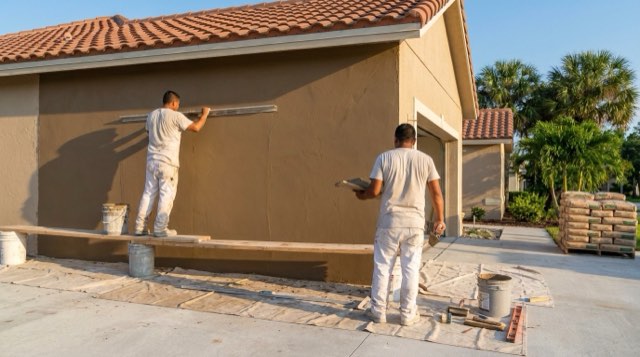 Hiring
How to Hire a Stucco Contractor in Florida
Most of what protects you on a stucco job happens before anyone touches your wall. Here is how to verify a license and insurance yourself, read a scope, and check references that actually apply to your house.
Read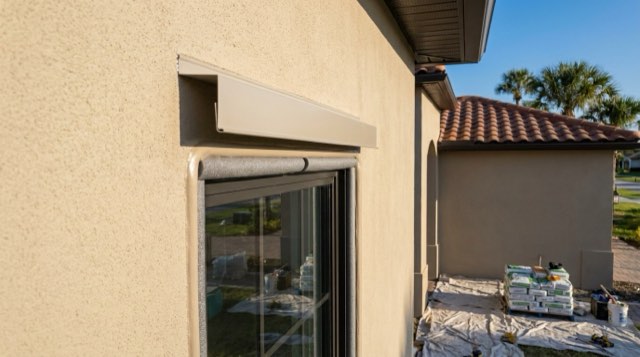 Storm season
A Pre-Season Stucco Checklist for Treasure Coast Homeowners
Forty minutes in April is worth more than a week of worry in September. Here is what to look at on a Treasure Coast stucco wall before hurricane season starts, and what you can honestly leave alone.
Read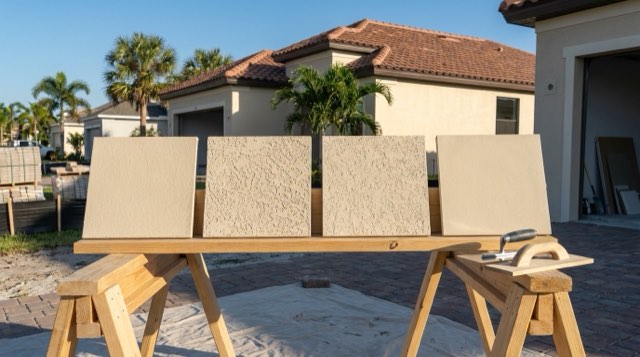 How it works
How to Match Existing Stucco Texture on a Repair
Matching stucco texture is a hand skill, not a product you buy. Here is how the common Treasure Coast finishes get matched, why a patch can still show after a perfect color match, and when re-coating the whole elevation is the cheaper answer.
Read Diagnosis
Signs of Moisture Behind Your Stucco, and What to Do
Trapped water leaves evidence long before the wall fails. Here is what to look for outside and inside a Port St. Lucie home, how water actually gets in, and what to do first.
ReadHow it worksPhasing Stucco Work on Occupied Multi-Family Buildings
The building does not empty out for the work, and on the Treasure Coast how full it is depends on the month. Phasing, season, access and containment are what separate a project residents tolerate from one that generates complaints for a year.
ReadStraight answer on your wall.
Call, or send the form and we will get you a written price.