Phasing Stucco Work on Occupied Multi-Family Buildings
The building does not empty out for the work, and on the Treasure Coast how full it is depends on the month. Phasing, season, access and containment are what separate a project residents tolerate from one that generates complaints for a year.

Occupancy is the constraint, and here it moves with the season
On an empty building the schedule follows the work. On an occupied one the work follows the people. That inversion drives the access equipment, the crew size, the daily hours, the sequence and a real share of the price.
On the Treasure Coast it drives the calendar as well. A large share of the condo and apartment stock in Port St. Lucie, Stuart and Jensen Beach fills through the winter and thins out over the summer. Winter is the comfortable season to work and the worst season to disturb residents, because that is when the building is full, guest parking is taken and the lanais are in use every day. Summer is the mirror image. Fewer people are home, and the afternoon storms that run roughly June through September cut hours off the end of the working day.
Managers who have run one of these know where complaints actually come from. Rarely the stucco. Usually a resident who could not reach their car, who had chipping noise outside a bedroom window at seven in the morning, or who was told two weeks and is watching week five. So plan the disruption with the same rigour as the repair, and pick the season deliberately instead of taking whichever start date a contractor has open.
Cut the site into phases residents can name
A phase should be a thing a resident recognizes. One building. One stack. One elevation of one building. Something you can name in a notice and mark on a site map that people can find themselves on.
Keep phases short enough to finish. A two or three week phase with a stated end date builds trust every time it lands. A phase covering four buildings and running open ended for months produces complaints even when the work is excellent, because nobody can tell whether it is on track. Sequence with the residents in mind rather than purely for crew efficiency, and complete each phase through punch list before the crew moves on, so people get to watch the work end.
Then put the local calendar inside the published durations rather than producing it later as an excuse. There is no freeze shutdown here, so the constraint is not temperature. It is the wet season from roughly June through September, which costs afternoon hours and stretches coating windows, and hurricane season from June through November, which governs what a contractor will leave standing on site. A board in St. Lucie West or Tradition that wants the exterior finished before the winter arrivals should count backwards from that date with the wet months priced in.
- One building or one stack per phase, marked on a site map
- A stated start date and a stated finish date per phase
- The whole phase completed through punch list before moving on
- Wet season and storm contingency built into the durations you publish
- No more than one or two active phases at a time on a small site
Want a price for your own wall?
Four quick questions and we come back with a written quote. Or call (772) 251-6654 if that is faster.
Request a quote
Four questions, about a minute. We'll call you back.
Noise and access windows, agreed before anyone starts
Chipping out failed stucco is the loudest thing that will happen. Grinders, hammers and rotary tools on a block wall carry through the whole structure and there is no quiet way to do it. Coating and finishing are comparatively quiet.
Set a daily work window in writing and hold it. A start time that respects people sleeping and a stop time that respects people getting home. Then sequence inside it. Put the loud demolition in the middle of the day and use the early morning for setup, protection and cleanup.
Screen enclosures are the local half of the access problem. Almost every building here has lanais and screened porches, residents treat them as living space, and no crew reaches the wall through one. Tell people exactly what to move and by when, with a date rather than soon. In a full winter building in Jensen Beach or on Hutchinson Island that notice has to go out earlier and be repeated, because the residents who most need it are the ones who arrived last week and have never met the manager.
Summer brings the opposite problem. Units sit empty, owners are out of state, and nobody clears the lanai. Decide in advance who may clear an unoccupied unit and how that gets documented. The notice terms that govern entry come from your own governing documents or lease, so have the manager confirm them with association counsel rather than improvising on site.
- Published daily start and stop times, plus any weekend rules
- Loud work scheduled inside the window, not at the edges of it
- Clear instructions for balconies, lanais and screens, with a deadline
- A written route for clearing units whose owners are out of state
- Advance notice of any period a door, slider or walkway is unusable
- A named contact for residents that is not the foreman
Lift, swing stage or scaffold, and the ground under it
Access equipment is a bigger decision than it looks, because it sets cost, schedule, and how much of the ground the residents lose.
The building stock decides most of it, and it changes across the region. Garden apartment sites around St. Lucie West, Tradition and the rest of Port St. Lucie are usually two or three stories on generous drivable ground, which is lift country. Older mid-rise buildings near the water in Stuart, Jensen Beach and on Hutchinson Island run taller, sit on tight sites with no parking to spare, and more often end up on swing stages hung off the roof.
Boom and scissor lifts are fast to reposition and cheap to run, but they need firm ground and a clear path. Sandy soil after a wet week ruts under a lift, and irrigation lines, sod and pavers sit directly under the route. Swing stages need roof rigging, engineered anchors and roof protection, and they cover a wall in narrow vertical strips, which changes how a phase reads to residents. Scaffold gives the best access and the most stability, but it is slowest to erect and strike and it stands against the building for the duration, which raises questions about balcony access and about anyone being able to climb it.
Hurricane season sits on top of all three. Anything standing against a building has to be secured or struck when a storm is forecast, and that plan belongs in the contract rather than in a phone call during a watch. When a cone covers the Treasure Coast, every crew from Fort Pierce to Hobe Sound is securing sites in the same forty eight hours.
- Ground bearing, buried irrigation and utilities checked before lifts arrive
- Ground protection mats over sod, pavers and drive areas
- Roof anchors and rigging engineered and documented for swing stages
- Roof surface protected wherever equipment bears on it
- Scaffold secured against climbing where it stands overnight
- A written strike or secure plan, with a named trigger, before mobilization
Containment, dust and overspray in a sea breeze
Three things escape a stucco job. Dust from chipping and grinding, water and debris from washing, and material from spray application. Each needs its own answer, and containment is far cheaper than cleaning somebody's car or replanting a bed.
Screen and poly on the active elevation, tied properly, holds most of it. Wind decides whether that is enough, and here the wind is not random. The sea breeze builds through the day on coastal sites, so an elevation on Hutchinson Island or in Jensen Beach that was still at eight in the morning can be unworkable for spray by early afternoon. Crews that spray early and switch to repair and prep later lose far fewer days than crews that fight it. The rule stands either way. Spray work stops when the wind picks up, and a crew that keeps going to protect a schedule spends more on claims than the day was worth.
Wash water carries debris and old coating, so decide where it goes before the pressure washer starts. Keep it off pool decks and out of planting beds, and out of the storm drains, which in most communities here feed canals running to the Indian River Lagoon. If a disposal rule applies to your property, confirm it with the county. Cover mechanical equipment too, particularly condensers at the base of a wall, because coating in a condenser coil becomes an expensive complaint quickly.
- Screen or poly containment on the active elevation, secured for wind
- A stated wind threshold above which spraying stops
- Spray scheduled early in the day on coastal sites
- Condensers, meters, vents and light fixtures covered
- Wash water kept out of storm drains, pools and planting beds
- Windows, sliders and screens masked before any spray work
- Daily debris pickup rather than a single cleanup at the end
Cars, landscaping and everything else at ground level
Vehicles generate more disputes on these projects than any other single item, and on the Treasure Coast the size of that problem changes with the month. A lot with spare spaces in August is at capacity in February with guest cars in it. Publish a parking plan per phase, mark the closed spaces physically rather than only in a notice, and give people somewhere else to go. Hand-delivered notices work better than email alone, and a physical barrier works better than both.
The summer version is a car that has not moved in weeks because the owner is in another state. Give the manager real lead time to reach an absent owner before a lift needs that space, because the alternative is a tow argument that outlives the project.
Landscaping needs a plan too. Beds against the building get trampled or buried, irrigation heads get crushed by lifts, and sod under a scaffold leg does not come back. Decide in advance what gets protected, what gets removed and replanted, and who pays to restore it. Pool decks, walkway pavers, mailboxes and dumpster approaches all sit exactly where equipment wants to be.
- A parking plan per phase, posted and physically marked
- Door-hung notices ahead of any space closure, not just email
- Lead time for the manager to reach owners who are out of state
- Beds, irrigation heads and specimen plants protected or relocated
- Restoration responsibility for landscape and irrigation in the contract
- Pedestrian routes kept open and clearly marked at all times
Punch list per building, not one at the end
The most useful contractual habit on a multi-building project is closing out each phase as it finishes. Walk the building with the contractor, list what is outstanding, agree dates, correct it, and sign it off before the crew moves to the next phase.
The alternative is a project-wide punch list assembled at the end, by which point building one was finished eight months ago, the crew that did it has moved on, and there is no leverage left because the money is nearly all paid. Tying retention to phase completion fixes that incentive cleanly.
Give residents a route to report items as well, logged through the manager, since some of it is only visible from inside a unit or off a balcony. Then walk in the right conditions. Texture and color differences show up in raking morning or late afternoon light and hide at midday, which is when most walks get scheduled. Walk on a dry day too. Block walls here hold water for days after heavy rain, and a damp elevation reads darker and flatter, hiding both a color mismatch and a poor texture blend until the week after you signed.
- A documented walk at the end of each phase, with the manager present
- Texture and color match checked in raking light, not at noon
- Walks scheduled on a dry day, not the morning after a storm
- Sealant joints inspected for tooling, adhesion and full joint fill
- Resident-reported items collected through the manager and logged
- Retention released per phase against a signed list, not at the end of everything
Related questions
What time of year should we schedule work on an occupied building?
There is a real trade-off and the board should make it on purpose. Winter gives settled weather and long working days, but it is when Treasure Coast buildings are fullest and disruption reaches the most people. Summer is quieter inside and wetter outside, so daily hours shrink and hurricane season adds a securing risk from June through November. Many boards run noisy demolition in the quieter months and coat once the wet season eases.
How long does one building take?
It depends on repair quantity and access method far more than on building size. A garden-style building in Port St. Lucie with light repairs, lift access and a straightforward recoat moves quickly. The same building with heavy delamination, swing stage access and full sealant replacement takes considerably longer, because repairs have to cure before coating. Ask each bidder for a per-building duration that already includes lost wet season afternoons.
Do residents need to move out during the work?
For exterior stucco work, almost never. What they need is notice, a parking plan and clear instructions about clearing balconies and lanais. Units next to demolition will hear it, and residents who work nights or from home should be told which days are loudest. Anything requiring genuine interior access is handled under whatever notice terms your governing documents set.
What happens to balcony screens and enclosures?
Settle it in the scope before pricing, because it is a real cost and a common gap. Screens usually have to come out to reach the wall, and whether the contractor, the residents or a screen vendor handles that should be written down. Record their condition beforehand too, since sun-aged screening on an older Stuart or Jensen Beach building often does not survive removal.
A storm is forecast in the middle of a phase. What should already be decided?
The contract should name the trigger, say who secures the site, and state what gets struck rather than tied down. Loose material, containment sheeting, scaffold components and lift positioning all need handling, and open wall areas need temporary protection. Decide it at signing, because once a watch is issued every crew in St. Lucie and Martin County is doing the same work at once.
How do we handle complaints without stopping the work?
Route everything through one logged channel at the management office and keep residents away from the crew. Log it, get an answer from the site supervisor, close it back with the resident. Most complaints are information problems rather than work problems, and a resident who gets a straight answer inside a day rarely escalates.
More guides
All guides →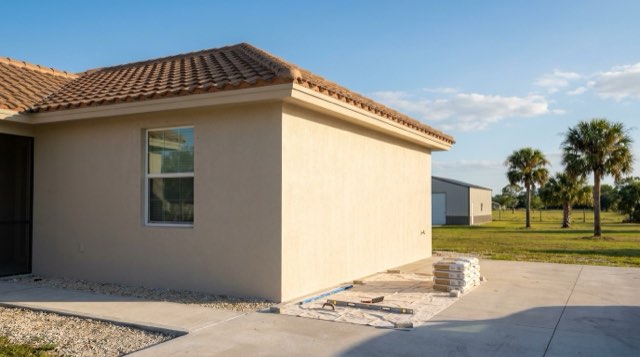 Local guide
Stucco Away From the Coast: Okeechobee and Inland Properties
Take salt out of the equation and the whole failure list changes. Inland stucco around Okeechobee and the western county lines is a rain, heat and mineral problem, on properties where the water and the power are not always waiting for you.
Read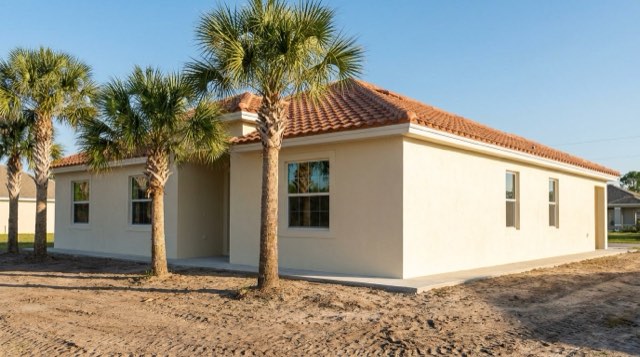 How it works
One-Coat and Three-Coat Stucco Systems Compared
Three-coat, two-coat direct to block, and proprietary one-coat over foam are three different walls. Here is what separates them, where each turns up on the Treasure Coast, and how each repairs.
Read How it works
Paint or Elastomeric? Coating a Treasure Coast Stucco Wall
The same block house gets a different answer in Sebastian than it does in Okeechobee. Salt, drying time and the sun load on a given face matter more than the brand on the bucket.
Read Maintenance
Pressure Washing Stucco Without Damaging It
A pressure washer will clean your stucco or resurface it, and the line between the two is thinner than most homeowners expect. Here is how to stay on the right side of it.
ReadHiringTwelve Questions Worth Asking Before You Sign
Twelve questions that separate a contractor who has thought about your particular wall from one who has not. Several of them only make sense in this climate and this housing stock.
ReadStraight answer on your wall.
Call, or send the form and we will get you a written price.