How to Hire a Stucco Contractor in Florida
Most of what protects you on a stucco job happens before anyone touches your wall. Here is how to verify a license and insurance yourself, read a scope, and check references that actually apply to your house.
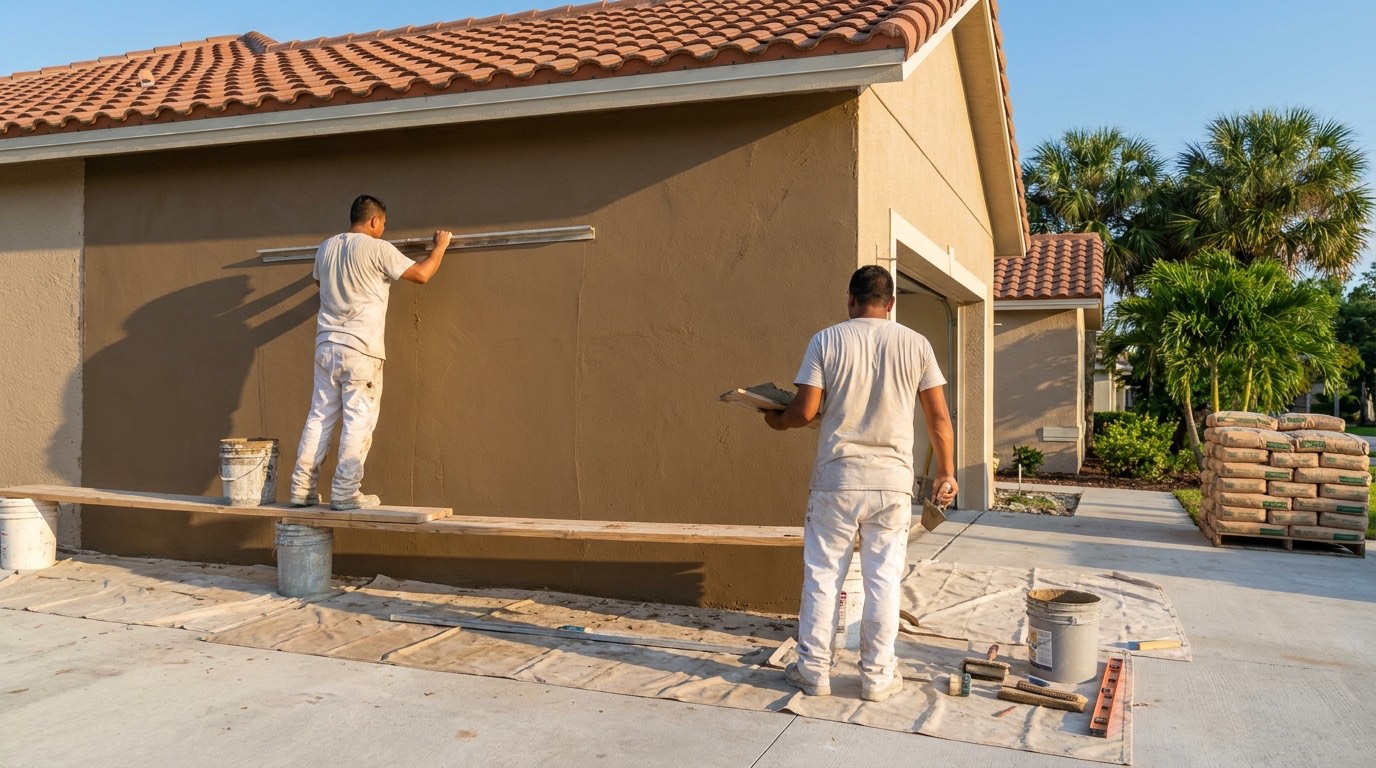
Two facts to establish before anything else
Hiring stucco work in Florida is a paperwork problem before it is a craftsmanship problem. Anyone can put a magnet on a truck door. The work happens outside, up a ladder, with wet material, and most of what you are paying for is buried under the finish coat by the time you can look at it. So the checks that protect you have to happen early, not after the crew has left.
Two of them are facts rather than opinions. A license you looked up yourself, and insurance you saw on paper from the insurer. Everything further down this page is judgment and preference. Those two take about fifteen minutes and they rule out the situations that turn into real money.
Scale the rest to the job. A two square foot patch near your hose bib does not need three references and a spreadsheet. A full elevation of removal and rebuild on a two story house in Palm City does.
Look the license up yourself
The Florida Department of Business and Professional Regulation, usually shortened to DBPR, licenses construction contractors statewide and runs a public license search on its website. You can put in a person or a business name and see whether the license exists, what it covers, whether it is current, and whether anything has been filed against it. A photo of a license card on somebody's phone tells you none of that. Search it yourself while they are standing in your driveway if you like. It is a normal thing to do.
Two details matter for plaster work specifically. What a license permits is written into the license category, not into the trade name on the truck, so ask what category it is and what that category covers. And local registration and permitting are handled separately from state licensing. Port St. Lucie, Fort Pierce, Stuart and unincorporated St. Lucie County each run their own building department, so ask which one will issue the permit if the job needs one, and in whose name it will be pulled.
If anyone suggests you pull the permit yourself as the owner to save time or money, slow down. That arrangement moves responsibility for the work onto you.
- Search DBPR yourself rather than accepting a copy of anything
- Check the licensed name matches the name that will be on your contract
- Confirm the license is current and read any disciplinary history shown
- Ask which building department issues the permit and whose license it goes under
Want a price for your own wall?
Four quick questions and we come back with a written quote. Or call (772) 251-6654 if that is faster.
Request a quote
Four questions, about a minute. We'll call you back.
Insurance, and why the certificate should come from the agent
Ask for two things. General liability, and workers compensation if anybody other than the owner will be on your property. Then ask for the certificate to be sent to you directly by the insurance agency, with your name and address on it as certificate holder. Contractors here get that request weekly and good ones make one phone call. A certificate that arrives from the agency is accurate the day it arrives. A file forwarded from a phone might be a year old or cancelled.
Workers compensation gets complicated in Florida construction, because it is possible for an owner to hold an exemption covering themselves. An exemption covers one person, not a crew of four. If it comes up, ask plainly who else will be on the ladder and what covers them. When someone gets hurt on an uninsured job, the argument about who pays happens at your address.
This is not a formality in stucco. The daily risks are ladders and lifts, scaffold near a tile roof edge, wet material on a pool deck, and a pressure washer working next to windows and screens.
A written scope beats a low number
The price is a summary of the scope. It carries no information on its own. Two contractors looking at the same east wall can mean fill the cracks and roll a coating over them, or take the failed material off back to sound stucco, rebuild the coats, and finish the elevation corner to corner. Both of those are real, defensible jobs. They are not the same job, and the gap between the prices is mostly the gap between the work.
So get the scope in writing before you look at any total. Which walls. How much area and how it was measured. What is coming off, what goes back, how many coats. How the texture is matched. What is excluded. Once you are holding that from two or three contractors, the numbers finally mean something and you can pick on more than price.
A line that reads stucco repair as needed followed by a total is not a scope. It is a number with the job attached later, and later is where the disagreements live.
References for the same kind of work
References are worth asking for and worth very little if you take them generically. A crew that produces flawless new construction finishes in Tradition may almost never open a 1960s frame and lath wall in Fort Pierce, and the crew that lives in those old walls may not be who you want spraying a new subdivision finish. Ask for addresses where the work matched yours.
Ask when each job was done and lean toward the older ones. Fresh stucco looks perfect on day one regardless of who applied it. A wall that has been through two summers of afternoon storms and a hurricane season has actually been tested.
When you call, skip the general question about whether they were happy. Ask what happened when the crew found something they did not expect. Ask whether the schedule held. Ask whether you can tell from the street where the repair is, which is the only texture review that counts.
- Same substrate: block, frame with wire lath, or a foam band detail
- Same scope: crack repair, a full elevation, a resurface, or new install
- Same access problem: two story, pool cage, tile roof edge, tight side yard
- At least a year old so the finish has been through a wet season
- Close enough that you can drive past and look at the wall yourself
Find out who actually does the work
The person who measures your walls is often not the person who trowels them. That is normal in this trade and it is not a problem by itself. The problem is finding out on the morning the truck arrives. Ask whether the crew is employed by the company or subcontracted, who supervises them day to day, and how often that supervisor is physically at your house.
Then ask who you talk to once work starts. Stucco jobs throw off decisions in the middle of the day. Somebody sounds a soft area two feet past where the removal was supposed to stop, or the texture sample reads differently in afternoon sun than it did on the board. With a clear person to ask, that is a twenty minute conversation. Without one, your wall sits open while messages get relayed.
It is also fair to ask how many jobs the crew is running that week. Stucco has waiting built into it, because coats need time before the next one goes on, so crews stack work on purpose. Stacked too thin and your house becomes the Friday stop.
A sane order to do it in
Homeowners usually run this backwards. They collect three prices first, then try to work out afterward what each price was for. Reverse it. Decide who is qualified, get comparable scopes from those people, and let the price be the last thing you look at rather than the first.
The whole sequence below costs you a few phone calls and one evening. On a job of any size it is the cheapest hour you will spend, and it is worth doing even if you already know who you want to hire.
- Shortlist two or three contractors who work on houses like yours
- Verify each license on the DBPR search before anyone comes out
- Have each one walk the wall, sound it, and put the scope in writing
- Ask the two you like for agent issued insurance certificates
- Call references for the same kind of work, done a year or more ago
- Compare scopes side by side, then price, then who can start when
- Sign a contract naming scope, schedule, payment steps and warranty
Related questions
Do I need a licensed contractor for a small stucco patch?
Whether a license is legally required depends on the scope of the work and the rules where you live, and Port St. Lucie, Fort Pierce and the county each administer their own. Set that aside for a moment though. The practical reason to use a licensed, insured contractor even on small work is that an unlicensed crew has nothing behind their warranty and no policy behind an accident at your house. Ask your building department about the requirement, and make the insurance question your own rule regardless of the answer.
How do I check a stucco contractor's license in Florida?
Go to the DBPR website and use the public license search. You can search by individual name or business name, and the record shows the license category, its status and any discipline attached to it. Match the name on that record against the name that will appear on your contract, because they are sometimes different. Then ask the local building department whether anything further is needed for work in your city.
What insurance should a stucco contractor carry?
General liability at minimum, and workers compensation for anyone on your property who is not a covered owner. Ask the insurance agency to send the certificate to you directly with your address listed, rather than accepting a forwarded copy. Stucco work involves ladders, lifts and pressure washing near glass, so this is a live risk rather than a formality.
How many quotes should I get?
Two is usually enough to see whether a scope makes sense, and three is plenty. Past that you are mostly generating variations of the same conversation and delaying the work. What improves your decision is not more prices, it is getting the same level of written detail out of each contractor so the prices are actually comparable.
Should I just hire whoever my neighbor used?
It is a good starting point, especially in a neighborhood where the houses were built together and the walls are all the same. Just confirm the work was the same kind. A neighbor who had a garage wall coated cannot tell you much about a contractor who is about to open a two story wall and rebuild it, and both of those are stucco.
Is it worth paying for an inspection before I hire anyone?
Sometimes. If several contractors have given you very different explanations of what is wrong, an independent moisture inspection or a structural engineer can settle the question before you buy a repair. On a straightforward patch it is an unnecessary expense. The signal to spend it is disagreement about the cause, not disagreement about the price.
References
Standards bodies and agencies referenced above. We are not affiliated with them.
More guides
All guides →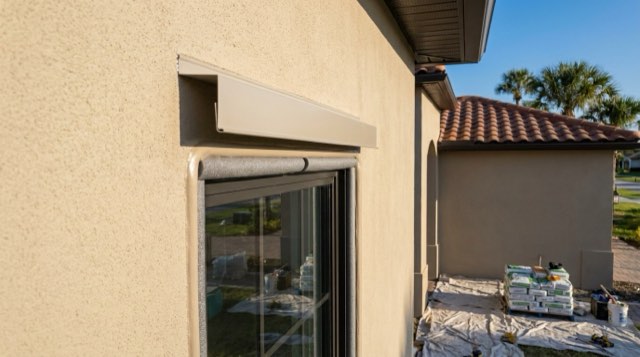 Storm season
A Pre-Season Stucco Checklist for Treasure Coast Homeowners
Forty minutes in April is worth more than a week of worry in September. Here is what to look at on a Treasure Coast stucco wall before hurricane season starts, and what you can honestly leave alone.
Read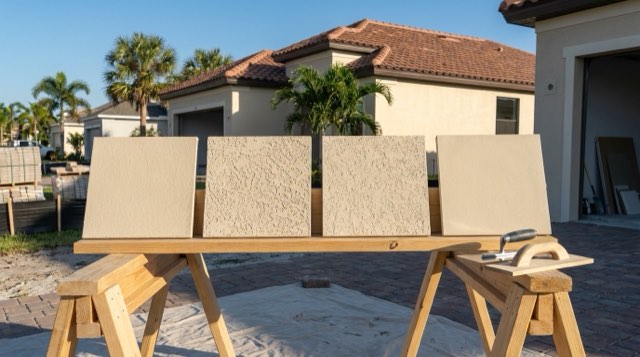 How it works
How to Match Existing Stucco Texture on a Repair
Matching stucco texture is a hand skill, not a product you buy. Here is how the common Treasure Coast finishes get matched, why a patch can still show after a perfect color match, and when re-coating the whole elevation is the cheaper answer.
Read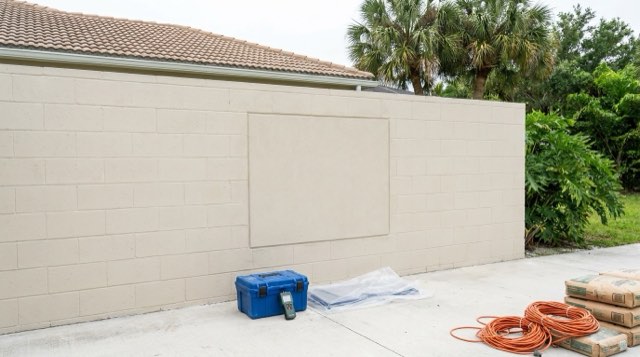 Diagnosis
Signs of Moisture Behind Your Stucco, and What to Do
Trapped water leaves evidence long before the wall fails. Here is what to look for outside and inside a Port St. Lucie home, how water actually gets in, and what to do first.
Read How it works
Phasing Stucco Work on Occupied Multi-Family Buildings
The building does not empty out for the work, and on the Treasure Coast how full it is depends on the month. Phasing, season, access and containment are what separate a project residents tolerate from one that generates complaints for a year.
Read Local guide
Stucco Away From the Coast: Okeechobee and Inland Properties
Take salt out of the equation and the whole failure list changes. Inland stucco around Okeechobee and the western county lines is a rain, heat and mineral problem, on properties where the water and the power are not always waiting for you.
ReadStraight answer on your wall.
Call, or send the form and we will get you a written price.