What Does It Cost to Restucco a Whole House in St. Lucie County?
Restucco means three different jobs at three different prices. Measure your own wall area first, then use the per square foot ranges below to work out which conversation you are actually having.
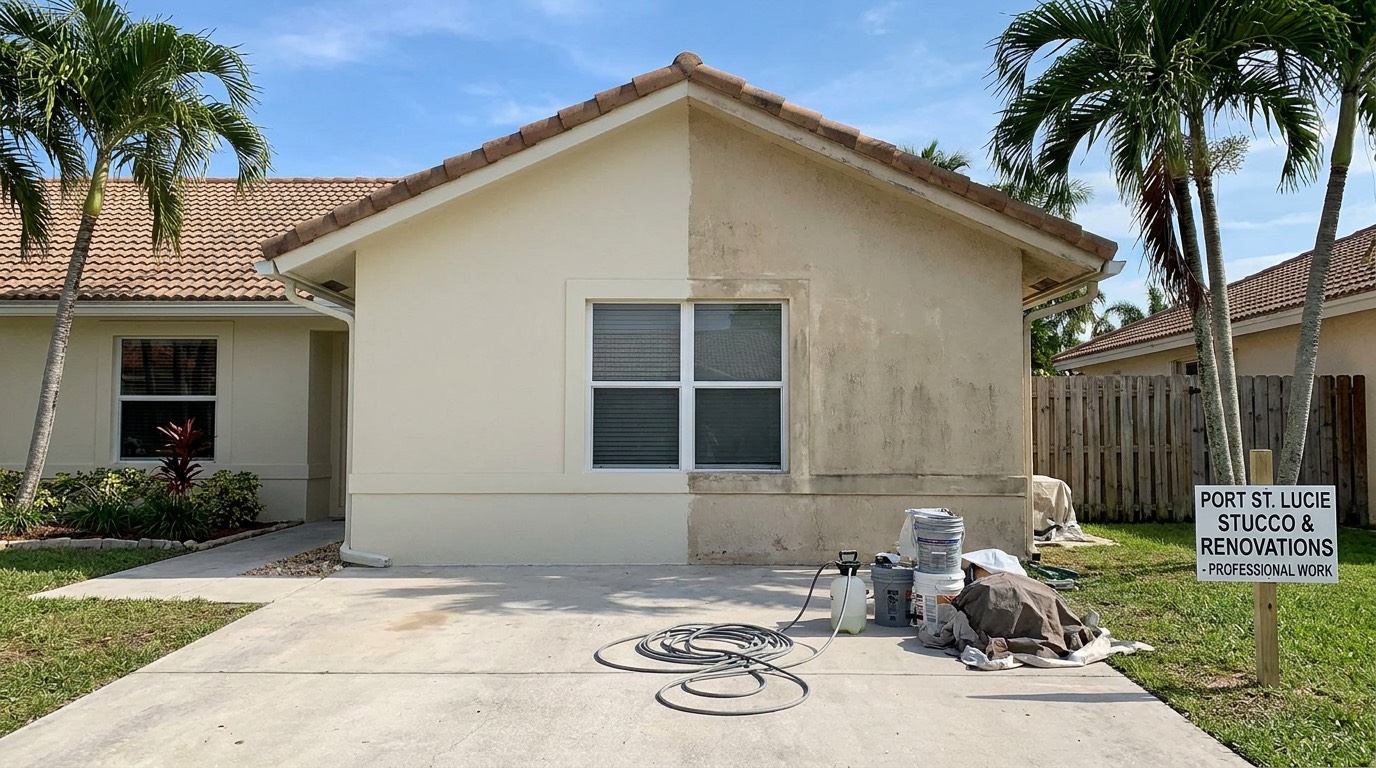
Restucco means three different jobs
When a homeowner in Port St. Lucie says restucco, they usually mean one of three things, and the gap between them is the whole reason estimates come back so far apart.
The first is a resurface. The existing stucco stays, gets prepared, gets its cracks addressed, and receives a new finish or levelling coat. The second is a partial replacement, where failed sections come off and are rebuilt and then the whole house is refinished so it reads as one wall. The third is a full remove and replace, where the plaster comes off the building and goes back from the substrate up. A resurface bid next to a remove and replace bid is not a comparison. It is two different projects.
- Resurface, existing stucco retained, prepared and refinished
- Partial replacement plus a full refinish so the house matches corner to corner
- Full remove and replace, back to block or back to sheathing and lath
Measure your own wall area first
Stucco is priced by wall area, not by the floor area on your tax record. A 2,000 square foot single story house does not have 2,000 square feet of wall. Getting your own rough number takes ten minutes and it turns every per square foot range into something you can actually use.
Walk the perimeter of the house and add up the lengths. Multiply that perimeter by the wall height, roughly nine to ten feet for a typical single story block home on the Treasure Coast, and double the height calculation for the two story portion if you have one. Then take off about fifteen to twenty percent for windows, doors and the garage opening.
A common single story block home here lands between 1,600 and 2,400 square feet of wall. A larger two story house in Palm City or Tradition can be well past 3,500. Do the arithmetic once and keep the number.
- Perimeter in feet times wall height in feet equals gross wall area
- Subtract roughly 15 to 20 percent for openings
- Count gable ends and second story separately, they add area and access cost
- Do not use your air conditioned square footage, it is a different measurement
Want a price for your own wall?
Four quick questions and we come back with a written quote. Or call (772) 251-6654 if that is faster.
Request a quote
Four questions, about a minute. We'll call you back.
The ranges, per square foot of wall
With your wall area in hand, these market ranges become useful. They reflect what this trade generally runs across Florida and they still need a site visit to become a real number.
Notice how wide the remove and replace band is. That is not vagueness. It is an honest reflection of a job whose scope is not fully knowable until the old plaster is off and the substrate is visible.
- Resurface with crack preparation and a new finish, commonly $3 to $6 per square foot of wall
- Partial replacement plus full refinish, commonly $5 to $9 per square foot of wall
- Full remove and replace on block, commonly $7 to $12 per square foot of wall
- Full remove and replace on frame with new lath and three coats, commonly $9 to $15 per square foot of wall
- Elastomeric coating as the finish rather than paint, generally adds $1 to $3 per square foot
Block or frame changes almost everything
Most housing stock across St. Lucie, Martin and Indian River counties is concrete block. Block is good news here. It is dimensionally stable, it does not rot, it needs no lath across the field, and once failed plaster is removed the wall underneath is usually sound. That keeps a replacement job predictable and near the lower end of the band.
Frame construction is a different job. Three coat stucco over frame needs a weather resistive barrier and metal lath before any plaster goes on, and the crew can find rusted lath, soft sheathing or a bad flashing detail once the wall is open. More material, more labor, more unknowns.
Plenty of Treasure Coast homes are both. Block on the first floor, frame on the second, frame gable ends and foam band trim. Make sure each quote identifies which parts of your house are which, because that mix is where estimates quietly diverge.
Access, height and what is standing in the way
A crew that can walk the full perimeter with ladders and a mixer parked in the driveway works fast. Anything that stops that costs money before a single bag is opened.
Two story elevations mean staging, scaffold or a lift, and a lift needs ground it can drive on and a gate it fits through. Pool cages, screen rooms and covered entries create walls that have to be worked by hand in tight space. Barrel tile roof edges and low soffits slow the top of every wall.
- Second story and gable ends, staging or lift required
- Screen enclosure or pool cage restricting equipment placement
- Narrow side yards, common on zero lot line and villa lots
- Barrel tile roof edges, soffits and decorative bands requiring hand work
- Landscaping, irrigation and hardscape needing protection
- Occupied home, which limits hours and adds daily cleanup
Finish, color and HOA approval
The finish is a design decision with a price attached. A smooth or fine sand finish shows every imperfection behind it and takes more labor to get flat. Knockdown, dash and lace textures are more forgiving and quicker. On a partial job, matching an existing texture is its own skilled task and belongs on the estimate as a line rather than an assumption.
Then decide between integral color in the finish coat and a coating applied afterward. Integral color will not peel, but it cannot be changed without recoating and matching a repair into it later is harder. A coating gives you color flexibility and a maintenance path, and it adds cost.
If you live in a master planned community such as Tradition or St. Lucie West, or in any neighborhood with an active association, exterior color typically goes through architectural review. Do not order material before you know where that stands. Submit early, because approval timelines are set by your association and they sit on the critical path of your project.
Timeline, weather and living in the house
A whole house restucco is generally a one to three week project, and the spread is driven by the scope, the wall area, the access and the weather. Florida gives us a year round work season, which is a genuine advantage over most of the country. What we trade for it is humidity and afternoon storms through the summer, both of which stretch cure times and close coating windows.
Plan around it rather than fighting it. Expect weather days in the schedule and be suspicious of a rigid calendar with none in it. Wind driven rain during hurricane season is also the reason to get flashings, penetrations and sealant details right during the job rather than as a punch item afterward.
You can usually stay in the house. Expect noise, expect windows covered on the elevation being worked, and expect the yard to be a work site. If the house is vacant, say so when you request quotes. Vacant homes are easier to schedule and easier to work, and that can show up in the number.
Every figure here is a market range for building a budget and reading your quotes. Your actual price comes from someone standing at your walls, measuring them and sounding them.
Related questions
How do I know if my house needs a full replacement or just a resurface?
Sound the walls. Tap across each elevation with a knuckle or a hammer handle and listen for the change from a solid ring to a dull thud. Scattered hollow areas usually mean partial replacement plus a full refinish. Widespread hollowness or bulging points toward full replacement. A contractor should map this before quoting.
Is it cheaper to restucco or to re-side the house?
On a concrete block home in St. Lucie County, stucco is almost always the practical answer. Block is designed to take a cementitious finish directly, and most alternative claddings would need a furring and fastening system built over the block first. That added framing usually erases any material savings before you start.
Will a whole house restucco stop my leaks?
Not on its own. Most water intrusion on Treasure Coast homes comes in at details rather than through a wall field, meaning window and door flashings, penetrations, roof to wall junctions and failed sealant joints. New stucco over a bad detail is still a bad detail. Insist those are in the scope.
What time of year is best for this work in Port St. Lucie?
There is no closed season here, which is a real advantage. Winter and spring generally offer lower humidity and more predictable cure windows. Summer work is completely normal but schedules should account for afternoon storms and higher humidity slowing coating and cure times.
Do I need a permit to restucco my house?
It depends on the scope and on which jurisdiction you are in. Port St. Lucie, Fort Pierce, Stuart, Jensen Beach and unincorporated county areas each handle their own permitting, and a resurface and a full re-clad are not always treated the same way. Ask your contractor exactly what they intend to pull and verify it with your local building department.
How long should a new stucco finish last here?
Properly installed stucco on block is a long life finish and can go decades on a Florida home. Lifespan is decided by detailing and maintenance, meaning sealant joints kept sound, cracks addressed before they let water in, and the coating renewed on a sensible cycle. Homes near the coast and the Indian River Lagoon need that attention more often than inland homes.
More guides
All guides →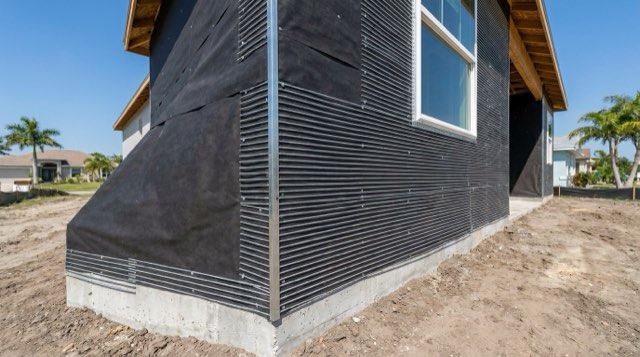 Diagnosis
Rust Stains Bleeding Through Stucco
An orange stain on stucco is downstream evidence. Something metal inside the wall is corroding and water is carrying it out. Here is how to find it and how the repair has to be done.
Read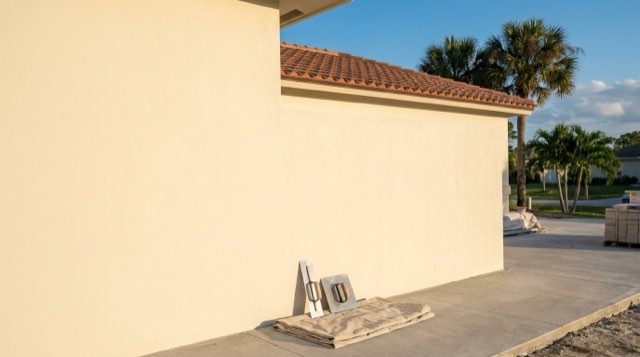 Maintenance
Sealing Hairline Stucco Cracks Yourself: When It Works
Some stucco cracks are a genuine Saturday job with a five dollar tube. Others will cost you money if you fill them. Here is how to tell which one you have, and how the season decides your prep.
Read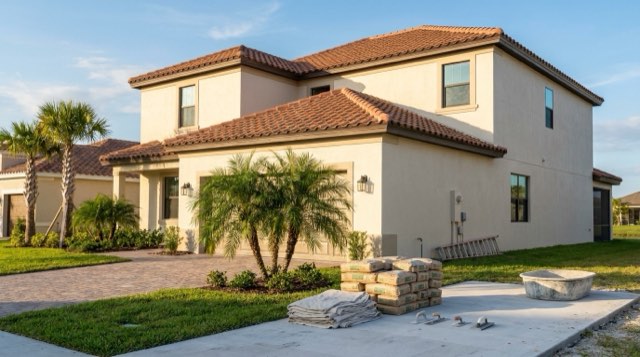 Maintenance
What Sprinkler Overspray Does to Your Stucco
A head that clips the wall three mornings a week does more damage over five years than any storm does in a season. Start by reading the color of the band it leaves.
Read Diagnosis
Why Stucco Color Fades on the Treasure Coast
Three different things get called faded stucco, and only one of them needs new color on the wall. Where your house sits, and which way the wall faces, usually tells you which one you have.
ReadHiringWarning Signs When Hiring for Stucco Work
None of these prove anybody is dishonest. They are patterns that turn up often enough on the Treasure Coast to be worth a pause, and each one has a check you can finish in a few minutes.
ReadStraight answer on your wall.
Call, or send the form and we will get you a written price.