The Best Time of Year for Stucco Work on the Treasure Coast
There is no freeze shutdown in Florida, so stucco runs all twelve months. What actually moves the calendar here is the afternoon storm pattern, storm season staging, and how fast a wall can take its next coat.
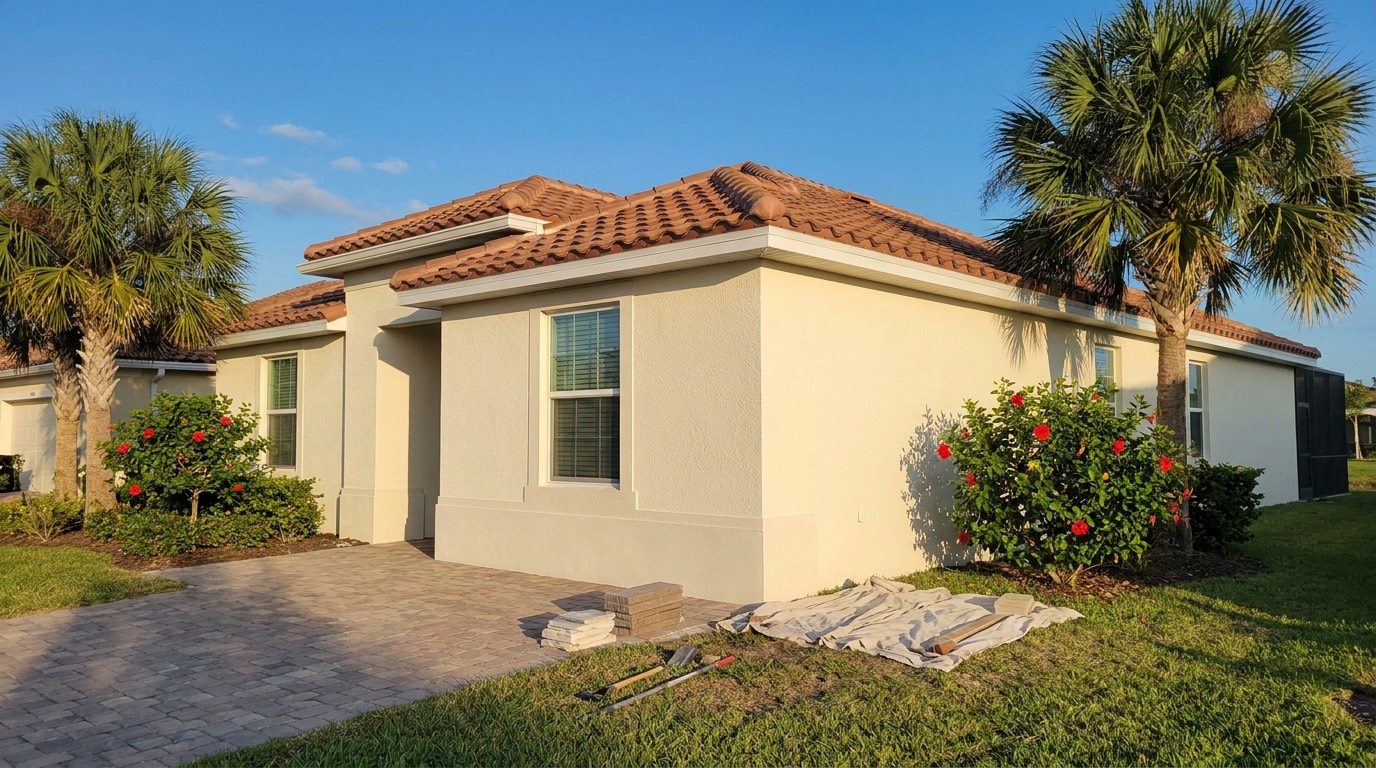
Nobody down here shuts down for winter
If you moved to Port St. Lucie from up north, you probably remember masonry and plaster work stopping cold around November. That is a freeze problem. Water in a cement mix freezes, expands, and destroys the bond before the material ever gains strength, so plasterers north of here have a real season with a real end date.
We do not have that constraint. St. Lucie County sits far enough south that a hard freeze on an active job site is not something we plan around. Crews here work every month of the year. A January install goes on the wall the same way a July install does, with the same materials and the same coat sequence.
So the honest answer is that there is no bad month for stucco on the Treasure Coast. There are months where the schedule holds tighter and months where it moves around. That distinction is worth understanding before you book anything.
The wet season is what actually moves the calendar
From roughly June through September the daily pattern is consistent. Mornings are clear and hot. By early afternoon the sea breeze pushes inland, collides, and builds thunderstorms that drop a lot of water fast and then move off. That is the normal summer rhythm from Vero Beach and Sebastian down through Fort Pierce, Port St. Lucie, Stuart, and Hobe Sound.
That pattern does not stop stucco work. It reshapes the working day. Scratch and brown coats go on in the morning. Finish coat gets applied early enough to set before the sky opens. Crews watch radar the way other trades watch the clock, and some afternoons we pull off a wall at one o'clock and pick it back up the next morning.
Inland jobs out toward Okeechobee often get a slightly different version of the same thing, since the storms build over the interior and can sit longer. Coastal work in Jensen Beach and Port Salerno tends to lose more time to wind than to rain when the elevation is tall.
Want a price for your own wall?
Four quick questions and we come back with a written quote. Or call (772) 251-6654 if that is faster.
Request a quote
Four questions, about a minute. We'll call you back.
What rain actually does to stucco that has not set
Fresh cement stucco has to reach initial set before it can take water without damage. Rain on a green finish coat washes the face, opens pinholes, and leaves streaks and blotchy patches that will telegraph through paint later. On a very fresh coat it can wash out fine material and leave you with a weak, sandy surface that never coats properly.
Once a coat has set, water is far less of a concern. Cement cures by hydration, not by drying out, so a light rain on a day-old scratch coat is closer to a favor than a problem. The window we protect is the first several hours after application. That single fact is the reason for the morning-heavy summer schedule.
- Rain on a green finish coat causes washout, streaking, and pinholing
- Rain on a set scratch or brown coat is usually harmless and sometimes helpful
- Wind-driven rain on a scaffolded elevation stops work for safety before it stops it for material
- Standing water at grade slows work at the base of the wall and splashes the fresh face
- A soaked wall has to dry back to the right surface condition before the next coat goes on
Hurricane season is a logistics season, not a shutdown
Hurricane season runs June through November. Most of it passes without touching any given street in Martin or St. Lucie County. What it does affect is how a job gets staged.
When a system is being tracked toward Florida, scaffolding comes down or gets tied off, mixers and material get secured, and nobody starts a large tear-off that leaves a wall open. An exposed lath wall is a bad thing to leave standing in front of weather. We would rather push a start date by a week than have a house half stuccoed with something coming.
The second effect is demand. After a storm moves through the Treasure Coast, repair calls spike hard. Material gets tight and every stucco crew in the region books out. If your project is not urgent, the weeks right after a significant storm are the hardest ones to get on a calendar.
Why winter and spring are the easiest months to book
Roughly November through April is the dry season. Lower humidity, far fewer afternoon storms, and a full usable workday where a crew can start at eight and finish at five without watching the sky. That is why those months are the smoothest for a full restucco or a whole-house re-coat.
It is not that stucco performs badly in summer. It is that the schedule holds. A three-day exterior in February is usually three days. The same job in August might be four, because one afternoon gets cut short.
The tradeoff is that everyone wants those months. Seasonal residents come back, community projects get approved, and stucco and paint crews across Port St. Lucie, Palm City, and Vero Beach fill up. If you want a February start, you generally want to be having the conversation in the fall.
Summer stucco is still good stucco
There is a genuine argument for summer work beyond just availability. Cement stucco cures better when it stays damp, and Treasure Coast summer humidity keeps a wall from drying out too fast while the material is gaining strength. That is exactly the condition you want during the cure.
In the dry season we often have to add that moisture back by misting walls, because a breezy February afternoon can pull water out of a fresh coat faster than is good for it. Summer gives you that for free.
The summer risk runs the other direction. Direct midday sun on a south or west elevation will flash the surface of a coat before the plasterer is done working it, which is how you get plastic shrinkage cracking and a texture that will not knock down evenly. So crews chase shade. West walls early, east walls late. Same job, planned around the sun instead of the clock.
How we schedule a job around all of it
In practice it comes down to job size, elevation exposure, and what time of year you are calling. Small repairs fit almost any week of the year. A full restucco in the middle of the wet season gets quoted with rain days built into the timeline instead of pretending they will not happen.
We also tell you what we will not do. We are not going to put a finish coat up under a threatening sky to keep a promised date. We are not going to coat a wall that has not had its cure time because the painter is scheduled for Thursday. Both of those decisions cost a day now and save a callback in a year.
- Small repairs and patches: schedulable nearly any week, year round
- Full restucco: dry season for the tightest schedule, wet season with rain days planned in
- Paint and coating: needs its own dry window after the stucco cure period, not a rushed one
- Storm watch: no large tear-offs started with a system tracking toward the state
- Tall or coastal elevations in Jensen Beach, Fort Pierce, and Vero Beach: more days lost to wind than to rain
Related questions
Is it a bad idea to have stucco done in the summer?
No. Summer humidity actually helps cement stucco cure, because the wall stays damp longer while the material gains strength. The summer issues are scheduling issues, not quality issues. Crews work mornings, chase shade on sun-exposed elevations, and plan for the chance that an afternoon gets cut short by a storm.
Will an afternoon thunderstorm ruin the work done that morning?
Usually not, if the coat had time to set. A scratch or brown coat that went on in the morning is generally fine by mid afternoon and rain on it does no harm. A finish coat is the one we protect, because rain on a green finish washes the surface and leaves streaking that shows up later under paint. If we cannot get a finish coat on with enough margin, we hold it for the next morning.
Should I wait until after hurricane season to start?
For most projects there is no reason to wait. We stage jobs so a wall is not sitting open when something is being tracked, and we adjust start dates if a storm is coming toward the Treasure Coast. The one situation where waiting makes sense is a very large exterior in the peak of the season, where you would rather not have scaffolding up for three weeks in September.
When should I call if I want a dry season slot?
Earlier than most people expect. The November through April window is the busiest stretch for exterior trades across Port St. Lucie, Stuart, and Vero Beach. If you want a specific month, start the conversation a couple of months ahead so there is time for the estimate, any approvals you need, and a real slot on the calendar rather than whatever is left.
Does the time of year change when I can paint the new stucco?
It changes how long the drying part takes, not the cure requirement. Cement stucco needs its cure period regardless of season, and the common guidance is roughly 28 days before painting. In humid summer conditions the wall may also need extra time to release surface moisture before a coating goes on. In the dry season it tends to hit paint condition closer to the end of the cure window.
What actually stops a crew for the day?
Active rain on fresh material, lightning anywhere close to the site, and sustained wind on scaffold or a lift. Wind is the underrated one, especially on two-story and gable elevations near the water. We would rather lose an afternoon than have people working high in gusts or spray blowing off the wall before it lands.
More guides
All guides →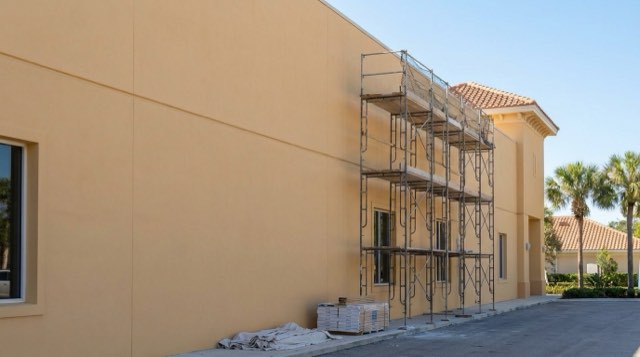 Diagnosis
Inspecting Commercial EIFS: Drainage vs Barrier Systems
EIFS is uncommon on Treasure Coast block construction, so finding it on your building tells you something before the inspection even starts. Here is how a manager or board works out which assembly they have, and what that changes.
Read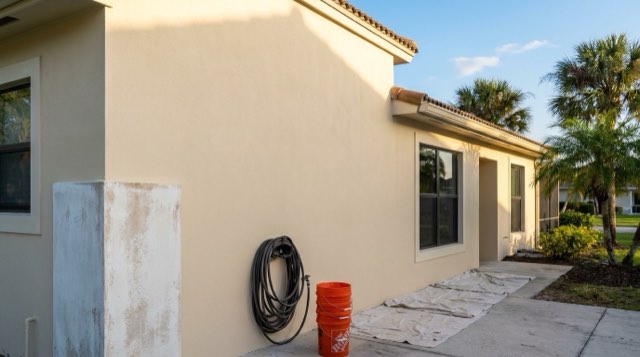 Maintenance
Building a Facade Maintenance Plan for Commercial Stucco
Facade spending is either a planned line item or an emergency. On the Treasure Coast two calendars decide which one it becomes: the storm season and the occupancy year.
Read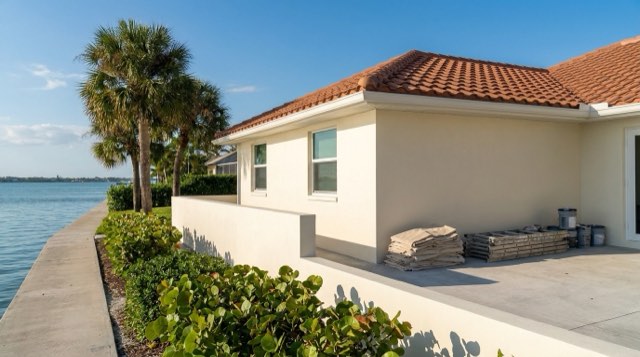 How it works
Assessing Stucco on a Coastal Condo Building
An island tower and a three story garden building both get called a condo, and they need different surveys. How exposure, access and the season decide what a board can actually learn.
Read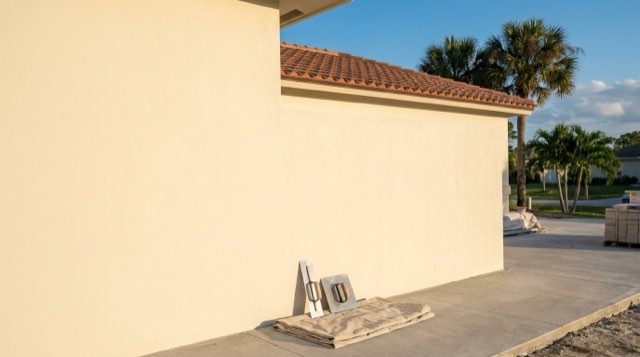 How it works
DIY Stucco Repair: What Is Reasonable and What Is Not
Some stucco jobs are genuinely worth doing yourself, and paying somebody to do them is a waste of money. Here is that list, how to do it properly in this climate, and where the line sits.
Read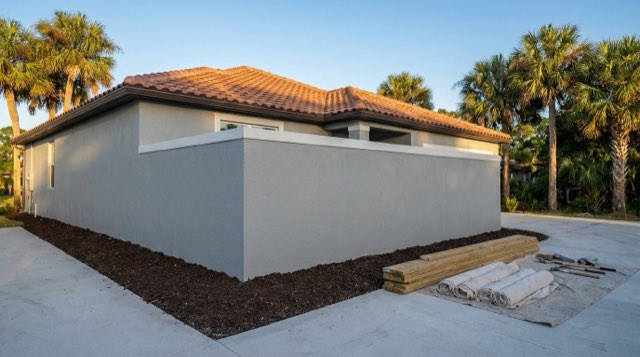 Diagnosis
That White Chalky Residue on Your Stucco, Explained
White powder on a block wall is usually efflorescence, and it is a moisture symptom rather than a surface problem. Here is how to identify it and read what it is telling you.
ReadStraight answer on your wall.
Call, or send the form and we will get you a written price.