One-Coat and Three-Coat Stucco Systems Compared
Three-coat, two-coat direct to block, and proprietary one-coat over foam are three different walls. Here is what separates them, where each turns up on the Treasure Coast, and how each repairs.
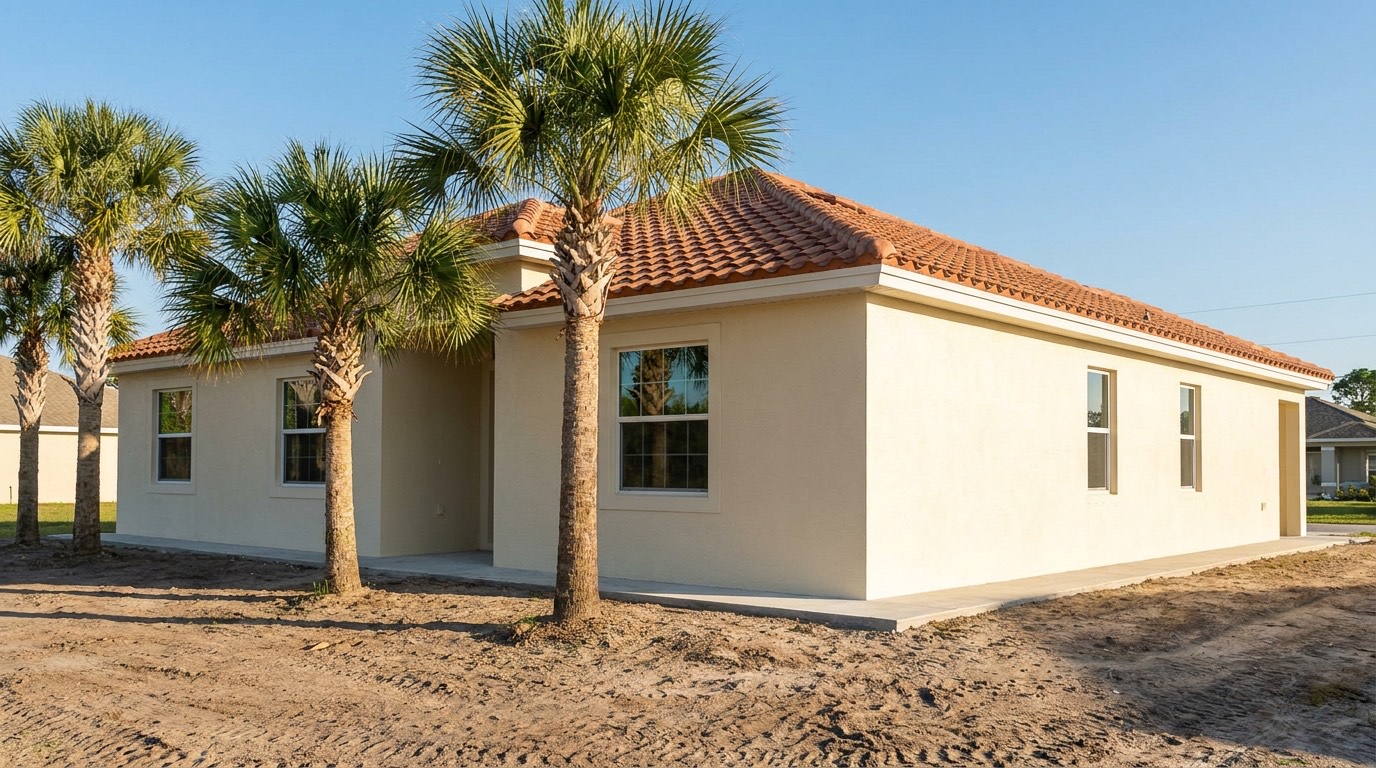
Three coats, and the job each one does
Traditional portland cement plaster over lath goes on in three passes, and the names describe the work. The scratch coat is combed with horizontal grooves, which is where its name comes from. Those grooves give the next pass something to key into, and this coat embeds the lath so metal and plaster become one element.
The brown coat follows and carries most of the thickness. It makes the wall flat and plumb, and it is floated rather than troweled slick, because the slightly open surface it leaves is what the finish grips.
The finish coat is thin and is the only one anybody sees. Texture and color live there: sand, knockdown, lace, dash, smooth. It weathers first, so it is the layer replaced when a house is resurfaced.
ASTM International maintains the consensus standards this trade works to, including C926 for the application of portland cement based plaster and C1063 for lathing installation. Where a requirement bears on your job, have your contractor point to it in the current standard and confirm what your building department expects.
Direct to block, where the third coat disappears
On a concrete block wall the plaster does not need lath, because it bonds straight onto the masonry. Direct applied work over block is normally a two coat application, base coat then finish coat, at a thinner total build than three coat work over lath. Half an inch is a common target, though the specification and the manufacturer govern the number.
This is not a lesser wall. The block does what lath and a scratch coat do on framing, giving the plaster a rigid keyed surface to grab. The trade off is that bond becomes everything. If the block face was dusty, painted, sealed or scorching when the base coat went on, that bond is compromised, and years later it surfaces as a hollow area with no crack to warn you.
It is worth knowing when you read bids. On a block home here, a proposal promising three coats across the block field is either describing something unusual or has never had its boilerplate updated.
Want a price for your own wall?
Four quick questions and we come back with a written quote. Or call (772) 251-6654 if that is faster.
Request a quote
Four questions, about a minute. We'll call you back.
One-coat systems, and what the name really means
One-coat stucco is a proprietary product rather than a generic mix. It is a factory blended, fiber reinforced base coat that does the work of scratch and brown in a single thinner pass, applied over lath and very often over rigid foam board. A separate finish coat still goes over it, so the name oversells it.
Because it is proprietary, the assembly is not defined by generic standards alone. Each manufacturer sets the thickness, the lath, the accessories and the finishes permitted over it, and the package is evaluated together. Swapping in a component from another maker breaks that package, and your building department is the place to confirm what is accepted locally.
The Stucco Manufacturers Association also publishes guidance for plaster assemblies. Applied correctly, one-coat is a legitimate system used on a great many houses. Its reputation problems come from thin application, missing accessories and window details that were never right, which describes the reputation problems of every stucco system.
Thickness, lath and accessories
Thickness is the practical difference. Three coat over lath is the heaviest build, two coat direct to block sits below it, and a one-coat base is thinner still before its finish goes on. More thickness gives mass, impact resistance and forgiveness. Less gives lower weight, less material and a faster schedule.
Lath is the other half. Over any framed surface the plaster is carried by metal lath fastened through sheathing into framing, over a water resistive barrier. It has to be lapped, fastened at the right spacing and handled properly at corners. When people say a stucco wall failed, very often the lathing failed.
Accessories are the third piece and the cheapest thing to get wrong. Casing bead at openings, corner bead at outside corners, control joints where a field runs too large, and a weep screed at the base of a framed wall. These let a wall move and drain instead of cracking where it likes.
- Three coat over lath: scratch, brown and finish, greatest total thickness
- Two coat direct to block: base and finish bonded to masonry, no lath
- One-coat: proprietary fiber reinforced base over lath, plus a finish coat
- Framed walls need lath, a water resistive barrier and a weep screed
- Control joints and accessories matter as much as the mix does
Where each system shows up on the Treasure Coast
Walk a street in Tradition or St. Lucie West and most of what you see is direct applied stucco on concrete block, with framed gable ends and the occasional bump-out or second story on lath.
The older stock in Fort Pierce and Stuart includes genuine frame construction with wire lath and three coat plaster, much of it decades old and still serving. Those are the walls where rusted lath and corroded fasteners turn up, because salt air off the Indian River Lagoon and the Atlantic has been working on the metal the whole time.
One-coat over foam appears most often on newer framed construction, on decorative bands around openings, and through commercial and multifamily work. On a single family block home you are far more likely to meet it on the framed areas than across the main wall field.
What each costs to repair years later
Repair complexity tracks the system, which is worth weighing before a wall goes on rather than after.
Direct applied stucco on block is the friendliest. Remove the failed material, find sound block underneath, put base and finish back on, match the texture. No lath to replace and no framing to inspect, which is why most repair work on block homes here can be scoped with real confidence.
Three coat over lath is more work per square foot but straightforward. Where lath has corroded it comes off and goes back on over a fresh barrier, then three coats follow with cure time between them.
One-coat over foam is the awkward one. A generic mix troweled into a proprietary assembly does not behave the same, wet foam has to come out, and the edge details have to be rebuilt. These repairs get priced after an investigation, not from the driveway.
- Block, two coat: lowest complexity and the most predictable scope
- Frame, three coat: more steps, more cure time, possible lath replacement
- One-coat over foam: proprietary materials, foam replacement, detail rebuild
- Every system: texture matching is a genuine line item on any repair
- Every system: the water source gets fixed before the wall closes up
What to ask before you sign anything
Most stucco disputes trace back to a proposal that never said what was going on the wall. Two contractors can both write stucco and mean different assemblies, thicknesses and warranties.
Get the system named in writing. If it is proprietary, name the manufacturer and the finish that goes over it, because mixing brands across a system is how a warranty evaporates. None of these questions is aggressive. They simply move the specifics into the document, where they can be checked later.
- Which system: three coat, two coat direct to block, or a named one-coat product
- Total thickness and how many coats go on the wall
- Lath type and the water resistive barrier behind it on framed areas
- Accessories: casing bead, corner bead, control joints, weep screed
- The finish product and texture, with a sample panel made on site
- Who confirms permitting with the local building department
Related questions
Is one-coat stucco worse than three-coat?
Not inherently, but it is less forgiving. A thinner base means less mass and less margin, so application quality and correct accessories matter more than on a thick three coat wall. Installed to the manufacturer requirements it performs, and installed thin or with substituted parts it does not.
How thick should the stucco be on my block house?
Direct applied two coat work over block is commonly targeted around half an inch, with the specification and the manufacturer setting the actual figure. Framed areas differ again, because the lath and the coats change. If thickness matters, have it written into the proposal so it can be checked.
Can I tell which system my house has?
Often, yes. Tap the wall, since block sounds dense and solid while framed areas sound lighter and more resonant, and check the window reveals, because block usually sets the window deeper. A magnet will find lath or fasteners under the plaster on framed sections. Foam bands around windows are a different assembly again.
Does one-coat cost less to install?
Usually somewhat less in material and labor, since there is one base pass instead of two. The saving is not dramatic, and it can reverse over the life of the house if a later repair means matching a proprietary system. Judge it on suitability for the wall rather than on install price alone.
Can a one-coat wall be patched with ordinary stucco mix?
It is a poor idea. The proprietary base is fiber reinforced and formulated to work at its own thickness with a specified finish, and a generic mix troweled into it cures and moves differently. Identify the original system first, then patch with materials compatible with it.
Which system lasts longest in Florida?
Direct applied stucco on block generally has the easiest life here, because there is no lath to corrode and nothing organic behind it. All three fail in the same places though: at openings, at transitions between materials, and wherever water sits. Detailing beats system choice on longevity.
References
Standards bodies and agencies referenced above. We are not affiliated with them.
More guides
All guides → How it works
Paint or Elastomeric? Coating a Treasure Coast Stucco Wall
The same block house gets a different answer in Sebastian than it does in Okeechobee. Salt, drying time and the sun load on a given face matter more than the brand on the bucket.
Read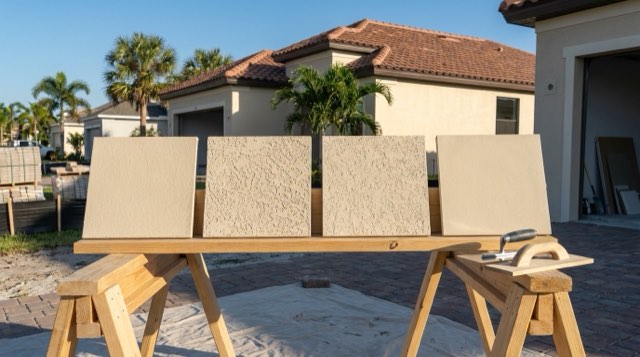 Maintenance
Pressure Washing Stucco Without Damaging It
A pressure washer will clean your stucco or resurface it, and the line between the two is thinner than most homeowners expect. Here is how to stay on the right side of it.
ReadHiringTwelve Questions Worth Asking Before You Sign
Twelve questions that separate a contractor who has thought about your particular wall from one who has not. Several of them only make sense in this climate and this housing stock.
Read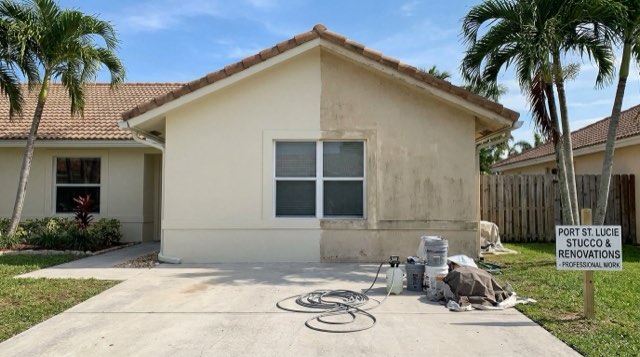 How it works
Patch Repair or Full Restucco? How to Decide
The choice between a patch and a full restucco is arithmetic, not a feeling. Measure what has actually failed, count the old patches, and see where the two costs cross.
ReadCost guideWhat Does It Cost to Restucco a Whole House in St. Lucie County?
Restucco means three different jobs at three different prices. Measure your own wall area first, then use the per square foot ranges below to work out which conversation you are actually having.
ReadStraight answer on your wall.
Call, or send the form and we will get you a written price.