Pressure Washing Stucco Without Damaging It
A pressure washer will clean your stucco or resurface it, and the line between the two is thinner than most homeowners expect. Here is how to stay on the right side of it.
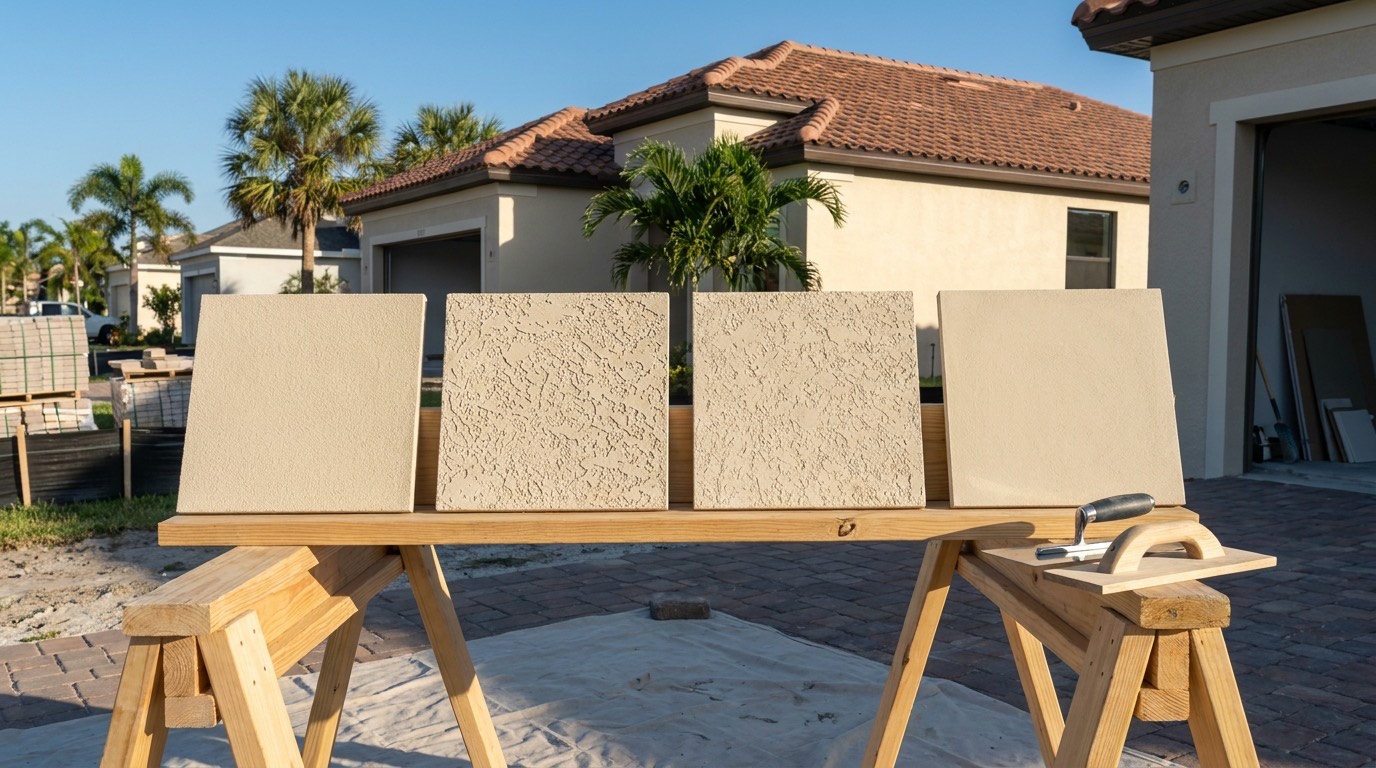
The damage does not look like damage while you are doing it
Nobody stands at a wall thinking they are wrecking it. The wall looks cleaner every second the wand is on it. The problem shows up a week later when the surface dries out and you can read every path the wand took as a lighter, rougher stripe.
That is because the part of your wall doing all the work is thin. The finish coat is a shallow layer over the brown coat, and on a painted house there is a film of coating over that. A washer does not care about the difference. Given enough energy in a small enough spot it will take off dirt, then the coating, then the sand out of the texture, in that order and faster than you can react.
The good news is that stucco does not need much force to get clean. Almost everything growing on a Florida wall is biological, and biology comes off with chemistry and patience rather than pressure.
Tip, distance, pressure, in that order
Your tip choice matters more than the machine. Pressure washer nozzles are color coded by spray angle, and the number on the tip is the angle, not the strength. Red is zero degrees and is a cutting tool. Yellow is fifteen. Green is twenty five. White is forty. Black is the wide, low pressure soap tip.
For stucco, use white. Green with real distance is acceptable on a sound, well painted wall if you are careful. Red and yellow have no business on plaster at all, and a zero degree tip will open a hairline crack, blow the sand out of a lace texture and etch a visible line in a single pass because all of the machine's energy is landing on a spot the size of a pencil.
Then manage the rest with your feet. Distance does more than any dial. Start at least two feet back, keep the wand moving in overlapping horizontal passes, and only close in if you must. Most homeowner gas machines run two thousand five hundred to three thousand five hundred psi, which is far more than any wall needs. Sound painted stucco cleans at somewhere around a thousand to fifteen hundred psi at the surface, and you get there by backing up and widening the tip rather than by trusting the rating on the box.
- White forty degree tip as the default, green twenty five only with distance
- Never red or yellow, and never a turbo or rotary tip
- Two feet back minimum, further on older or chalky walls
- Keep the wand moving, never pause on one spot
- Angle slightly downward so you are not driving water up behind laps, trim and terminations
- Test on a hidden elevation, like the back of the garage, before you start the front
Want a price for your own wall?
Four quick questions and we come back with a written quote. Or call (772) 251-6654 if that is faster.
Request a quote
Four questions, about a minute. We'll call you back.
Soft washing is what most Florida walls actually need
Soft washing means low pressure, roughly garden hose force, with a cleaning solution doing the work. It is the method most professionals use on stucco, tile roofs and screen cages down here, and it is the honest answer for the black and green growth that shows up on shaded elevations.
The logic is simple. Mildew, algae and lichen are alive and rooted in the surface. Pressure knocks the top off and they come back in months. A proper solution kills the organism, so the wall stays clean far longer and you never put a cutting force on the finish.
The mix is usually diluted sodium hypochlorite with a surfactant to make it cling. Let it dwell, but never let it dry on the wall, and rinse from the top down with low pressure. Work one elevation at a time so nothing sits too long. Wet your landscaping before you start and rinse it again after, because plants tolerate a diluted overspray they were watered before and after far better than a dry hit.
Know what you are looking at before you buy chemicals
Not everything on a stucco wall is dirt, and the ones that are not will not come off no matter how hard you push.
Mildew and algae are surface growth. They sit on top, they are worst on the shaded north side and under deep eaves, and they respond to a soft wash. Efflorescence is white and powdery and comes from inside the wall, so cleaning it is housekeeping rather than a repair, and it returns until the water feeding it is dealt with. Rust staining means metal in the wall is corroding, which no cleaner touches. Orange or tan banding at the bottom of a wall usually comes from irrigation water minerals.
The practical rule: if a stain returns after a good wash, stop washing it. You are cleaning a symptom, and the next dollar is better spent finding out where the water is coming from.
Rinsing salt off the walls that face the water
Houses within a couple of miles of the ocean or the Indian River Lagoon collect airborne salt on the windward elevations. Jensen Beach, Hobe Sound, Port Salerno, Fort Pierce, Vero Beach and Sebastian all live with it. Okeechobee and the inland edge of St. Lucie County effectively do not.
Salt matters because it holds moisture. It draws water out of humid air, so a salted wall stays damp longer than a clean one, and it accelerates corrosion in every piece of metal it can reach, including corner beads, lath, fasteners, light fixtures and railing anchors.
The maintenance for it is not a pressure wash. It is a plain fresh water rinse of the exposed elevations, a few times a year, with a garden hose and no chemicals. Take the light fixtures, hose bibs, railings and screen frames while you are there. It takes fifteen minutes and it is the cheapest thing a coastal homeowner can do for their walls.
Walls to leave alone
Some walls should not meet a washer at all, and knowing which ones saves the biggest repairs.
New stucco is first. Fresh plaster is still gaining strength, and blasting it early will damage a surface that would have been fine a month later. Walls with hollow areas, open cracks or bulges are next, because you are about to inject water directly into the space behind the plaster. Rust staining is a stop signal for the same reason.
EIFS deserves its own warning. That system is a thin synthetic skin over foam board, it cuts far more easily than cement stucco, and water pushed behind it does not drain the way it does on a block wall. If your walls sound hollow and feel slightly soft when you press them, find out what you have before you clean it.
- Stucco applied within the last month
- Any area that sounds hollow or shows a bulge
- Walls with cracks you can catch a fingernail in
- Anything with active rust bleed
- EIFS or synthetic stucco, unless you know exactly what you are doing
- Second story work from a ladder, since the wand pushes back harder than people expect
A wash day that goes right
Order of operations matters more than equipment. Pick an overcast morning rather than two in the afternoon in July, because a solution that dries on a hot wall streaks and can leave you with a worse looking house than you started with.
Walk the house first and note anything from the leave alone list. Close the windows, disconnect or bag anything electrical you are going to wet, and pre wet the plants. Work one elevation at a time: apply from the bottom up so runs do not streak, let it dwell without drying, then rinse from the top down with the wide tip and plenty of distance.
When you are done, rinse the beds, the driveway and any painted trim that caught overspray, then walk the house again the next day when it is dry. Anything that came back is not dirt, and that is useful information rather than a reason to get the machine back out.
Related questions
What pressure is safe for stucco?
Around a thousand to fifteen hundred psi at the wall is plenty for sound painted stucco, and less is fine. The number on your machine is not the number at the wall, since distance and tip angle both drop it fast. If you have to get close and lean on it to shift something, pressure is not the tool for that stain.
Which nozzle should I use on my house?
The white forty degree tip for rinsing and the black soap tip for applying solution. Green at twenty five degrees can work on a sound wall if you keep two or three feet of distance. Leave the red, the yellow and any rotary or turbo tip in the box, because those are made for concrete and they will cut a finish coat.
Can I wash brand new stucco?
Give it time. Fresh plaster is still gaining strength in its first weeks, and washing it early can open the surface. If a new wall needs cleaning before then, use a garden hose and a soft brush. Ask the crew that installed it when the wall is ready for anything stronger.
Will bleach solution hurt my plants or my stucco?
Diluted properly it does not harm sound stucco, and it is what most soft wash mixes are built on. Plants are the real risk. Water them thoroughly before you start, keep the mix off them as much as you can, and rinse them again when you finish. Never mix cleaning products together, and never let solution dry on a hot wall.
Should I wash the house before painting it?
Yes, and this is the one time the wash is not optional, because coating over mildew or chalk is how a good paint job fails early. It is also the moment to be gentle, since damage you cause during prep gets sealed under the new finish. Let the wall dry fully before anything is applied over it.
Is hiring a soft wash worth it if I already own a pressure washer?
Often yes, and not for the equipment. You are paying for the right dilution, the right dwell time and someone who has to come back if it streaks. It is especially worth it on a two story house, where the alternative is you on a ladder with a wand that pushes back. On a single story home with a hose and patience, doing it yourself is perfectly reasonable.
More guides
All guides → Hiring
Twelve Questions Worth Asking Before You Sign
Twelve questions that separate a contractor who has thought about your particular wall from one who has not. Several of them only make sense in this climate and this housing stock.
Read How it works
Patch Repair or Full Restucco? How to Decide
The choice between a patch and a full restucco is arithmetic, not a feeling. Measure what has actually failed, count the old patches, and see where the two costs cross.
ReadCost guideWhat Does It Cost to Restucco a Whole House in St. Lucie County?
Restucco means three different jobs at three different prices. Measure your own wall area first, then use the per square foot ranges below to work out which conversation you are actually having.
Read Diagnosis
Rust Stains Bleeding Through Stucco
An orange stain on stucco is downstream evidence. Something metal inside the wall is corroding and water is carrying it out. Here is how to find it and how the repair has to be done.
Read Maintenance
Sealing Hairline Stucco Cracks Yourself: When It Works
Some stucco cracks are a genuine Saturday job with a five dollar tube. Others will cost you money if you fill them. Here is how to tell which one you have, and how the season decides your prep.
ReadStraight answer on your wall.
Call, or send the form and we will get you a written price.