Twelve Questions Worth Asking Before You Sign
Twelve questions that separate a contractor who has thought about your particular wall from one who has not. Several of them only make sense in this climate and this housing stock.
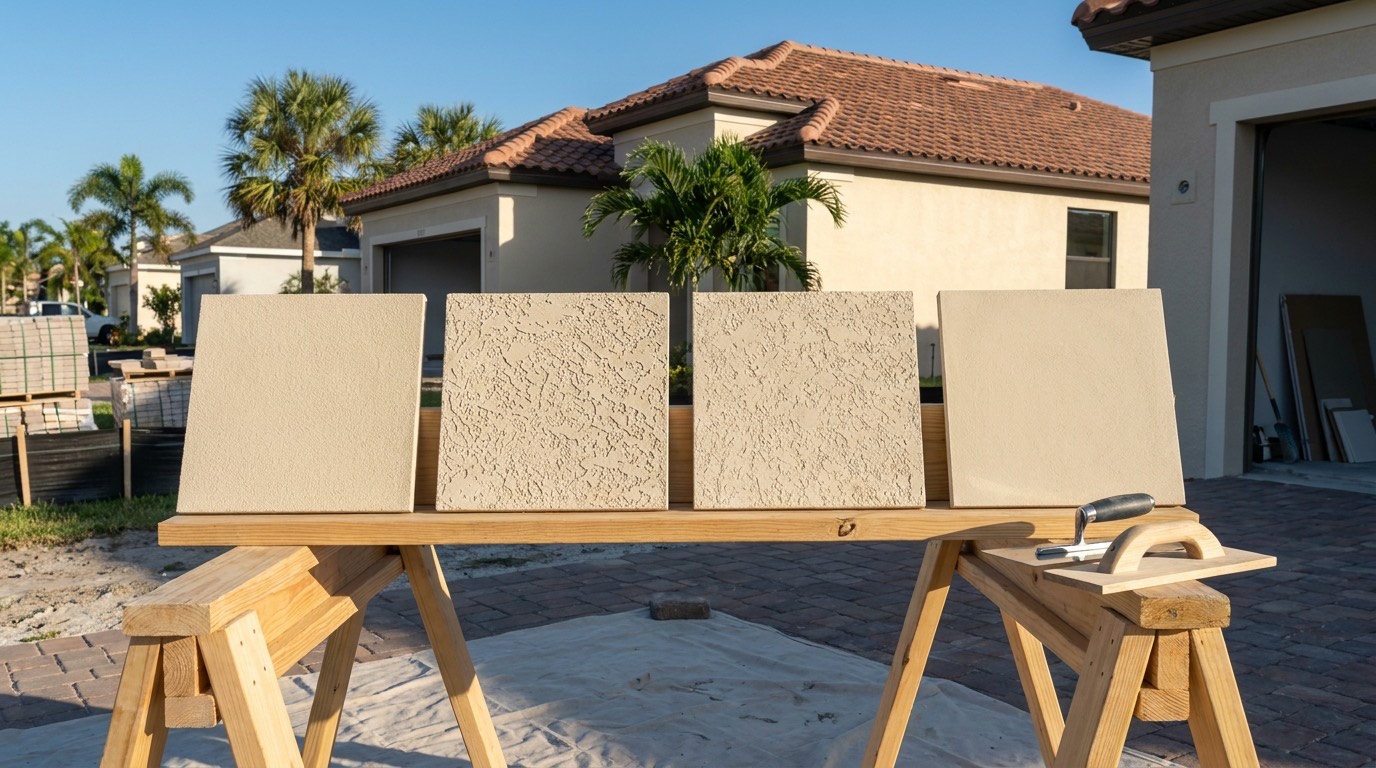
Listen to how the answer arrives
None of these are a quiz with correct answers waiting at the back. Stucco is site specific, and two good contractors will answer several of them differently and both be right. What you are listening for is whether an answer sounds worked out beforehand or assembled on the spot.
Somebody who has opened a few hundred walls between Fort Pierce and Hobe Sound has met every situation below already and has a habit for each one. The answers come quickly, they are specific to your house rather than to houses in general, and they include the parts that are not flattering. Vagueness is the signal here, not disagreement.
Take the list on paper. Nobody minds, and it slows the conversation down to a speed where you can actually think about what you are hearing.
What is behind the finish, and it depends where you live
Everything in a stucco price rests on what sits behind the finish, and nobody knows for certain until it is open. In this service area there are two very different answers and they are roughly geographic.
Older stock in Fort Pierce and Stuart includes frame walls with wire lath and building paper behind the plaster. After decades in this humidity the lath and its fasteners can be corroding, the paper can be brittle, and the failure carries on well past the crack you pointed at. Newer construction in Tradition and St. Lucie West is mostly plaster applied straight onto concrete block, where the base is stable and the trouble concentrates in the framed parts: gable ends, second floors, porch infills and additions.
So the questions here are really about how a contractor handles not knowing yet. What you want on the second one is a policy rather than a promise. We stop, we photograph it, we call you, and the extra area prices at the rate already written in the contract. A guarantee that nothing else will turn up inside a fifty year old Fort Pierce frame wall is not confidence. It is a wall nobody has opened.
- 1. Is each elevation block or frame behind the finish, and how do you know before opening it?
- 2. If the lath or the substrate is worse than it looks once open, what happens step by step and at what rate?
- 3. How far past the visible damage does removal run, and what lath, fasteners or accessories are being replaced?
Want a price for your own wall?
Four quick questions and we come back with a written quote. Or call (772) 251-6654 if that is faster.
Request a quote
Four questions, about a minute. We'll call you back.
Matching a wall the sun has already changed
This is where most complaints about finished stucco work begin. The repair is sound, the wall is dry, and from the street you can see precisely where it happened.
Two separate things are being matched and contractors sometimes only price the first. Texture is one: sand grade, tool, hand. Color is the other, and on a coastal elevation that has spent years in this sun the wall is no longer the color it was mixed to be. A south or west facing wall in Jensen Beach or Vero Beach has moved further than the shaded north side of the same house, so a patch mixed to the original formula lands as a bright rectangle.
Ask for a dried sample, made on a board or somewhere out of sight, because wet material lies about color and dry material tells the truth. Then ask where the coating stops. Blending into the patch area costs less and can ghost when the sun drops in the afternoon. Carrying the coating corner to corner across the elevation costs more and ends the question permanently.
- 4. How will you match my texture, and will I see a dried sample before it goes on a visible wall?
- 5. Are you matching the faded color or the original, and does the coating stop at the patch or run the elevation?
Wet season scheduling, and cure in this humidity
Work runs all year here. There is no freeze shutdown, which is a genuine advantage over most of the country. What replaces it is water and humidity, and both belong on the schedule rather than in the excuses.
From roughly June into September an afternoon storm is close to a daily event, and hurricane season carries on into November. Fresh coats and open wall have to be covered, and some days finish early whether anybody likes it. Every honest schedule on the Treasure Coast has weather days built into it. Ask how many are in yours and what happens to the finish date once they are spent.
Humidity pushes the other way. It slows drying, which is not the same thing as slowing cure, and putting a coating on a wall that has not had its time is one of the most common reasons a coating fails a year later. Ask for the actual intervals in days for your job, and ask what the coating manufacturer requires the wall to reach first, because that instruction belongs to the product and it varies between them.
- 6. How many weather days are built into this schedule, and how is open work protected overnight?
- 7. How long between coats, and how long does the wall cure in this humidity before any coating or paint?
Two approvals that are not the contractor's to give
Two separate permissions can sit in front of a stucco job here, and neither of them belongs to the person quoting you.
In a master planned community such as Tradition or St. Lucie West, an architectural committee generally reviews changes to exterior color and finish. What that committee requires, and how long it takes, varies by association, and only your association can tell you. What you can settle at the estimate is who is preparing the submission and when it goes in. Getting that sequence backwards means painting a house twice, and the second coat is at your expense.
The other permission is the building department, and which one depends entirely on the address. Port St. Lucie and Fort Pierce are in St. Lucie County. Stuart and Palm City are in Martin County. Vero Beach and Sebastian are in Indian River County. Whether your particular scope needs a permit is a question for that department rather than a guess at the kitchen table, and a contractor who works here can at least tell you which counter your house goes to.
- 8. Who submits color and finish to the architectural committee, and how long before work can start?
- 9. Which building department covers my address, and who confirms with them whether this scope needs a permit?
Your yard, your pool cage, and who is standing in them
Stucco is a messy trade. Chipping throws dust and debris, mixing throws splatter, washing puts water everywhere at once. On a typical Port St. Lucie lot the crew is working over an irrigation line, a screen enclosure and a pool deck, often all three, and under a barrel tile roof that does not enjoy being leaned on.
Ask what gets covered and by whom, where material gets mixed, and where the wash water ends up, because cement wash water kills plantings and stains a driveway. Ask what the site looks like at the end of each day rather than at the end of the job, since the daily version is what you live with for a week.
The same question covers people. You are giving strangers access to your yard, your hose bib and possibly your power for several days. Knowing who is employed, who is subcontracted and who runs the crew is entirely reasonable, and it tells you who to talk to when something needs deciding at eleven in the morning.
- 10. What gets protected, where does wash water go, and who supervises the crew day to day?
Money that appears later, and the promise that outlives the job
Nearly every stucco job that ends badly ended over money that turned up partway through. Not because the extra work was wrong, but because nobody agreed to it in writing before it happened. So ask for the mechanism rather than for reassurance. What form does a change order take, who signs it, and does work pause until it is signed. Anybody with a real process describes one without hesitating, because it protects them at least as much as it protects you.
On payment, shape matters more than the numbers do. A deposit sized to materials and mobilisation, progress payments tied to work you can walk out and see finished, and a final payment held until you have been round every elevation. Florida has consumer protection rules covering deposits on residential work, so if a deposit feels heavy for the job, that is fair to raise and worth confirming with DBPR or your county rather than accepting on trust.
The last question is the one people ask casually and then never see written down. Get the warranty into the contract along with its exclusions, because the exclusions decide whether a future claim goes anywhere. Ask how long workmanship cover runs, what is specifically excluded, whether the material carries a separate manufacturer warranty, and what would void either of them.
- 11. How do change orders work, will I sign before extra work starts, and what triggers each payment?
- 12. What does the warranty cover and exclude, how long does it run, and is all of that in the contract?
Related questions
Will asking twelve questions put a good contractor off?
It should not, and the reaction is useful either way. People who work carefully generally prefer an informed homeowner, because most callbacks and arguments grow out of expectations nobody discussed. If somebody gets impatient around question four, you have learned something valuable for the price of asking.
If I only have time for three, which three?
The concealed condition question, the color and texture matching question, and the change order question. Those three cover what actually generates disputes here: work that grows once an older Fort Pierce or Stuart wall is open, a repair that is sound but obvious from the street, and money that appears without anybody agreeing to it first.
Do I need architectural approval if the color is not changing?
Only your association can answer that, and the answer differs between communities in Tradition, St. Lucie West and elsewhere. Some review any exterior work, some only color changes, and some care about texture as well. Ask before the crew is booked, since a submission takes as long as it takes and a repainted house is expensive to redo.
How long should the wall cure before a coating goes on?
Ask for the number that applies to your job rather than a general rule, because it depends on the system, the thickness and the week's weather. What should worry you is a schedule with no waiting in it at all. Cement plaster gains strength over time, and humidity here slows drying, so coating too early is a common cause of failure later.
Two contractors gave me completely different answers. Who is wrong?
Usually neither. Different answers normally mean they are proposing different work, which is the single most useful thing you can discover before signing. Go back to each with the other explanation and ask them to respond to it. Their reasoning will tell you more than either original quote did.
Is it reasonable to ask to see a job in progress?
Yes, and it is one of the more revealing requests available to you. A crew's habits show on a live site: how material is being mixed, whether surroundings are covered, whether ladders are set properly, and what the property looks like when they pack up. Just clear the visit with the homeowner whose house it is.
More guides
All guides →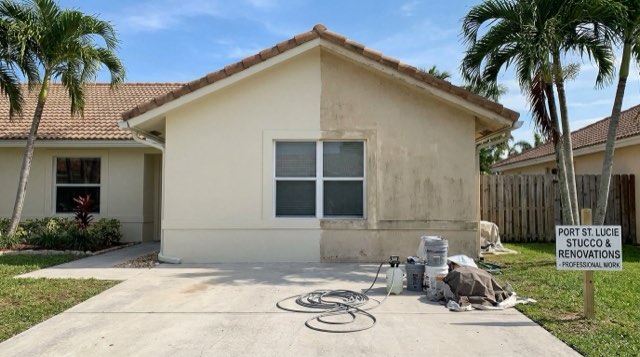 How it works
Patch Repair or Full Restucco? How to Decide
The choice between a patch and a full restucco is arithmetic, not a feeling. Measure what has actually failed, count the old patches, and see where the two costs cross.
ReadCost guideWhat Does It Cost to Restucco a Whole House in St. Lucie County?
Restucco means three different jobs at three different prices. Measure your own wall area first, then use the per square foot ranges below to work out which conversation you are actually having.
Read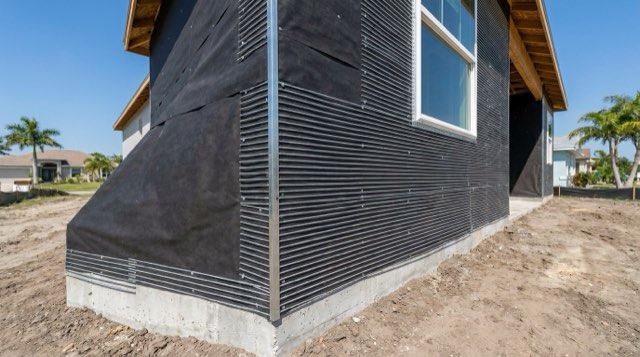 Diagnosis
Rust Stains Bleeding Through Stucco
An orange stain on stucco is downstream evidence. Something metal inside the wall is corroding and water is carrying it out. Here is how to find it and how the repair has to be done.
Read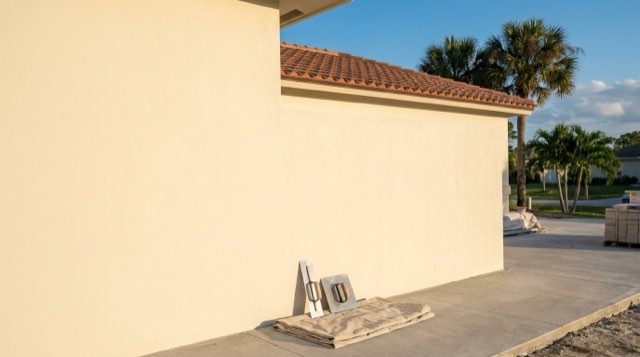 Maintenance
Sealing Hairline Stucco Cracks Yourself: When It Works
Some stucco cracks are a genuine Saturday job with a five dollar tube. Others will cost you money if you fill them. Here is how to tell which one you have, and how the season decides your prep.
Read Maintenance
What Sprinkler Overspray Does to Your Stucco
A head that clips the wall three mornings a week does more damage over five years than any storm does in a season. Start by reading the color of the band it leaves.
ReadStraight answer on your wall.
Call, or send the form and we will get you a written price.