Stucco Work in Hobe Sound: Estate Homes and Older Cottages
Hobe Sound is two housing markets under one name. A custom home with a hand applied finish and a 1960s cottage need very different stucco work, and very different pricing.
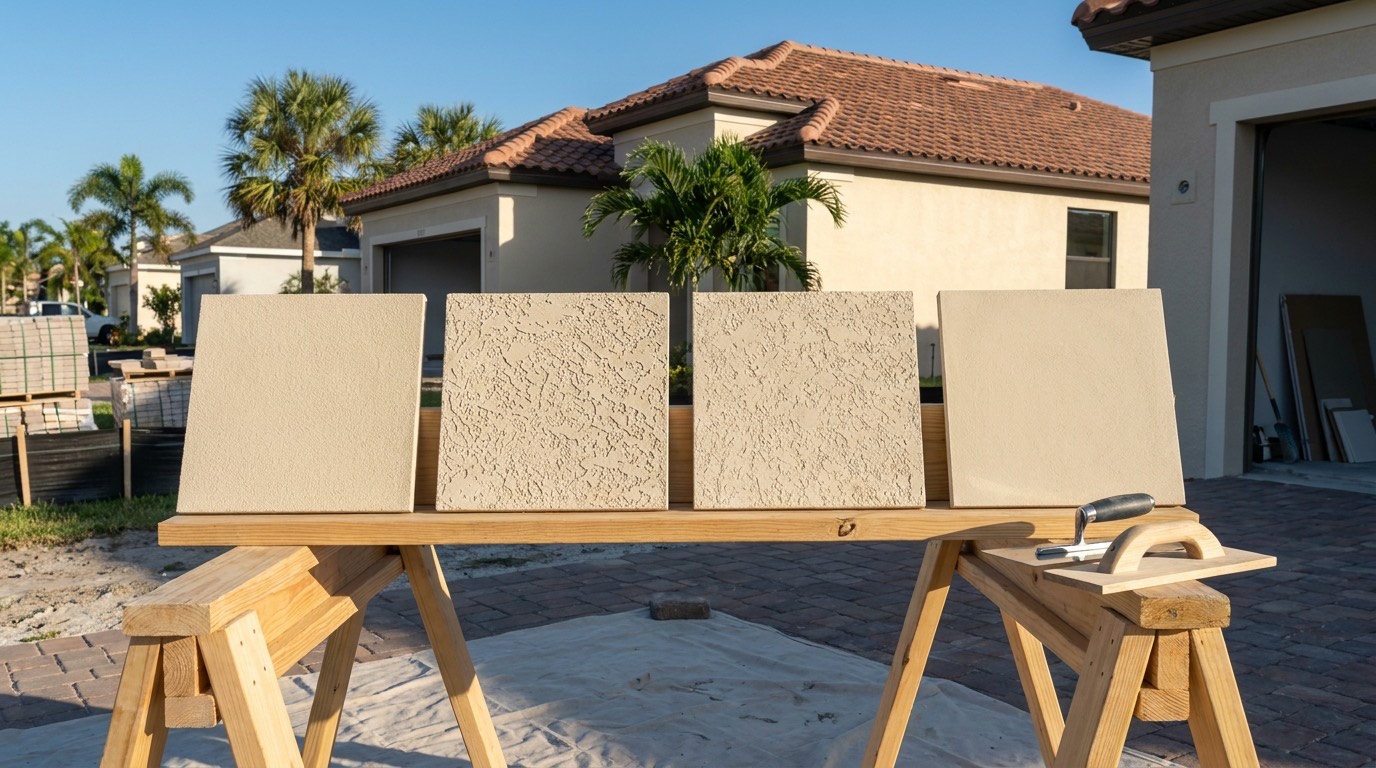
Which Hobe Sound is the house in?
Hobe Sound carries two housing stocks under one name, and a stucco price that ignores the difference is a guess. Out toward the water and along the estate roads there are large custom houses with hand applied finishes, deep reveals, arched openings and walls that were never meant to see a paint roller. Back through the older platted streets near the Bridge Road business strip there are small block and frame cottages from an earlier Florida, low and plain with a carport and a shallow roof.
Both sit in Martin County. Both take the same salt off the Atlantic and the Intracoastal. Both crack. What separates them is what a correct repair involves, because on one house the finish is the product and on the other the finish is a texture that can be matched in an afternoon.
So the first thing worth sorting out on a call is which of those two jobs you have. It changes the price, the schedule, and which hands should be on the wall.
Estate homes: the finish is the job, not the crack
On a custom home with a hand applied finish, the plaster is a finished material rather than a substrate waiting for paint. Integral color, burnished smooth surfaces, worked sand textures and heavy troweled lace all get their look from one person's hand on a particular day. There is no product code to reorder.
That is why a two foot crack on this kind of wall is rarely a two foot repair. Blending into a hand finish takes practice panels, cured samples and enough area to judge honestly, and there are finishes where the only result that looks right is redoing a full plane, corner to corner or joint to joint. A patch that stops in open wall reads as a patch for the life of the house.
None of that is a reason to panic about cost. It is a reason to have the conversation before the first trowel comes out, so you are choosing the finish approach instead of being handed the result.
- Sample panels made with the same material, the same sand and the same hand that will do the wall
- Color judged cured and dry, in the light that elevation actually gets
- Agreement in writing on where the finish stops: patch, plane, elevation or house
- A written record of the mix and material, because the next repair will want it
Want a price for your own wall?
Four quick questions and we come back with a written quote. Or call (772) 251-6654 if that is faster.
Request a quote
Four questions, about a minute. We'll call you back.
Older cottages: usually a smaller job than people fear
The older cottages are the easier half of town and it is worth saying plainly. Most are concrete block with a sand or dash finish, often with a framed gable end or a later addition over wire lath. The failures are ordinary: cracks off window corners, rust bleeding from an outside corner, damage at hose bibs and air conditioning line penetrations, and a low band of wall where a sprinkler has been hitting the stucco for years.
Those repairs are routine, and a coarse texture is forgiving. A sand finish hides a blend far better than a burnished wall does, which means the honest answer on many of these houses is to do less than the homeowner expected and put the money into the coating and into whatever is wetting the wall.
What does surprise people on cottages is what sits behind the plaster. Older stock has been altered. Enclosed carports, replaced windows and added rooms all leave seams, and a seam is where the wall tells you the truth once it is opened.
Gated communities have their own site rules, and they come first
A good share of the work here happens behind a gate, and the gate has a process. Associations commonly want a contractor registered before the first truck arrives, with license and insurance certificates on file, vehicles and workers named on an access list, and agreed working hours. Some limit noisy work to certain days, restrict deliveries, or set where a material pallet, a mixer or a debris trailer may sit and where tools may be washed out.
None of that is unreasonable, and none of it is a problem when it is handled a week early. It becomes a problem at seven in the morning at the gate house with a loaded truck and a crew already on the clock.
Every association writes its own rules and they are not interchangeable. Get yours from your property manager in writing and hand it to whoever is bidding, so the schedule you are promised is one that can actually happen.
- Contractor registration, license and certificate of insurance on file
- Named access list for vehicles and workers, updated when the crew changes
- Permitted working hours and any restricted days
- Approved spots for staging, mixing, tool washout and debris
- Whether exterior color or finish changes need architectural approval first
Salt exposure here is not a background detail
Hobe Sound sits on a narrow piece of ground with the Atlantic on one side and the Indian River Lagoon and the Intracoastal on the other. Airborne chloride reaches walls on both faces of a house, and the elevations that look at open water take the spray and the storm driven rain that carries it.
Salt does not eat cement plaster the way people picture. What it attacks is metal, and a stucco wall is full of metal. Corner bead on every outside corner. Casing and stop beads at openings. Lath and fasteners anywhere the wall is framed. Steel inside a precast lintel over a window. When that metal corrodes it swells, and swelling metal pushes plaster off the wall from the inside.
The tell is a crack that runs unnaturally straight, a ridge you can feel with a flat hand crossing it, and rust color weeping out of the line. On a coastal house that combination is not cosmetic, and sealing it only buys a season.
Color and texture matching on a house with no paint code
Matching is where estate work slows down, and slow is the right answer. Integral color in a finish coat behaves nothing like paint on a chip. It shifts as it cures, it varies with the sand, and it looks like one color at ten in the morning and another at four in the afternoon.
The method that works is unglamorous. Make more than one sample. Let them cure. Look at them on the wall they belong to, at two times of day, before anybody commits. If the house has been coated rather than left in its integral finish, keep the coating records with the house documents, because the next repair and the next owner will both want them.
Never let a wet patch be judged. Fresh plaster is always darker than it will be, and a match approved on a wet wall is a mismatch approved in advance.
What an estimate for a Hobe Sound house should spell out
A bid on a coastal Martin County house should read differently from a bid on an inland tract home, because the risks are different. Two things move the number here more than anything else. Corrosion found once the wall is open, and how much finish work it takes to make the repair invisible.
Ask both questions in writing before work starts rather than after. A contractor who has worked this coast will already have a clear answer for what happens when rusted bead is found running well past the marked area, because on these houses it regularly does.
- How far past the visible damage removal will go, and how that is measured
- What replaces corroded accessories, and in which material
- Whether finish stops at the patch, the plane or the whole elevation
- The sample panel process, and who signs off on the match
- Gate access, staging and working hours agreed with the association in advance
- A written policy and rate for hidden corrosion found after the wall is opened
Related questions
My street is gated. How far ahead do you need the access details?
Give it about a week where you can. Most associations want a contractor registered, license and insurance certificates on file, and every vehicle and worker named on the gate list before anyone is let through. Ask your property manager for the packet and pass it straight to whoever is bidding. It is the single easiest way to keep a start date from slipping.
Can a hand troweled finish really not be patched?
It can be patched, and the real question is whether the patch will be invisible. Coarse and heavily worked textures blend well. Smooth burnished finishes and strong integral colors are much less forgiving, and on those the finish often has to run to a natural stopping point such as a corner or a joint. Ask for a sample panel before committing to a scope.
How do I tell whether my Hobe Sound cottage is block or frame?
Tap it. Block sounds solid and dead, frame walls sound lighter and more hollow between studs. Deep window reveals usually mean block, and gable ends above the ceiling line are frequently framed even on a block house. A contractor confirms it by opening a small area, which is worth doing before any scope is priced.
How often should a house this close to the ocean be recoated?
More often than the same house inland, and not evenly on every side. The elevations facing open water usually need attention years before the sheltered ones. Rather than working to a fixed number, look at the wall: chalk on your hand, color drift, and hairline crazing that has become visible from the drive all mean the coating is done. Check the service life on the manufacturer data sheet for whatever was applied.
Is rust staining on an outside corner always a big repair?
No, but it is always a real one. The staining tells you metal is corroding, and corroded metal has to come out rather than be covered. How big the job gets depends on how far the corrosion runs, which is why the wall is sounded first and marked before a price is written. Sometimes that is a few feet of corner, and sometimes it is the full height of it.
Do I need association approval to repair in the same color?
Often yes, even for like for like work, and the requirement varies from one community to the next. Some want an application for any exterior work, some only for a color change. Ask your manager in writing before material is ordered. Redoing an unapproved finish is the most avoidable expense in this whole trade.
More guides
All guides →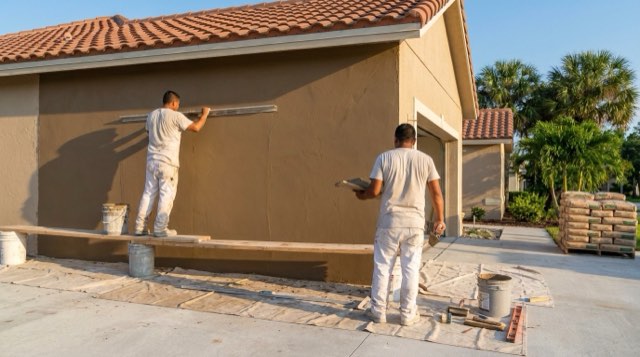 Storm season
Stucco Damage and Insurance Claims: What to Document
We are stucco contractors, not insurance advisers. What we can explain is how a wall gets recorded properly here, because a soaked block wall photographed on the wrong day tells the wrong story to everyone.
Read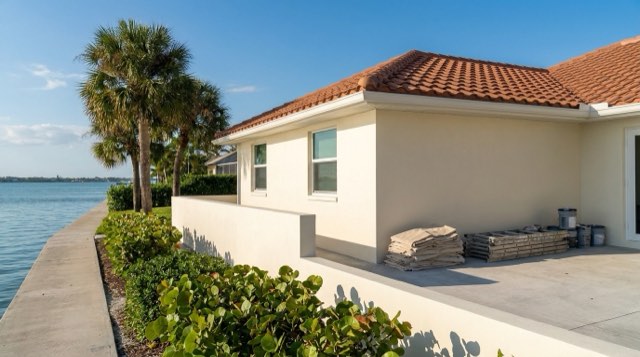 Local guide
Salt Damage to Stucco in Jensen Beach
Jensen Beach has the Atlantic on one side and the Indian River on the other. That geography, not the age of the house, is what decides how long your stucco and sealant last.
Read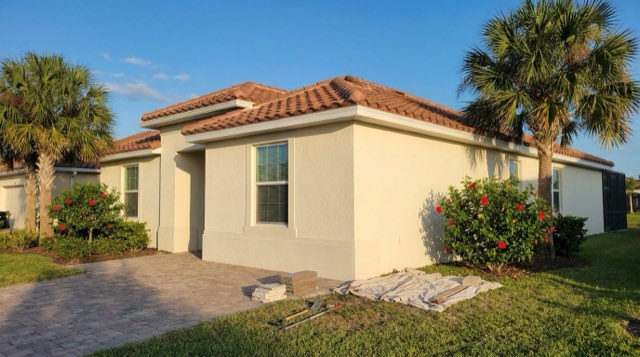 Maintenance
A Realistic Stucco Maintenance Schedule for Florida Homes
Stucco is a low maintenance wall, not a no maintenance wall. Here is the schedule a Port St. Lucie homeowner can actually keep, including the parts where the right answer is to do nothing.
Read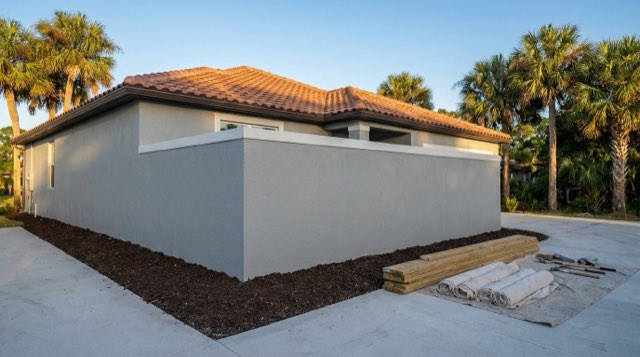 How it works
Block or Frame: Which Stucco Wall Does Your House Have?
Two walls that look identical from the driveway behave nothing alike. How to tell block from frame using the age of your house, the street it sits on and ten minutes with a magnet.
Read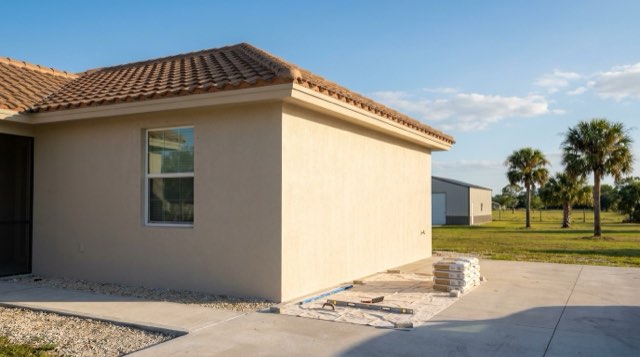 Local guide
Hairline Cracking on Palm City Block Homes
Inland Martin County has no salt problem, so almost everything that goes wrong on a Palm City stucco wall traces back to water and to where it is coming from.
ReadStraight answer on your wall.
Call, or send the form and we will get you a written price.