How Much Does Stucco Repair Cost in Port St. Lucie?
Stucco repair is priced off what the wall turns out to be, not off the crack you can see. Here are the ranges homeowners on the Treasure Coast run into and what pushes a job to the top of them.
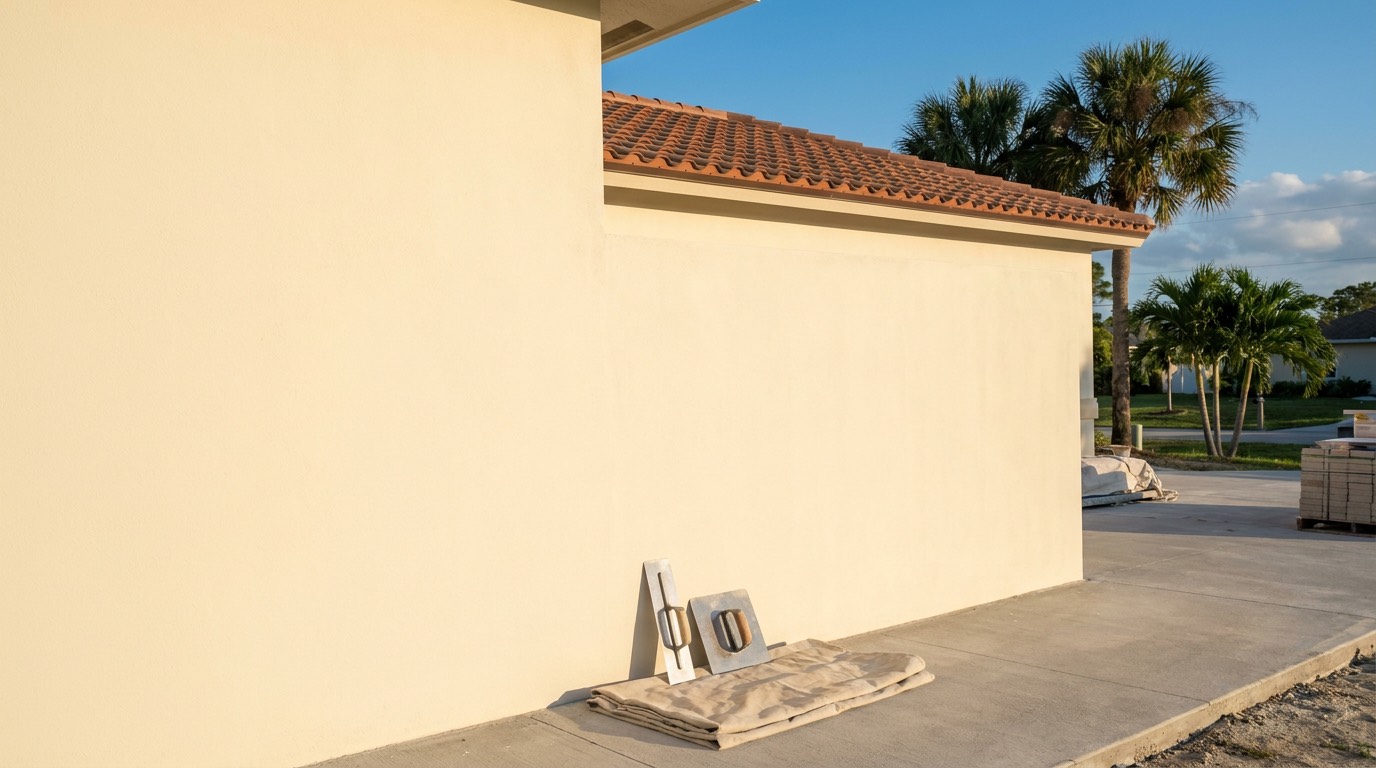
Why there is no single price for stucco repair
Stucco repair is not a product with a shelf price. It is a diagnosis followed by a repair, and the repair is sized by what the wall turns out to be once somebody sounds it and opens it. Two houses on the same street in St. Lucie West can show the same hairline crack under the same window and end up as two very different invoices.
On one house the crack is shrinkage in the finish coat and nothing more. On the next it is the visible end of a hollow area that runs three feet in every direction because water got behind the plaster and broke the bond. The first is an afternoon. The second is a section of wall coming off and going back on. Treat the ranges below as a budget frame, not a quote.
The three ways repair work actually gets priced
Almost every stucco repair estimate on the Treasure Coast is built one of three ways, and knowing which one you are looking at makes two bids comparable.
Small work is priced against a minimum. Loading a truck, mixing material, protecting landscaping and returning twice to finish and coat all cost the same whether the damaged area is two square feet or twenty. That is why a tiny repair feels expensive per square foot.
- Service minimum, commonly in the $350 to $750 range for a small repair visit on the Treasure Coast, before material and finish work
- Per square foot of patched area, often $10 to $25 for small isolated patches and $8 to $15 where the damaged area is larger and continuous
- Per job for a defined scope, used when the repair is a whole elevation or a full band of wall and the crew is on site for several days
- Separate line for access, when a lift, staging or scaffold is needed rather than ladders
Want a price for your own wall?
Four quick questions and we come back with a written quote. Or call (772) 251-6654 if that is faster.
Request a quote
Four questions, about a minute. We'll call you back.
Crack repair, the bottom of the range
Fine map cracking across a wall field is usually the cheapest thing that happens to stucco. It is generally shrinkage, it is generally shallow, and on a block home it is often handled by routing, filling and then coating the elevation so the repair disappears into the wall rather than sitting on it as a stripe.
A single elevation of routine crack work commonly lands between $400 and $1,500 depending on linear footage, wall height and whether the whole face gets coated afterward. Cracks off window and door corners are different. Those are stress cracks, they come back if they are only filled, and the repair has to deal with the movement behind them.
If a contractor quotes crack repair without walking the wall and sounding it, they are quoting the crack, not the wall. That is how people pay twice.
Hollow, delaminated and spalling stucco, the middle and top
When stucco has lost bond, tapping it gives a dull thud instead of a ring. Delaminated material has to come off. It cannot be glued back down and it will not hold a patch. Cost then becomes a function of how many square feet come off, how high up the wall, and what is underneath.
On a concrete block home the substrate is usually still sound once the loose plaster comes off, which keeps the repair predictable. On a frame wall or a foam band, the crew can find rusted lath, soft sheathing or a failed flashing detail. That is where an estimate turns into a range, because nobody can price what is behind an intact wall.
Spalling with rust staining is its own category. When embedded steel or lath is corroding, that steel has to be cleaned or replaced and treated before anything goes back over it. Skipping that step is why some houses get the same repair three times.
- Isolated hollow patches, typically priced per square foot with a minimum
- A full elevation of delaminated stucco, usually priced as a defined job
- Rust and spall repair, adds steel treatment or replacement to the scope
- Anything above one story, adds access cost before a single trowel moves
The conditions on your house that move the number
Most of the spread between a low estimate and a high one is not profit. It is site condition. A single story block house in Tradition with clear ground on all four sides sits at the easy end of what this trade does. A two story house in Palm City with a screen enclosure, mature plantings and a pool deck under the damage does not.
Salt exposure matters too. Homes near the Indian River Lagoon and along the Fort Pierce and Jensen Beach coast sit in a harsher environment than homes inland toward Okeechobee. That shows up as more corrosion driven damage and more preparation.
- Wall height and whether ladders will reach or a lift is required
- Barrel tile roof edges and soffit details that have to be worked around carefully
- Screen enclosures, pool cages and pool decks limiting where equipment can sit
- Landscaping and irrigation against the wall that has to be protected or cut back
- Occupied home versus vacant, which changes staging, hours and cleanup
- Salt air near the coast and the lagoon, which drives corrosion related repairs
- Whether the cause of the water is being fixed at the same time
Texture and color matching is a real line item
This is the part homeowners do not budget for. A structurally perfect patch that does not match the surrounding texture is still a visible patch, and from the driveway that is all anyone sees. Matching an old knockdown, sand, dash or worn lace texture takes sample boards and time, and time is the cost.
There are two honest ways to finish a repair. Blend the coating into the patch area, or coat the entire elevation corner to corner so there is no line. The second costs more up front and looks right for years. The first can look right today and show a ghost when the sun hits it in six months.
If your home is in a master planned community such as Tradition or St. Lucie West, color is not fully your decision. Those associations typically run architectural review. Check with yours before anybody buys material, because repainting in an approved color afterward is the most avoidable cost on this page.
How to compare two estimates without just taking the low one
Bids on the same house can differ by a factor of three, and usually the two contractors are not pricing the same work. One is filling cracks. The other is removing failed material back to sound stucco, rebuilding the coats and coating the elevation. Both are legitimate scopes. They are just not the same scope. So make each one put the following in writing.
Then get the site visit. Every figure here is a market frame, not a price for your house. Twenty minutes walking your walls with a hammer handle is worth more than any cost guide, including this one.
- Measured area of removal, not just the length of the crack
- Number of coats going back and whether lath is being replaced
- Texture match method and whether a sample is being made
- Coating scope, patch area only or full elevation
- Written policy for hidden damage found after opening the wall
- Who is protecting landscaping, pool cage and windows, and who cleans up
Related questions
Is there a minimum charge for a small stucco repair?
Almost always, yes. Most crews on the Treasure Coast carry a service minimum because setup, mixing, protection and return trips cost roughly the same on a small patch as a large one. If you have several small areas, get them all done in one visit. That way you buy the minimum once instead of three times.
Can I just caulk and paint the cracks myself?
On a fine shrinkage crack in a wall field, a flexible sealant and a coating will hold for a while. The problem is that caulk over a stress crack or a hollow area hides a moving or debonded wall instead of fixing it. Tap around the crack first. If the sound goes dull, you are sealing water inside the wall.
Does homeowners insurance pay for stucco repair?
It depends on the cause and on your policy. Damage from a sudden covered event is treated differently from gradual water intrusion or wear, and those distinctions are written into each policy separately. Call your carrier and ask before work starts, because documenting the cause usually has to happen before the wall is repaired.
Why did one contractor quote twice what another did?
Usually because they scoped different work. A low bid often prices filling and coating what is visible. A higher bid often prices removing failed material back to sound stucco, rebuilding coats, and coating the full elevation so no patch line shows. Read both scopes side by side before you read either price.
How long does a typical stucco repair take?
A small patch is often a day of work spread across two or three visits, because the coats need time between them. A full elevation with removal and rebuild is commonly several days to a week. Florida gives us a year round work season, but summer storms and humidity stretch cure windows, so schedules here should have weather days in them.
Do I need a permit to repair stucco in Port St. Lucie?
That depends on the scope and the jurisdiction. Port St. Lucie, Fort Pierce, unincorporated St. Lucie County and the Martin County towns each administer their own permitting, and cosmetic patching and large scale re-cladding are not always treated the same way. Ask your contractor what they intend to pull, then confirm it with your local building department.
More guides
All guides →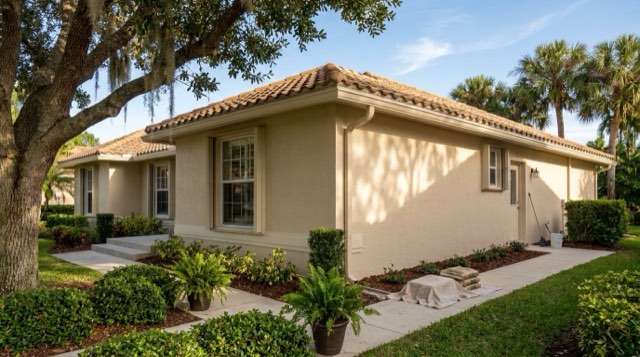 Local guide
Stucco Repair in Fort Pierce: Older Homes, Older Problems
Fort Pierce housing is decades older than the block subdivisions south of it. That changes what is behind the stucco, how it fails, and what a real repair involves.
Read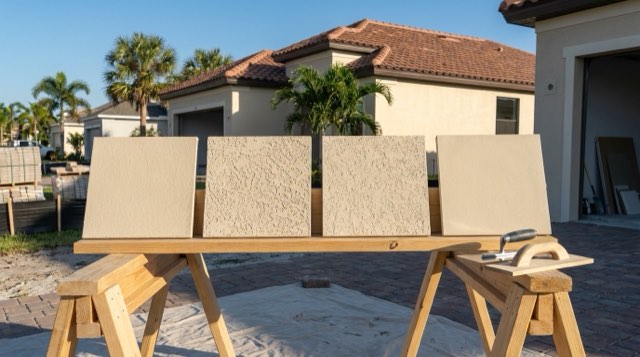 Local guide
Stucco Work in Stuart: Historic District and Waterfront Homes
In Stuart the repair itself is rarely the hard part. Getting it to disappear into an older, carefully kept house is, and the decorative profiles are what separate a good crew from an average one.
Read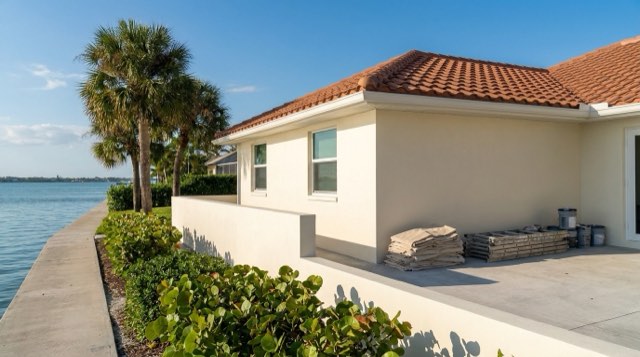 Local guide
Stucco Repair in Sebastian and the Indian River Lagoon
In Sebastian almost every stucco repair traces back to the lagoon. Salt corrodes the metal buried in the wall, and the coarse original sand finishes take real effort to match.
Read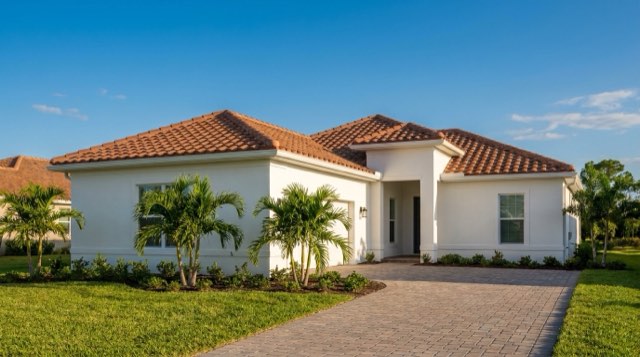 Local guide
Stucco in St. Lucie West: Villas, Townhomes and Color Matching
Attached villas and townhomes make stucco a shared problem. Matching a neighbor's twenty year old color, repairing foam bands and getting an architectural submittal right all decide the result.
Read Diagnosis
Dark Streaks and Staining on Treasure Coast Stucco
Most stucco staining is a drainage problem wearing a disguise. Read where the streak starts and what shape it takes, and the cause usually names itself.
ReadStraight answer on your wall.
Call, or send the form and we will get you a written price.