Stucco Repair in Sebastian and the Indian River Lagoon
In Sebastian almost every stucco repair traces back to the lagoon. Salt corrodes the metal buried in the wall, and the coarse original sand finishes take real effort to match.
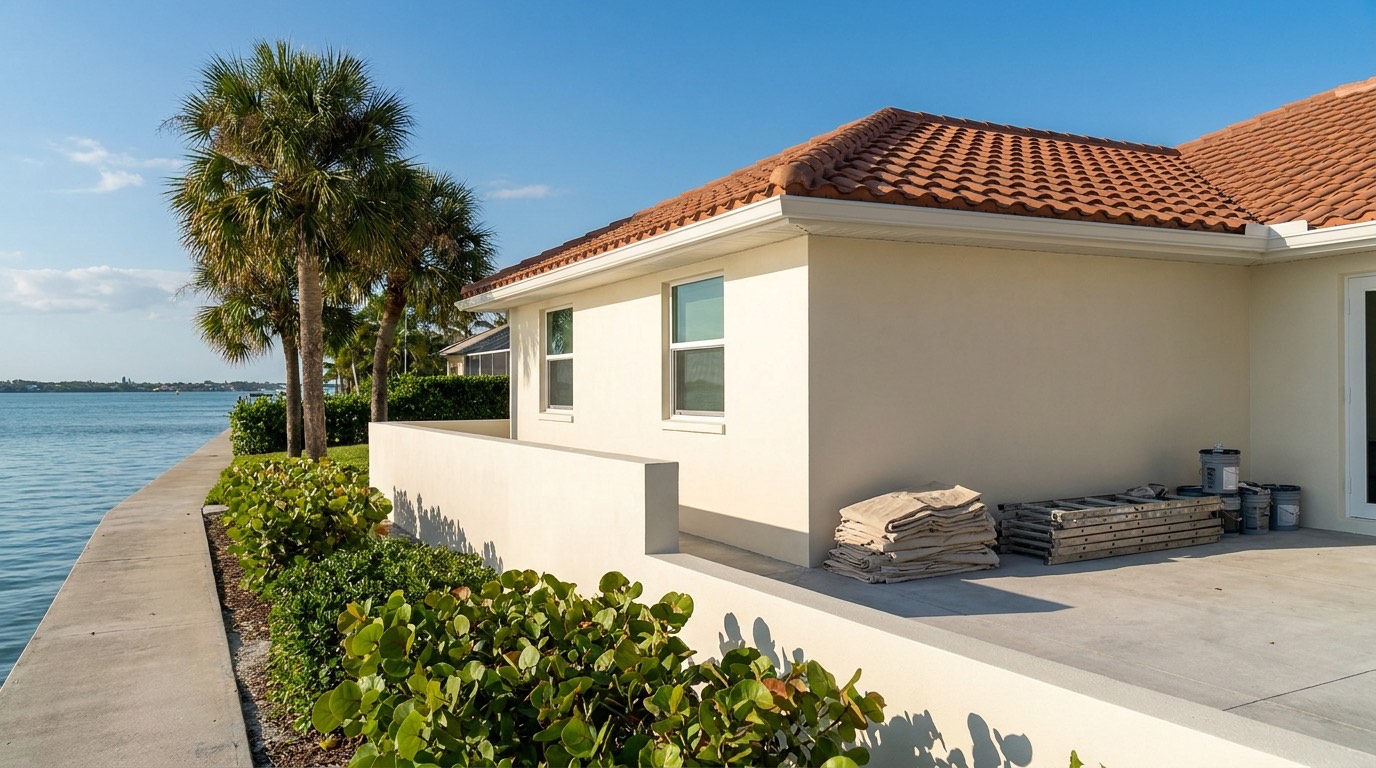
Sebastian is Indian River County, and that changes more than the drive
Sebastian sits on the west bank of the Indian River Lagoon, north of Vero Beach and well past the St. Lucie County line. For a homeowner reading advice written for Port St. Lucie, two practical things are different. Permitting and inspections here are administered by the City of Sebastian or Indian River County rather than by Port St. Lucie or Fort Pierce, and the housing stock is its own animal.
Much of the residential ground was platted long before it filled in, so one street can hold a 1970s block ranch, a house from the 1990s and something finished last spring. There is no single Sebastian house, and a quote given over the phone from a description of the street is worth nothing.
What is consistent is the water. The lagoon is right there, canals run back into the neighborhoods, and the inlet is up the road. Salt is the thread running through nearly every repair in this town.
Lagoon salt is not a weaker version of ocean salt
Homeowners on the river side often assume they are in the mild zone. On a wall it does not work out that way. Chloride travels on the wind off open water, and the lagoon is open water with a long fetch across it. Houses on canals collect it, and so do houses several streets back, because the breeze carrying it does not stop at the second row.
There is a second source people forget. Irrigation. Shallow well water in this part of the coast can carry enough mineral to stain a wall orange and to leave the base of the stucco wet every single morning. A sprinkler head that has been throwing water at the same corner for a decade does more damage than any storm has.
Cement plaster itself copes with salt reasonably well. The metal inside it does not, and that is where the repair work in Sebastian concentrates.
Want a price for your own wall?
Four quick questions and we come back with a written quote. Or call (772) 251-6654 if that is faster.
Request a quote
Four questions, about a minute. We'll call you back.
The metal inside your walls, and the order it gives out
A stucco wall is not only cement. It contains accessories that shape it, terminate it and hold it, and most of those are steel. Corner bead runs the full height of every outside corner. Casing and stop beads finish the edges at windows, doors and soffits. A screed or stop sits at the bottom of the wall. Any framed area, whether a gable end, a Florida room or a later addition, is built over wire lath fastened back to the framing.
Corrosion works through them in a fairly predictable order, and knowing it tells you where to look on your own house before anyone else does.
- The base of the wall, wherever sprinklers or splash keep it damp
- Corner bead on outside corners, worst on the elevations facing the water
- Casing and stop bead around window and door openings
- Wire lath and its fasteners on gable ends and frame additions
- Steel inside a precast lintel over an opening, which shows as a horizontal line
Reading rust before the wall opens itself
Rust jacking gives plenty of warning if you know its handwriting. A crack that is suspiciously straight and follows a construction line instead of wandering. A raised edge you can feel by dragging a flat palm across it. Brown or orange staining bleeding downward out of the line. A dull, hollow note when you tap either side of it with a knuckle or a screwdriver handle.
Two of those together is reason enough to have the wall sounded. All four means the metal has already swollen and the repair will be bigger than the crack suggests, because the damage runs as far as the corrosion does.
The thing that never works is sealant. Caulk over corroding steel changes nothing about the reaction underneath it. The same line reopens, usually wider, often within a couple of seasons. It is the most common piece of wasted money in coastal stucco.
Doing a corrosion repair once
The work itself is not complicated, but the order is not optional. Remove plaster back past the corroded metal until sound material and sound accessory remain. Take the damaged bead or lath out instead of burying it again. Clean and treat any steel that has to stay. Fit new accessory, lap and tie new lath properly into the existing, then rebuild the coats and let them cure before finishing.
Replacement material is worth a direct question this close to salt water. Standard galvanised bead is the default and it is what most walls here already have. Stainless and PVC accessories cost more, do not corrode, and are a reasonable trade on a lagoon front elevation. ASTM International publishes the consensus standards this trade works to, with ASTM C926 covering application of portland cement plaster and ASTM C1063 covering installation of lathing and accessories. Asking a bidder which they build to is a fair question and a revealing one.
Anything short of that sequence is a cosmetic patch laid over an active reaction, and the wall will make that clear on its own schedule.
Matching a coarse original sand finish
Older Sebastian houses often wear a coarse sand or dash finish with visible aggregate, thrown or sprayed and left alone. Newer crews are generally quicker with a fine sand or a knockdown, and that is exactly why a poor patch stands out here. Set a fine texture beside a coarse one and the eye finds the line from the street even when the color is perfect.
Matching means matching the sand, not only the technique. Aggregate size, how wet the mix is, whether it is hand thrown or gunned, and how hard it is knocked back all change the result. It takes samples on a board or on a hidden elevation, and it takes looking at them dry rather than fresh.
There is also decades of weather on the original wall. A technically perfect new match often reads slightly too crisp beside it, which is one good reason to coat a full elevation after a large repair instead of leaving an island of new work in the middle of an old wall.
Hiring for a Sebastian job without surprises
Ask what happens when the wall opens up worse than expected, because on a corroding coastal wall it sometimes does. A contractor who works this stretch of coast will already have an answer and a rate for it rather than a shrug.
Confirm who is pulling permits and with which office, since Sebastian addresses are not administered by the same building department as Port St. Lucie, and different scopes are treated differently from one jurisdiction to the next. Then fix whatever is wetting the wall while the crew is on site. Moving a sprinkler head is the cheapest line item on this entire page and it decides how long the rest of the work lasts.
- A written policy and rate for corrosion found past the marked area
- Which accessory material is going back in, and the reasoning behind it
- Whether sand and texture get sampled and approved before the wall is finished
- Coating scope: patch area only, or the elevation corner to corner
- Who confirms permitting with the local building department, and when
- Irrigation, gutters and splash corrected as part of the same visit
Related questions
Does a house on a canal count as coastal exposure?
For stucco purposes, yes. Salt reaches the wall on the wind, and a canal connected to the lagoon carries the same air as the open river. Homes a few streets back are not exempt either. The difference between a canal home and a river front home is degree and which elevation gets hit hardest, not whether corrosion is a factor.
There is orange staining near the bottom of my wall. Is that rust?
Not always. Iron in shallow well irrigation water leaves an orange stain that sits on the surface and often covers a wide, sprayed shaped area. Rust from corroding metal bleeds out of a specific crack or a specific line and usually comes with a ridge you can feel. If the stain has a fan shape and a sprinkler pointing at it, start with the sprinkler.
Are stainless or PVC accessories worth the extra cost here?
On the elevations that face the lagoon or a canal, they are worth pricing. They cost more up front and they remove the failure mode that causes most repeat repairs on this coast. On sheltered elevations, standard galvanised accessory installed properly and kept dry does its job. Ask your contractor to price both so the decision is yours.
Can the coarse finish on my 1970s house be matched?
Usually, but it takes sampling rather than guessing. The crew has to get the aggregate size and the placing method close, then look at the sample dry and in daylight next to the existing wall. Expect a sample step in the schedule on any older Sebastian house. A repair that skips it is a repair you will notice every time you pull into the driveway.
Do I need a permit for stucco repair in Sebastian?
It depends on the scope and on which office administers your address, and small cosmetic patching is not treated the same as removing and replacing large areas of cladding. Ask your contractor what they intend to pull and confirm it directly with the City of Sebastian or Indian River County building department. Do not rely on what was true for a friend in another county.
Should I coat the whole house after one repair?
Not necessarily the whole house, but usually the whole elevation the repair sits on. Coating corner to corner puts the edge of the new work at a natural line instead of in open wall, which is what keeps a patch from showing. Whether the other three elevations go at the same time is a budget question, and there is no harm in phasing them.
References
Standards bodies and agencies referenced above. We are not affiliated with them.
More guides
All guides → Local guide
Stucco in St. Lucie West: Villas, Townhomes and Color Matching
Attached villas and townhomes make stucco a shared problem. Matching a neighbor's twenty year old color, repairing foam bands and getting an architectural submittal right all decide the result.
Read Diagnosis
Dark Streaks and Staining on Treasure Coast Stucco
Most stucco staining is a drainage problem wearing a disguise. Read where the streak starts and what shape it takes, and the cause usually names itself.
Read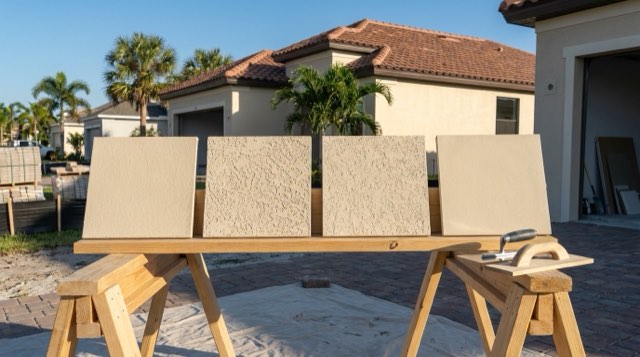 How it works
A Plain Guide to Florida Stucco Textures
Six textures cover almost every stucco wall between Vero Beach and Hobe Sound. Here is how to tell them apart, which ones hide a patch, and what integral color changes.
Read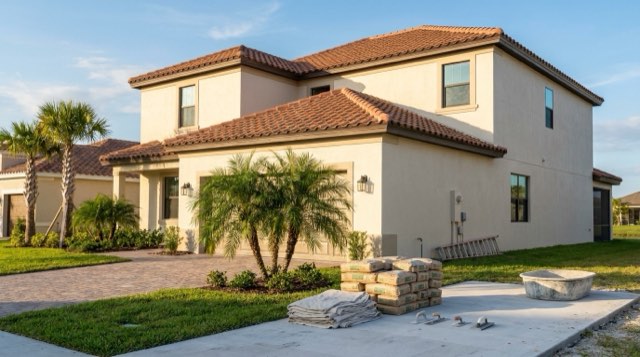 Local guide
Stucco on Newer Tradition Homes: Settlement Cracks and Warranty
New houses crack while they finish curing and settling. On a recent Tradition build the first call should be to the builder's warranty line, not to a contractor.
Read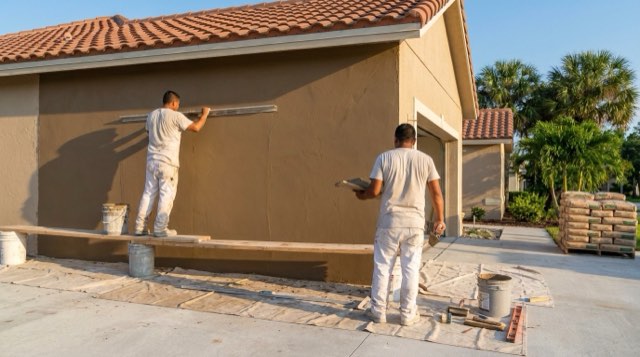 Local guide
Stucco Contractors Serving Vero Beach and Indian River County
Vero Beach is a different county from the rest of the Treasure Coast, and a lot of its owners are not in town when the work happens. Both facts should shape how you hire.
ReadStraight answer on your wall.
Call, or send the form and we will get you a written price.