Stucco on Newer Tradition Homes: Settlement Cracks and Warranty
New houses crack while they finish curing and settling. On a recent Tradition build the first call should be to the builder's warranty line, not to a contractor.

A two year old house with a crack over the garage
It is one of the most common calls we take from Tradition. The house is barely out of its wrapper, the landscaping is still young, and there is a crack running up out of the garage door corner or above a bedroom window. The first thing worth saying is that on a new Florida house this is normal far more often than it is a defect.
Tradition is a newer master planned part of Port St. Lucie, out on the western side of the city, and much of it is recent enough that houses are still in their first movement cycle. Cement plaster shrinks as it cures and keeps at it for months after the crew has gone. Fresh framing dries out. Fill and landscaping settle around the slab.
So the question on a house this age is not whether it will crack. It is which kind of crack you have, and who is supposed to pay for it.
Shrinkage, thermal and settlement do not look alike
Shrinkage cracking is fine and often web like across a wall field, and it stops changing once the wall has finished curing. Thermal cracking appears on the elevations that cook, usually south and west, and it opens and closes very slightly through the day as the wall heats and cools.
Settlement is the one homeowners worry about, and it has a different handwriting. It tends to widen toward one end rather than holding an even hair width, and sometimes the two sides are no longer in the same plane, so you can feel a small lip when you drag a finger across it. It often arrives alongside a door or window that has stopped latching cleanly.
Stress cracks off the corners of openings sit between the two. They are extremely common on new construction, they are usually not structural, and they still deserve a proper repair because a crack beside a window perimeter puts water right where the flashing and sealant live.
- Fine or map cracking in a wall field: shrinkage, monitor and coat
- Diagonal out of a window or garage corner: stress, repair it properly
- Even hairline that has not changed in a year: stable, leave it alone
- Widening at one end, or with a lip you can feel: get it looked at
- Cracks plus doors and windows binding: engineer first, plasterer second
Want a price for your own wall?
Four quick questions and we come back with a written quote. Or call (772) 251-6654 if that is faster.
Request a quote
Four questions, about a minute. We'll call you back.
Read the warranty before you pay anybody
This is the most valuable paragraph on the page for a Tradition homeowner. On a recent build there is a fair chance the crack you are looking at is somebody else's responsibility. Builder warranties commonly separate workmanship, systems and structural coverage, each with its own term and its own claim procedure, and those terms differ from builder to builder and contract to contract.
Nobody can tell you what yours says except your own paperwork. Find the warranty booklet from closing. Find the claim procedure. Find the deadline. Many warranty programs require written notice within a stated period, and many require the builder to be given the opportunity to inspect and to repair before anyone else touches the wall.
That last point is the trap. Hiring your own contractor to fix something still covered can end the claim outright. Call the builder's warranty line first, even when you expect to be told no, and get whatever they tell you in writing.
- Locate the warranty documents from closing before making any calls
- Note the term for each coverage type and the deadline for giving notice
- Follow the written claim procedure exactly, and submit in writing
- Let the builder inspect first where the documents require it
- Keep copies of everything sent and every answer received
Document it the way a claim wants it documented
Whether the claim succeeds or not, documentation costs nothing and takes minutes. Photograph the crack straight on with a tape measure or a coin beside it for scale. Note the date. Take a wide shot as well, showing where on the house the crack sits. Then take the identical photograph from the identical spot six months later.
Two dated photographs from the same position settle arguments that no amount of description can. A crack that has finished moving looks the same in both. One that is still working is obvious side by side, and that comparison is precisely what a warranty administrator, an engineer or an adjuster wants to see.
Keep a plain log with it. Date, location, width, and anything unusual the weather has done. It feels fussy for a hairline crack. It is also the difference between a claim taken seriously and a phone call about a crack.
Why an imperfect patch shows more in Tradition than anywhere else
Older neighborhoods hide repairs. Weathered walls, varied colors, coarse textures and mature landscaping all give a patch somewhere to disappear into. A newer street does the opposite. Elevations repeat down the block, the colors are close to one another, the textures are flat and even, and the walls have not yet been softened by twenty years of sun.
On that kind of wall a slightly heavier knockdown, or half a shade of difference in the coating, reads clearly from the sidewalk. It would be the same quality of repair that vanishes on a 1970s sand finish in Fort Pierce. Here it looks like a bruise on the front of the house.
The practical consequence is scope. On uniform newer walls it is usually better to finish a full plane, corner to corner, than to feather a patch into the middle of an elevation. It costs a little more on the invoice and considerably less at resale.
When the warranty is out, or the builder declines
It happens, and it is not a disaster. Out of warranty crack work on a newer home is usually straightforward, because the wall behind the finish is young and the substrate is normally sound. The work is routing the crack, filling it, meshing where the width warrants, matching the texture and coating a defined area so the repair ends at a natural line.
Two findings change that picture. Cracks that keep reopening in the same line after a correct repair point at movement rather than at plaster, and that is a question for a Florida licensed structural engineer rather than a stucco crew. Hollow sound, staining or a bulge points at water or corrosion behind the surface, and the only way to price that is to open a small area and look.
Before hiring anyone, verify the license. Florida contractor licenses are issued and published by the Department of Business and Professional Regulation and can be looked up by name or license number, which takes less time than reading a single review. Ask for the insurance certificate to come directly from the insurer rather than as a photograph on a phone.
What to watch in the first five years
A new house settles in and then stops. The point of watching is not anxiety. It is catching the small number of things genuinely worth acting on while a warranty may still cover them, and handling the maintenance that decides how the wall ages.
- Cracks that widen, lengthen, or reopen after they have been repaired
- Any crack with rust staining, blistering or a hollow sound beside it
- Stucco that sounds dull when tapped, especially under window sills
- Sealant at windows, doors and wall penetrations drying out or splitting
- Sprinkler heads throwing water at the wall, and mulch stacked against the stucco
- Downspouts discharging at the base of a wall instead of away from the house
Related questions
My house is two years old and already has cracks. Is it defective?
Usually not. Cement plaster carries on shrinking for months after application, and a new home settles as fill and framing come to equilibrium. Fine cracking and stress cracks off opening corners are the common results and are rarely structural. What warrants attention is a crack that keeps growing, one with a lip you can feel, or one arriving with staining or a hollow sound.
Could hiring my own contractor void the builder warranty?
It can jeopardise a claim, which is why the order of operations matters. Many warranty programs require written notice and give the builder the right to inspect and repair before anyone else works on the item. Read your own documents and follow the stated procedure. If you are told the item is not covered, get that in writing, then hire whoever you like.
How long does builder warranty coverage on stucco last?
There is no single answer, and anyone who gives you one without reading your contract is guessing. Coverage is normally split into categories with different terms, and both the terms and the claim deadlines vary by builder and by contract. Your closing paperwork is the only authority on it. If you cannot find the booklet, ask the builder's warranty department for a copy.
Should I wait for the cracking to stop before repairing it?
For fine shrinkage cracking in a wall field, waiting is often the sensible choice, and folding the work into the first coating cycle costs less than repairing twice. Waiting is the wrong call where a crack sits at a window or door perimeter, or anywhere water can get behind the wall, because that turns a cosmetic issue into a wet one.
Do I need architectural approval for exterior work in Tradition?
Most likely, since the community is under association governance and exterior appearance is normally reviewed. Requirements and approved palettes differ between associations and even between neighborhoods inside one community, so ask your property manager for the current process in writing. Do it before material is ordered, not after the wall is finished.
How do I check that a stucco contractor is licensed in Florida?
Ask for the license number, then verify it yourself. The Florida Department of Business and Professional Regulation publishes a public license lookup, so you can confirm the name on the license matches the company you are hiring and that the license is current. Request the certificate of insurance directly from the insurance agency as well, and confirm the coverage dates cover your job.
References
Standards bodies and agencies referenced above. We are not affiliated with them.
More guides
All guides →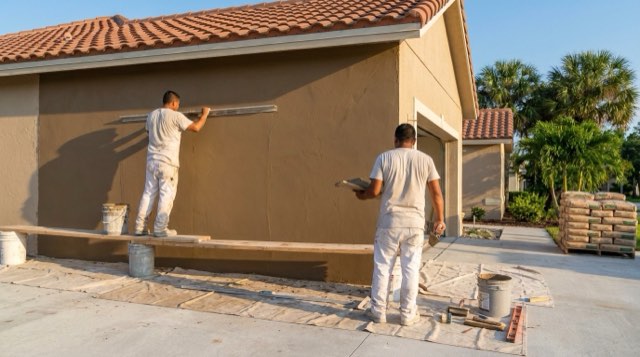 Local guide
Stucco Contractors Serving Vero Beach and Indian River County
Vero Beach is a different county from the rest of the Treasure Coast, and a lot of its owners are not in town when the work happens. Both facts should shape how you hire.
Read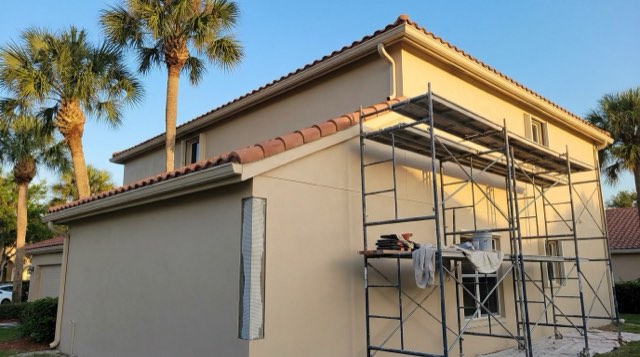 Cost guide
Stucco vs EIFS in Florida: Cost, Lifespan and Which Your Home Has
From the street they look the same. In price, repair cost and how they handle Florida water they are not close. Here is how to identify what is on your walls before you spend anything.
Read Hiring
Stucco Warranties: Workmanship, Materials and What Neither Covers
A stucco warranty is two separate promises from two different companies, and the useful reading is always in the exclusions. Here is what each one covers on a Florida block house.
Read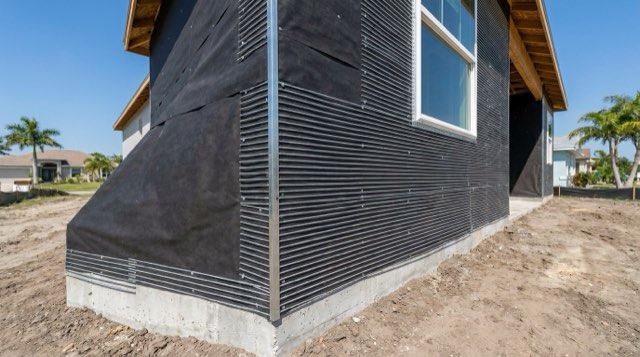 Maintenance
Weep Screed and Control Joints: The Two Details That Save a Wall
Two small pieces of bent metal decide how long a stucco wall lasts. The usual ways they get ruined on the Treasure Coast are a bag of mulch, a paver patio and a tube of caulk.
Read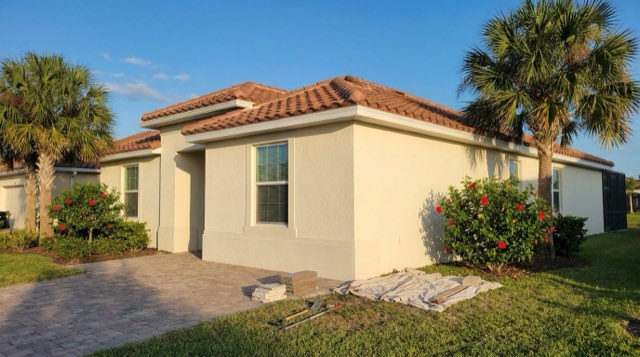 Hiring
What a Good Stucco Quote Actually Contains
A stucco quote is a description of work with a number at the bottom. Here is what belongs in the description, and how to lay two quotes next to each other and see the real difference.
ReadStraight answer on your wall.
Call, or send the form and we will get you a written price.