Stucco Contractors Serving Vero Beach and Indian River County
Vero Beach is a different county from the rest of the Treasure Coast, and a lot of its owners are not in town when the work happens. Both facts should shape how you hire.
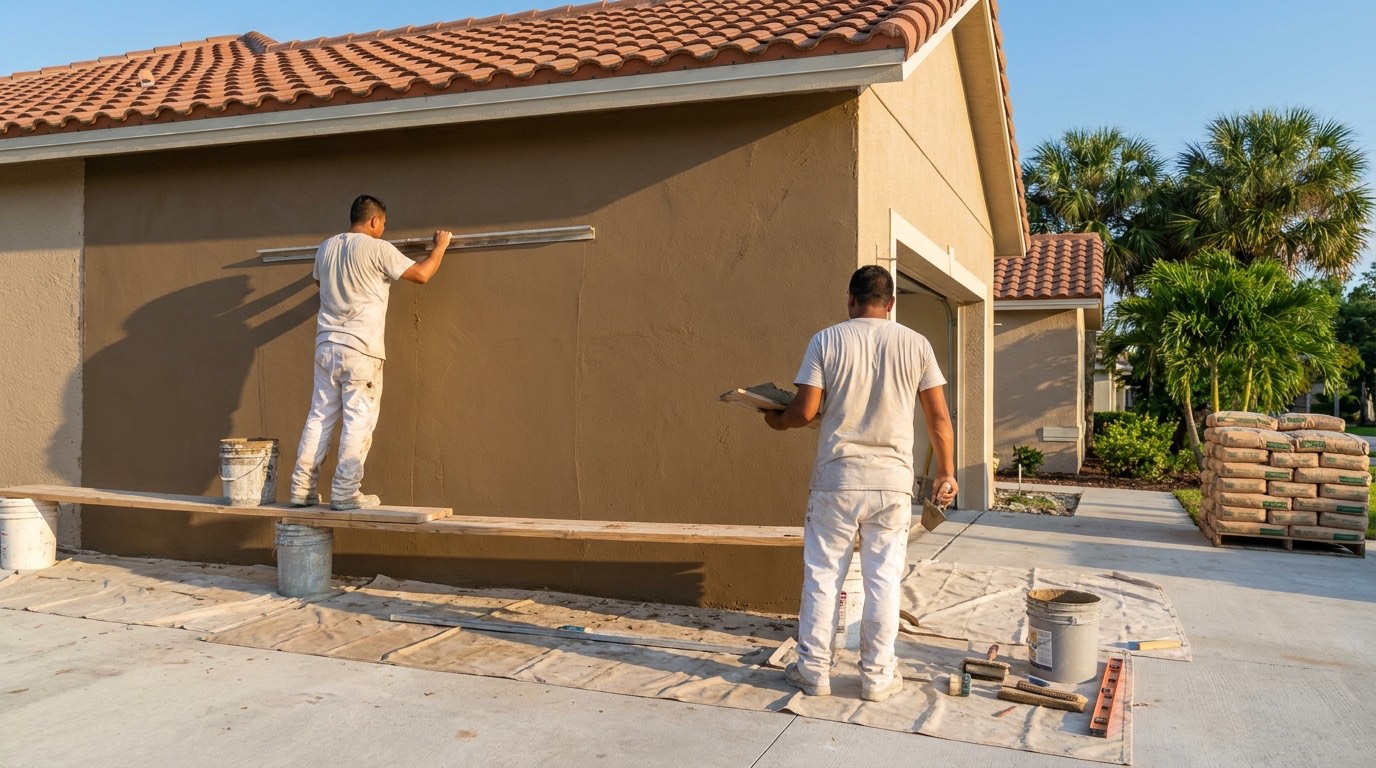
Indian River County is not an extension of the Treasure Coast corridor
Contractors who work Port St. Lucie and Stuart every day are operating in St. Lucie and Martin counties. Vero Beach is Indian River County, with the City of Vero Beach and several smaller municipalities inside it, and permitting runs through those offices instead.
The Florida Building Commission maintains the statewide code every jurisdiction here builds from, so the underlying rules are not a mystery. What differs locally is process. Which office issues, what a submittal includes, how inspections get scheduled, and what triggers a permit at all.
We are not going to tell you what your job requires, because that depends on your address and your scope and it changes. Ask the building department that covers your property directly, and expect your contractor to have made that call before quoting. A crew that shrugs at the permitting question has not done the homework.
Verify the license before you compare the prices
Florida licenses construction contractors through the Department of Business and Professional Regulation, and DBPR runs a public license search anyone can use. You are checking that the license is current, that it covers the work proposed, and that the name on it matches the company writing your estimate.
That last point catches more problems than the first two. It is not unusual to be handed a proposal from one business name while the license belongs to a different individual or entity. Sometimes there is a legitimate explanation. Often there is not, and you find out when something goes wrong.
Insurance is the other document to actually see. Ask for a certificate sent to you directly from the agent rather than a photocopy from the contractor, and check that it is current and lists your property as the job address. On a house where the owner is away half the year, that is the difference between a covered incident and a lawsuit.
- License current, and covering the scope proposed
- Licensed name matching the entity on your contract and your check
- Insurance certificate sent directly by the agent, in date
- Workers compensation coverage, or a documented exemption
- A physical business address and a phone number that a person answers
Want a price for your own wall?
Four quick questions and we come back with a written quote. Or call (772) 251-6654 if that is faster.
Request a quote
Four questions, about a minute. We'll call you back.
Island and mainland are two different specifications
A house on the barrier island and one on the mainland sit in genuinely different environments, and proposals for identical looking work should not read the same. On the island the governing factor is salt. Coatings chalk sooner, sealant joints open earlier, and every piece of metal in or near the wall corrodes on a shorter clock.
So an island scope should be weighted toward metal and joints. Bead replaced rather than patched over where corrosion has started, full sealant renewal instead of spot repairs, and coating selected for salt and UV. Expect the maintenance interval quoted to be shorter than a mainland number, because it will be.
On the mainland the drivers are rain, humidity and drainage. Cracking, efflorescence, irrigation damage and water paths matter more than salt. The right scope there spends its money on repair and breathable coating rather than wholesale metal replacement. If your estimate does not distinguish, ask which environment it was priced for.
Scheduling around owners who are not here half the year
Many Vero Beach exteriors belong to people who spend part of the year somewhere else. That shapes the job in ways that have nothing to do with stucco. Someone has to provide access, someone has to decide when a wall gets opened and the findings change the scope, and someone has to look at the finished work.
Sort that out before the crew mobilizes. Name the person who can approve a change and how to reach them, agree what dollar amount can be settled by email versus what waits for a signature, and settle who has keys and gate codes. Deciding that in advance turns a week of phone tag into one conversation.
There is a practical case for doing this work while you are away. Exterior stucco means crews on ladders, wet material, masked windows and equipment in the driveway for days. The trade off is that you cannot walk the job, which makes the next two sections more important.
What a written scope has to actually say
The proposal is the only thing that exists after the conversation ends, and on a remotely managed job it is the entire agreement. It should name which elevations are included, how the failed areas were identified, the products going on the wall, and how the texture will be matched.
It also has to handle the unknown honestly. Nobody can see behind stucco until it is open, and on an older Vero house what is found changes the number more often than not. Price that with unit rates agreed in advance, per square foot of extra removal, per linear foot of bead, per opening for sealant. A discovery then becomes arithmetic rather than a renegotiation with an owner a thousand miles away.
Watch for scope written to sound generous while committing to nothing. Repair as needed, patch and paint house, address cracking. Those phrases mean whatever the contractor decides once the deposit clears. A short scope with specific quantities beats a long one with none.
- Elevations and areas included, stated specifically
- How the failed and hollow areas were located
- Products named, including the coating system
- Texture matching method and where repairs will terminate
- Unit rates for anything found once a wall is opened
- Payment schedule tied to milestones rather than dates
- Who pulls any required permit and who schedules inspections
Photo documentation is the accountability, not the marketing
Every job should be photographed, and on an absent owner job it is not optional. Before photos of every elevation with the marked areas visible. Photos of the open wall. Progress shots at lath, base coat and finish. Then after photos from the same positions as the before set.
The value is not that the pictures look good. It is that the open wall stage is the only moment anyone can verify what was there, and once new material goes on it is gone. If a contractor says the lath was corroded and had to be replaced, the photograph of that lath is the entire proof.
Ask for this in writing as part of the scope, and ask for photos as the job runs rather than in a bundle at the end. Any competent outfit already does it, because it protects them as much as it protects you.
Questions to ask, and what actually moves the number
Ask how they identified the failed areas and whether they sounded the whole house or only the wall you called about. Ask what happens if more is found. Ask who is on site running the crew. Ask how long they wait before coating, since curing time is fixed and rushing it causes finish problems.
On price, anyone quoting a firm number from photographs on an older coastal house is either padding heavily or planning to revise it. We give ranges and the drivers behind them, and a real number comes from walking the property. Travel is a real factor too, so we schedule Vero work in continuous blocks rather than scattered single days.
A good contractor will also tell you what does not need doing. Stable hairline cracking on the mainland, light chalking, an old patch that shows slightly. Those can wait for your next paint cycle. If every item on a walkthrough comes back urgent, get another opinion before signing.
Related questions
Does a Port St. Lucie based contractor work in Vero Beach?
Many do, ours included, but ask how they handle it. Vero is far enough north that scattered single days are inefficient, which shows up as either higher pricing or a crew that keeps disappearing to closer jobs. Continuous blocks keep a Vero job moving.
Do I need a permit for stucco repair in Indian River County?
It depends on the scope and on whether your address is inside a municipality or in the unincorporated county. Small cosmetic patching is generally treated differently from replacing an elevation. Call the building department that covers your property, and have your contractor confirm before work starts.
How do I check a contractor's license?
Use the public license search run by Florida's Department of Business and Professional Regulation. Confirm the license is active, that it covers the work being proposed, and that the licensed name matches the company on your proposal and your check. A mismatch between those names is worth asking about before anything else.
Should island and mainland homes get the same stucco specification?
No. Island exposure means salt, so the scope should lean toward replacing corroded metal, full sealant renewal and coatings chosen for salt and UV, with a shorter maintenance interval. Mainland work is driven by rain, drainage and cracking, where breathability matters more. Ask which one your estimate assumed.
Can the work be done while I am out of state?
Yes, and many owners prefer it, since exterior stucco is disruptive to live around. It requires setup though. Name a decision maker who can approve a change, agree what can be settled by email, arrange access, and require progress photos as the job runs.
What should I do if the contractor finds more damage after opening a wall?
Nothing, if you agreed unit rates up front. Additional area gets measured and priced at the rate already in the contract, documented with photos of the open wall, and the job continues. Without unit rates you are negotiating from a weak position with a crew already on site, which is the situation to avoid.
References
Standards bodies and agencies referenced above. We are not affiliated with them.
More guides
All guides →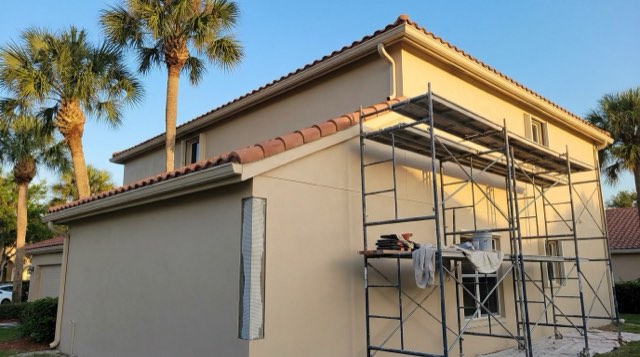 Cost guide
Stucco vs EIFS in Florida: Cost, Lifespan and Which Your Home Has
From the street they look the same. In price, repair cost and how they handle Florida water they are not close. Here is how to identify what is on your walls before you spend anything.
Read Hiring
Stucco Warranties: Workmanship, Materials and What Neither Covers
A stucco warranty is two separate promises from two different companies, and the useful reading is always in the exclusions. Here is what each one covers on a Florida block house.
Read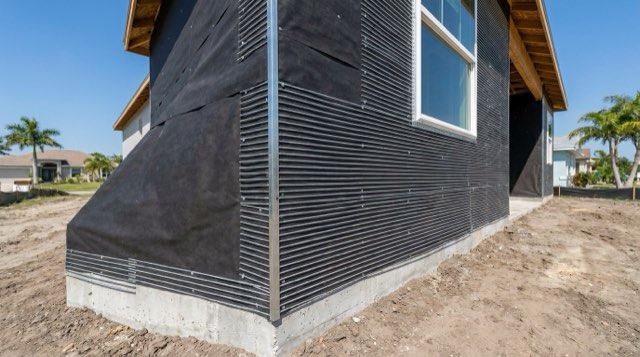 Maintenance
Weep Screed and Control Joints: The Two Details That Save a Wall
Two small pieces of bent metal decide how long a stucco wall lasts. The usual ways they get ruined on the Treasure Coast are a bag of mulch, a paver patio and a tube of caulk.
Read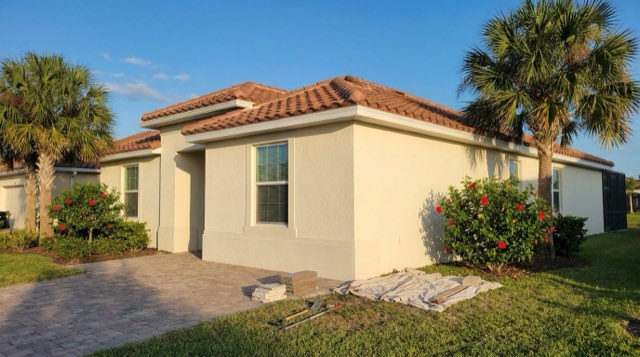 Hiring
What a Good Stucco Quote Actually Contains
A stucco quote is a description of work with a number at the bottom. Here is what belongs in the description, and how to lay two quotes next to each other and see the real difference.
Read Diagnosis
Why Stucco Cracks on Florida Block Homes, and Which Cracks Matter
Not every crack in a Florida stucco wall means trouble. Here is how to tell hairline shrinkage from a stair-step, a diagonal off a window corner, or a crack being pushed open by rust.
ReadStraight answer on your wall.
Call, or send the form and we will get you a written price.