What a Good Stucco Quote Actually Contains
A stucco quote is a description of work with a number at the bottom. Here is what belongs in the description, and how to lay two quotes next to each other and see the real difference.
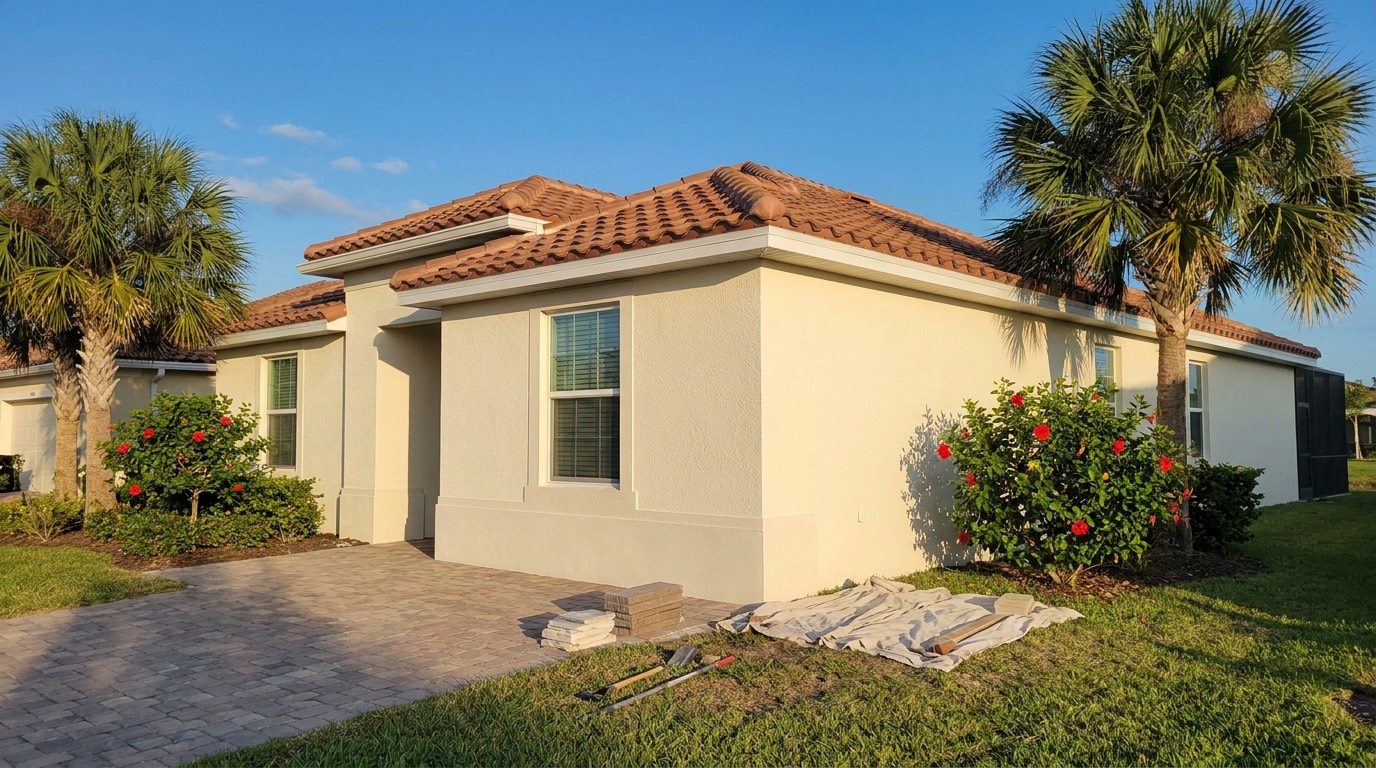
The number is the smallest part of the document
Homeowners read a quote from the bottom up. The trade reads it from the top down, because everything above the total is what you are actually buying. Two estimates on the same Port St. Lucie house can be four thousand dollars apart and both be fairly priced, because one is coating a wall and the other is rebuilding it.
There is no legal template for this. Some good contractors write two pages, some write six. What separates a useful quote from a thin one is whether a stranger could read it and know exactly what will be done to your house without asking you a single question.
That is the test to apply. Hand the quote to someone who was not there when it was written. If they cannot picture the finished work, neither can you, and neither can the crew on the morning it starts.
Scope written elevation by elevation
Houses do not fail evenly. The south and west walls take the sun, the windward side takes the storm rain, and the shaded north wall grows the algae. It is normal for one elevation to need removal and rebuild while another needs nothing but a coating, so a quote that treats the house as one item is hiding the differences.
Look for the walls named individually. Front, rear, left, right, or north, south, east, west, whichever the contractor uses, as long as it is consistent. Then a described scope under each one. The gable ends and any second story should be called out separately, because on most Florida homes those are frame with wire lath while the walls below are block, and they are different work.
Detail areas deserve their own lines too. Window and door perimeters, foam bands, columns, the soffit line, and the base of the wall near grade are where most of the labor hides on a repair job.
- Each elevation named, with its own described scope
- Gable ends, second story and dormers separated from block walls below
- Window and door perimeters called out, including sealant work
- Bands, columns, quoins and other trim listed rather than assumed
- Any elevation excluded from the job stated plainly as excluded
Want a price for your own wall?
Four quick questions and we come back with a written quote. Or call (772) 251-6654 if that is faster.
Request a quote
Four questions, about a minute. We'll call you back.
Square footage, and where the number came from
Ask any quote to state the area it is priced on. Square feet of wall for a resurface or a new install, square feet of removal for a repair, linear feet for crack routing and for banding. Without it you cannot compare two documents and you cannot check a change order later against anything.
Also ask how it was measured. There is a real difference between a contractor who walked the house with a wheel and a laser, and one who pulled the square footage off a property appraiser record and multiplied. The second method is a guess, and guesses go one direction once the job starts.
For repair work, the measured area should be the sounded area rather than the visible damage. If a crew taps the wall and finds hollow material running three feet past the crack, the quote should be priced on three feet past the crack. That is why the sounding matters before the quote and not after.
Materials named, not just the word stucco
Stucco is a system, not a product. A quote should say what is going on the wall in enough detail that you could buy it yourself. Which base coat product or mix, how many coats and their nominal thickness, what lath and what fasteners if any are going up, what the finish is and at what texture and grit, and what coating or paint goes over it.
Named products matter for a practical reason beyond quality. Manufacturer warranties usually apply to the system as a whole, so mixing a base from one line with a finish from another can leave you with materials that work fine and paperwork that covers nothing. If a manufacturer warranty is part of what you are being sold, the quote should reflect a matched system.
It also settles the texture argument in advance. Knockdown, sand, dash, lace and worn versions of each are different products and different labor. Written down, they are a specification. Spoken, they are two people picturing different walls.
- Base coat material and number of coats, with nominal thickness
- Lath type, fasteners and any weather resistant barrier where framing is involved
- Finish product, texture name and grit or aggregate size
- Coating or paint system, number of coats and color reference
- Sealant type at perimeters and joints
Prep, the repair allowance, and the concealed condition clause
Prep is a line item, not a courtesy. Pressure washing, scraping failed coating, routing cracks, treating any corroded metal, priming, masking windows and screens. On an older Fort Pierce or Stuart house the prep can be a real share of the labor, and a quote that skips it either absorbed the cost quietly or plans to bill it later.
Then there is the part nobody can price honestly: what is behind an intact wall. Good quotes handle this in one of two ways. An allowance, which is a stated quantity of repair included in the price, for example a set number of square feet of removal and rebuild, with a written rate for anything beyond it. Or a concealed condition clause, which states what happens when unexpected damage is found: work pauses, you are shown photographs, a change order is written and signed, and only then does work continue.
Either approach is fine. What you do not want is silence, because silence means the conversation happens with your wall already open, which is the worst possible negotiating position for both of you.
Access, protection and the exclusions list
How the crew reaches the work is a cost, and it belongs in writing. Ladders, scaffold, a lift, or working off a roof edge are all different numbers, and on a two story Palm City house with a pool cage in the way, the access method can drive the schedule more than the plaster does.
Protection should be stated too. What gets covered, how landscaping and irrigation are handled, where the mixing station sits, where wash water goes, and who cleans what at the end of each day. On a lot with a screen enclosure and mature plantings, this is not a detail.
The exclusions list is the most useful paragraph in any quote and the one homeowners skip. It is the contractor telling you exactly where their responsibility stops. Read it first, actually, because it tells you what will land on your list.
- Access method and equipment, with any lift or scaffold priced separately
- Protection of landscaping, screen enclosure, pool deck, driveway and windows
- Permit responsibility, whether it is included, excluded or not required
- Common exclusions: painting, structural repair, wood rot, roofing, window replacement
- Debris removal and daily cleanup, and who supplies water and power
Timeline, terms, and reading two quotes side by side
A timeline on a stucco quote should include the waiting. Days on site, cure days between coats, and a stated allowance for weather, because from June to September the afternoon storm is the rule rather than the exception. A schedule with no weather days in it was written by somebody who has not worked a Treasure Coast summer.
Terms should name a deposit, progress payments tied to visible milestones, and a final payment that comes after your walkthrough of every elevation. The warranty should be in the document rather than promised verbally, with its duration and its exclusions.
Then do the comparison properly. Put the two quotes in two columns and line up the same eight rows: area, removal depth, coats, lath, finish and texture, coating scope, allowance for hidden damage, access. Nine times out of ten the price gap explains itself in one of those rows, and you stop choosing between numbers and start choosing between plans.
- Start window, days on site, cure days and stated weather allowance
- Deposit and progress payments tied to specific completed milestones
- Change order process and rate for additional work
- Warranty duration, what is covered and what is excluded
- How long the quoted price stays valid
Related questions
Is a one page quote automatically a bad sign?
Not for small work. A tight one page quote for a single window corner repair can carry everything that matters. The concern is a one page quote for a job worth several thousand dollars, where a whole house is described in one sentence. Length is not the test. Whether a stranger could read it and know what will happen is the test.
What is an allowance, and how is it different from a change order?
An allowance is repair work included in the original price up to a stated quantity, for instance a set number of square feet of removal. A change order is the written agreement that adds work and cost beyond what the contract covers. Good quotes use both: the allowance absorbs the normal surprises, and the change order handles anything past it at a rate you already agreed to.
Should the quote include the permit?
It should at least state who is responsible for it and whether the cost is included, excluded or estimated. Whether a permit is needed depends on the scope and on which jurisdiction you are in, since Port St. Lucie, Fort Pierce, Stuart and unincorporated St. Lucie County each administer their own. Ask the contractor what they intend to pull, then confirm it with the building department yourself.
How long should a quoted price stay valid?
Many contractors put a validity window on the document, often measured in weeks, because material pricing and their own schedule both move. That is reasonable and not a pressure tactic on its own. What tells the two apart is whether the expiry is a stated business term written on the quote, or a countdown that appeared in conversation while you were being asked to sign.
The quote says repair as needed. Is that acceptable?
Not as the whole scope. It gives you nothing to compare, nothing to hold, and no way to tell later whether the work grew. Ask for it to be rewritten with a measured area and a rate. If the true extent genuinely cannot be known before opening the wall, that is what an allowance plus a concealed condition clause is for.
Should I expect an itemised breakdown of labor and materials?
Not usually, and pushing for one is often the wrong fight. Most contractors price by scope rather than by cost line, and their internal margin is not really your business. What you are entitled to is a clear description of the work, the quantities it is based on, and the rate for anything added later. That gives you everything a cost breakdown would, in the form that actually protects you.
More guides
All guides → Diagnosis
Why Stucco Cracks on Florida Block Homes, and Which Cracks Matter
Not every crack in a Florida stucco wall means trouble. Here is how to tell hairline shrinkage from a stair-step, a diagonal off a window corner, or a crack being pushed open by rust.
Read Storm season
How Wind-Driven Rain Gets Behind Florida Stucco
A stucco wall is meant to get wet. What matters is whether the water that gets past it can find its way back out. Here is the path wind-driven rain actually takes on a Treasure Coast house.
Read Storm season
Assessing Stucco Damage After a Storm
The morning after, a soaked wall looks worse than it is. Here is how to work out which elevation actually took the storm, separate fresh impact from cracking that was already there, and document it before anyone starts patching.
Read How it works
The Best Time of Year for Stucco Work on the Treasure Coast
There is no freeze shutdown in Florida, so stucco runs all twelve months. What actually moves the calendar here is the afternoon storm pattern, storm season staging, and how fast a wall can take its next coat.
Read Diagnosis
Inspecting Commercial EIFS: Drainage vs Barrier Systems
EIFS is uncommon on Treasure Coast block construction, so finding it on your building tells you something before the inspection even starts. Here is how a manager or board works out which assembly they have, and what that changes.
ReadStraight answer on your wall.
Call, or send the form and we will get you a written price.