Stucco Warranties: Workmanship, Materials and What Neither Covers
A stucco warranty is two separate promises from two different companies, and the useful reading is always in the exclusions. Here is what each one covers on a Florida block house.

Two promises, from two different companies
When somebody tells you the stucco is under warranty, they are usually describing two unrelated documents at once. The contractor warrants workmanship, meaning how the material went on. The manufacturer warrants the product, meaning whether it performed the way it was sold to. Different companies, different terms, different claim routes.
The split shows up the first time something goes wrong, because each side can point at the other. A finish that fails in a pattern the manufacturer treats as an application problem is a workmanship claim. A finish that fails evenly across a properly applied wall is a material claim. Working out which one you are holding is most of the effort in any claim.
There is a third thing people fold in that does not belong here at all, and that is insurance. A warranty answers for defects in work or product. Insurance answers for sudden damage from an event. Neither answers for a wall getting older, and nothing in this trade warrants against age.
What the workmanship warranty is actually for
A workmanship warranty covers the contractor's hand. Material letting go of the wall, coats laid too thin or out of sequence, lath fastened wrong on a framed gable, a texture that does not match what was agreed, a coating peeling because it went over a dirty or uncured surface. Those are installation defects and they are the thing you are actually buying cover against.
Duration varies widely and there is no standard in this trade. Some contractors write a year, some write several, and terms on new installation usually run longer than terms on a patch, because a patch has to live with whatever the wall around it decides to do next. Rather than shopping for the biggest number, read what the number is attached to.
Ask what the remedy is, specifically. Repairing the defective area is the usual answer. What gets left out is recoating the rest of the elevation so the repair does not stand out, and on a coated wall that can cost more than the repair. Settle it in writing before signing, because it is a cheap clause to add at the start and an argument to raise later.
- Debonded or hollow material inside the area that was worked on
- Coats outside the specified thickness or applied in the wrong order
- Lath and fastener defects on framed walls, gable ends and porch infills
- Finish and texture that does not match the sample that was agreed
- Coating adhesion failure traced to preparation or to coating too early
Want a price for your own wall?
Four quick questions and we come back with a written quote. Or call (772) 251-6654 if that is faster.
Request a quote
Four questions, about a minute. We'll call you back.
What the manufacturer covers, and what a claim pays out
Manufacturer warranties come from whoever made the base coat, the finish or the coating. They cover the product performing as published, and they nearly always require that the whole system came from that maker's line and went on according to their instructions. Mix a base from one brand with a finish from another and you can end up with a sound wall and paperwork that does not apply to it.
The part worth understanding early is what a material claim pays. Many product warranties are limited to replacement material, which means the manufacturer ships more product and the labor to strip and reapply it is yours. Labor inclusive or extended cover exists on some systems, generally tied to trained applicators and to registering the job. Ask which kind is being offered.
If a manufacturer warranty is part of why a quote appealed to you, have it named in the contract, ask whether registration is required and who files it, and ask for a copy once it is filed. An unregistered warranty is a brochure with your hopes attached to it.
Why hairline cracking on block is nearly always excluded
This is the exclusion that catches people out, and on a Florida block house it is worth understanding rather than resenting, because it is not a loophole. It is a description of the material.
Almost all housing here is concrete block with the plaster applied straight onto the masonry. A block wall on a Port St. Lucie street takes full sun through the afternoon, then sheds a large part of that heat in about twenty minutes when a June storm arrives. The plaster skin is bonded to the block and goes wherever the block goes. Add the shrinkage cement plaster does anyway while it cures, and fine hairline and map cracking is the normal result, not a defect in anybody's hand.
That is why effectively every warranty in the trade excludes it. A document promising no hairline on a block wall in this climate is either written carelessly or never going to be honoured. What is not excluded is cracking with a cause behind it. A crack that reopens on the same line after a proper repair, a crack with hollow sound beside it, a crack with rust bleeding out of it, or one wide enough to catch a fingernail all point past the surface, and those belong in a claim conversation.
- Normally excluded: fine shrinkage cracking and map cracking on block walls
- Normally excluded: fading, chalking and ordinary weathering of a coating
- Normally excluded: storm damage, impact, settlement and structural movement
- Usually covered: hollow or debonded plaster within the area that was worked
- Usually covered: a crack that returns on the same line after being repaired
Salt does not void a warranty. It shortens the clock.
Coating life is not the same across this service area, and the paperwork rarely says so out loud. A wall in Jensen Beach or Port Salerno a few hundred yards off the Indian River Lagoon lives in salt laden air. Salt lands on the finish, sits there through humid nights, and works on the coating from the outside. The identical product on a house out toward Okeechobee, inland with no marine air reaching it, is doing an easier job for longer.
That does not mean the coastal wall carries less cover. It means the maintenance conditions attached to your warranty carry more weight, because that is where the disagreement usually lands. Coating warranties are commonly conditioned on periodic gentle washing, on fixing the source of any water getting in, and on nobody else painting or sealing over the work. On a lagoon side elevation, rinsing the salt off is the maintenance that keeps you inside those conditions.
Read your own document for any language about marine or coastal exposure before assuming a color retention claim behaves the same in Vero Beach as it does inland. Then keep receipts for washing and for repairs. A claim on a salt exposed wall goes better when you can show the elevation was looked after, and badly when the last documented attention was the day it was installed.
Builder cover on a newer home, and how notice has to be given
If your house is newer, in Tradition or St. Lucie West or one of the newer subdivisions spreading west of Port St. Lucie, the first document to find is not the plasterer's. It is the builder's.
Builder warranties normally treat components separately, with one term for structure, another for systems and another for finishes, and exterior stucco frequently sits on its own line with its own period. The part homeowners miss is procedure. These documents typically state how notice must be given, in writing, to a named address or portal, within a window that starts when you discover the problem. A conversation with a site superintendent generally does not count as notice. Florida law also sets out a notice and opportunity to repair process for construction defect claims, and the current steps are a question for an attorney rather than for a contractor.
Sequence decides the outcome here. Find the document, give notice the way it tells you to, and get a written response, all before you pay an outside contractor to open that wall. Repairs carried out by somebody else can end the builder's obligation on the area they touched, and that is a painful thing to learn after the fact.
- Locate the builder warranty before booking any repair on a newer home
- Check which term applies to exterior finishes rather than to structure
- Follow the written notice route exactly, and keep proof of what you sent
- Photograph the condition on the day you find it, with a date on the file
- Get the builder's written answer before another trade opens the wall
Seasonal owners, transfers, and what to settle before signing
A good share of houses in Hobe Sound, Stuart, Vero Beach and along the rest of the Treasure Coast are second homes, shut up for months at a stretch. Two clauses matter more than usual because of that.
The first is the reporting window. Many warranties require a defect to be reported within a set period after it is discovered or after it happens. A wall that starts weeping in July does not get seen until an owner returns in November, and a window written in days becomes a problem in that gap. If the house sits empty for part of the year, arrange for somebody to walk the elevations, and ask the contractor at signing how a seasonal absence sits with their terms.
The second is transfer. Many workmanship warranties are written to the original customer and simply stop at closing. Some manufacturer warranties allow one transfer, occasionally with a form or a fee. On a seasonal property, which often changes hands sooner than a primary residence does, transferability is an easy thing to ask for at the start and an impossible thing to add afterwards.
- Whether cover survives a sale, and what the new owner has to do
- How quickly a defect must be reported once it is discovered
- Whether builder cover on a newer home is still running and on what term
- Who to contact for a claim, and how long they have to respond
- Whether the remedy includes recoating the elevation so a repair blends
Related questions
My new stucco has hairline cracks. Is that a warranty claim?
Usually not. Fine shrinkage cracking is what cement plaster does on a block wall in this climate, which is why nearly every warranty excludes it by name. What changes the answer is company: hairlines with hollow sound beside them, with rust staining, or with a bulge you can feel by hand are worth reporting, because those point behind the surface rather than at it.
Does a warranty cover salt damage or fading near the Indian River Lagoon?
Ordinary fading and weathering are excluded almost everywhere, and salt exposure is a weathering condition rather than a defect. What a coastal owner should read closely is the maintenance conditions, since those are usually what a coating warranty turns on. Gentle periodic washing to get the salt off, with receipts kept, is what keeps the document alive.
Does my paint warranty cover the stucco underneath it?
No. A coating warranty covers the coating: adhesion, film integrity and sometimes color retention, under the maker's conditions. The plaster beneath is a separate assembly with separate cover. This catches people out when a coating peels because the wall under it had already failed, since that is a stucco problem appearing on the paint.
My house in Tradition is still under builder warranty. Who do I call first?
The builder, and in writing rather than by phone. Find the warranty document, check which term covers exterior finishes, and follow the notice procedure it describes exactly. Bringing in an outside contractor first can end the builder's obligation on that area, so get their written response before anyone opens the wall.
What happens to my warranty if the contractor closes down?
A workmanship warranty generally goes with them, which is the honest limit of the whole idea. A manufacturer warranty on the material can survive, which is one practical reason to have the product named in your contract and any registration filed and copied to you. It is also why checking who you hire matters more than the wording of the promise.
Does the warranty transfer when I sell a seasonal home?
Only if the document says so. Plenty of workmanship warranties are written to the original customer and end at closing, while some manufacturer warranties permit a single transfer, sometimes with a form or a fee. Ask at signing rather than at listing, because transferability costs nothing to include at the start.
More guides
All guides →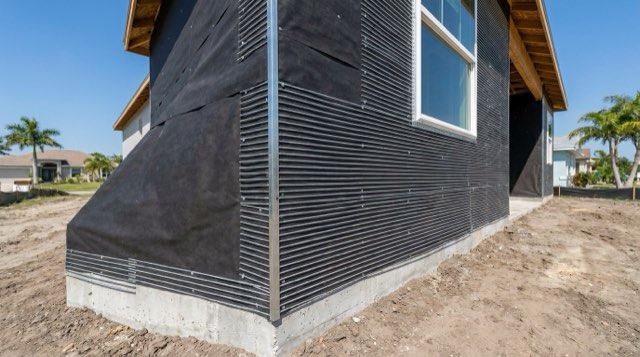 Maintenance
Weep Screed and Control Joints: The Two Details That Save a Wall
Two small pieces of bent metal decide how long a stucco wall lasts. The usual ways they get ruined on the Treasure Coast are a bag of mulch, a paver patio and a tube of caulk.
Read Hiring
What a Good Stucco Quote Actually Contains
A stucco quote is a description of work with a number at the bottom. Here is what belongs in the description, and how to lay two quotes next to each other and see the real difference.
Read Diagnosis
Why Stucco Cracks on Florida Block Homes, and Which Cracks Matter
Not every crack in a Florida stucco wall means trouble. Here is how to tell hairline shrinkage from a stair-step, a diagonal off a window corner, or a crack being pushed open by rust.
ReadStorm seasonHow Wind-Driven Rain Gets Behind Florida Stucco
A stucco wall is meant to get wet. What matters is whether the water that gets past it can find its way back out. Here is the path wind-driven rain actually takes on a Treasure Coast house.
Read Storm season
Assessing Stucco Damage After a Storm
The morning after, a soaked wall looks worse than it is. Here is how to work out which elevation actually took the storm, separate fresh impact from cracking that was already there, and document it before anyone starts patching.
ReadStraight answer on your wall.
Call, or send the form and we will get you a written price.